"Mr. Ferrell first connected his computer to my computer via internet and worked for quite a few hours trying to determine what exactly was wrong. The next day he continued working from his computer for several hours. He determined he would have to have my desktop tower to complete the repair. He and my son met in Huntsville to exchange the tower. He then cleaned up a lot of what was wrong and reloaded Windows 10. He deleted the D: drive which had way too much memory allotted to it. The tower was returned and I plugged it all back together and it is working better than it did when I first purchased it. I would use him again and I recommend him highly to anyone needing computer updating and/or repair. His work is warrantied and he is very personable, knowledgeable, and helpful."
"I have known this contractor for many years and can assure those interested in hiring his firm that they will get high quality workmanship at a fair price. He is known for his attention to detail, and will be sure to communicate with the owner before work is done so there are no surprises. You can have complete trust in both his honesty in business dealings and his quality workmanship. I recommend this contractor to anyone needing home repairs or small to medium sized building projects."
Some local utilities or state programs offer rebates or tax incentives for energy-efficient upgrades, including solar screens. Make sure to check with your local energy provider or government agency to see if you qualify for any cost-saving programs. Federal tax credits may also be available for qualifying window and exterior home upgrades.
The screen material you choose depends on your needs. Here are some differences to consider:
Fiberglass is the least expensive but needs replacing more often.
Aluminum suits almost any job and doesn’t stretch as easily as fiberglass.
Pet-resistant screens are more expensive than fiberglass or aluminum, but they’re also wind and weather-resistant.
Metal screens, like stainless steel, are the most expensive material for rescreening your porch or sunroom. However, they last for years and are golf ball-resistant.
Window screens are available in several standard sizes. Common dimensions include 24 to 36 inches wide by 36 to 48 inches tall, as well as sizes like 18 by 14 inches and 20 by 20 inches. These often correspond to standard window sizes, such as 2 feet wide by 3 feet tall or 4 feet wide by 6 feet tall. Screens are also sold in replacement rolls to accommodate various dimensions. It is always best to measure your windows for accuracy before a repair or replacement. If your windows are a non-standard size, you will likely need to order custom screens, which can increase the cost. However, a screen does not necessarily have to fit the entire window, so you may be able to use a standard-size screen even if your window is slightly larger.
Yes, adding windows adds value to a brick house. Homeowners don’t shy away from more natural light and an opportunity to get fresh air. Adding a window is particularly beneficial if you live in an area with good weather for much of the year or if your home has a nice view. Keep in mind that many older brick homes have historic wood windows that add to the charm of the house. When you install a new window in a brick house, you’ll want to find one that matches the aesthetic of the existing windows.
While windows increase a home’s value, how much they increase it can vary. It depends on the age of the home and the type of windows. You can expect about 70% to 85% return on investment (ROI) when adding a window to your home.
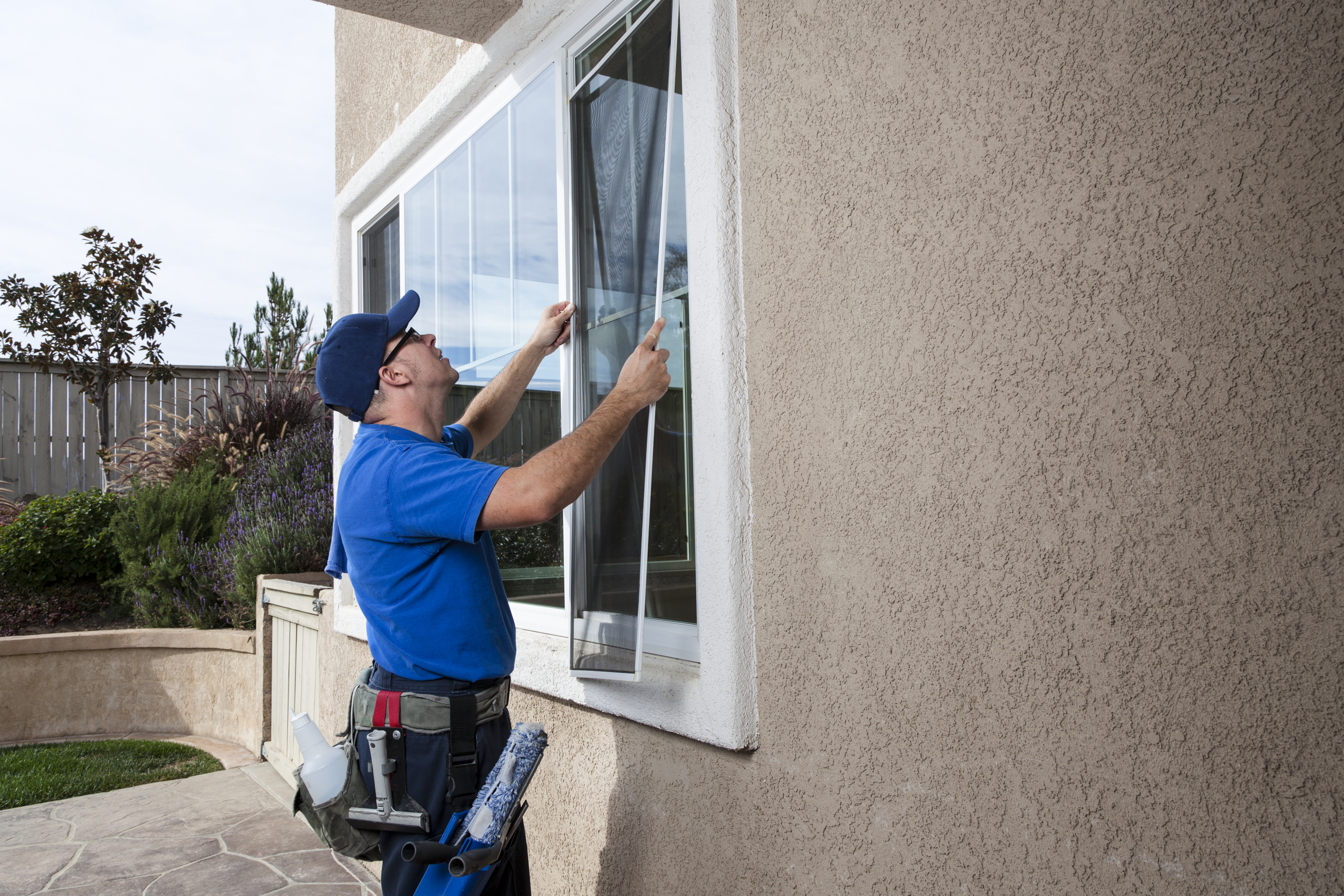
Window screen repair costs an average of $310, with a typical range of $100 to $480. The final price depends on several factors, including the window size, accessibility, screen type, whether the frame needs replacement, and especially the screen material.
The cost of window screen materials varies widely based on durability and features:
Fiberglass: $35–$200
Aluminum: $50–$300
Copper: $90–$850
Stainless Steel: $45–$400
Brass: $100–$900
Solar: $55–$850
Security: $100–$1,000
Vinyl: $25–$120
Costs also differ by screen type. For instance, a prefabricated screen might cost only $40, moveable screens typically run $25 to $75, and retractable screens range from $300 to $900. To save money, you can choose more affordable materials like vinyl or fiberglass, opt to rescreen instead of replacing the entire frame, and have multiple screens repaired at once to reduce labor costs.
The Mission, SD homeowners’ guide to window screen repair services
From average costs to expert advice, get all the answers you need to get your job done.
You’re probably already using them, but when it comes down to it, do you need screens on your windows? Learn about the pros and cons of using window screens.
Thinking about window screen installation for the spring? Learn about mesh materials, costs to expect, and how to hire the right local pro for the job.