







Top-rated stucco pros.

Get matched with top stucco pros in Trio, SC

Enter your zip and get matched with up to 5 pros

Need a pro for your stucco service project in Trio, SC?

Select your specific project to find the pro for you.

Find Stucco pros in Trio

Uribe's Stucco and Stone
New to Angi
Traditional Stucco - Repair or Partially Replace

Serving Trio, SC and surrounding areas

In business since 2011

Free estimates

Credit card accepted

We are a locally owned and operated company that values honesty and integrity and treats your home as if it were our own. We offer a variety of services that are customizable to each individual project. You will find us to be competitively priced, paying close attention to the details of each and every project that we are involved with. We look forward to building lasting relationships and guarantee your satisfaction!

Stucco questions, answered by experts

When cleaning stucco siding, it is recommended to use a pressure washer with a psi (pounds per square inch) between 1,500 and 2,000. This range provides sufficient power to remove dirt and grime without causing damage to the stucco surface. It's important to avoid using excessive psi as it can chip or crack the stucco. 

Using a wider spray nozzle and keeping a safe distance of about seven to 10 feet from the siding helps ensure a gentle and effective cleaning process. Always follow the manufacturer's guidelines and adjust the psi accordingly based on the condition of your stucco and the specific requirements of your pressure washer.

It’s not advisable to use CLR on stucco. CLR is a powerful acidic cleaner designed for removing tough mineral stains. Stucco is a porous material commonly made of cement, lime, and sand. The acidic nature of CLR can potentially damage or etch the stucco surface, leading to discoloration or deterioration. 

It is best to use cleaning solutions specifically formulated for stucco or mild household cleaners mixed with water to clean stucco siding. Always test any cleaning product in a small, inconspicuous area before applying it to the entire stucco surface.

Repaired stucco requires regular inspections, cleaning to prevent mold or mildew build-up, and timely minor repairs to address hairline cracks. Applying protective sealants can also enhance longevity and maintain its appearance.

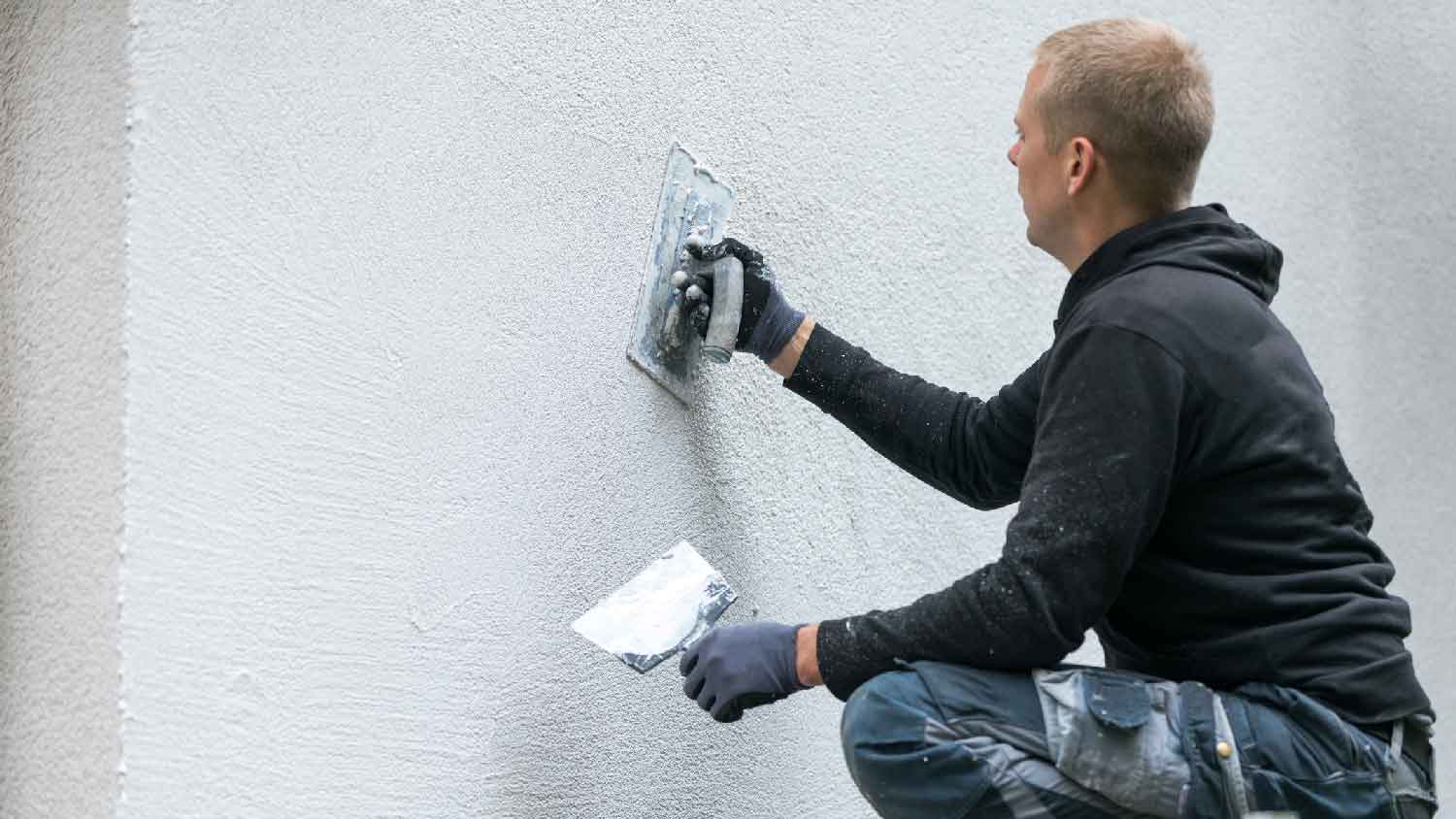
To repair damaged exterior stucco, you’ll first remove all loose and crumbling material from the damaged area. You then need to thoroughly clean the area and dampen it to ensure proper bonding. After that, you’ll apply a bonding agent to the repair area, then apply new stucco in layers, allowing for curing time between each layer. The final coat should be textured to match the surrounding stucco pattern as closely as possible. Once fully cured, the repaired area can be painted to match the rest of the wall if needed.

A standard drill will work just fine if you’re drilling small holes, and only a few of them. But anything with a diameter larger than 3/8 inch is best done with a hammer drill, since it is stronger, faster, and also makes your drill bits last longer. While you don’t absolutely need a hammer drill for stucco, it is a worthy investment if you think you might drill more holes down the road.

The Trio, SC homeowners’ guide to stucco services

From average costs to expert advice, get all the answers you need to get your job done.