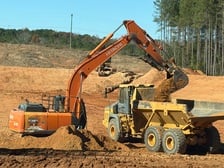
Top-rated excavation pros.

Best excavation pros near Inman, SC

Enter your zip and get matched with up to 5 pros

Need a pro for your excavation project in Inman, SC?

Select your specific project to find the pro for you.

TRUSTED BY INMAN, SC HOMEOWNERS

  • Average homeowner rating star icon4.8
    Average homeowner rating
  • Verified reviews icon36
    Verified excavation services reviews

Top-Rated Excavation pros in Inman - Updated Nov 2026

Avatar for Trailblazers
Trailblazers
4.9(
25
)
Building Site - Preparation and ClearingLandscape - Minor Grading or Resloping

Serving Inman, SC and surrounding areas

Approved

In business since 2020

Free estimates

Credit card accepted

"Years of water erosion needed fill and grading. Three other contractors had come and promised estimates. Crickets. Russ came out and gave us an estimate and did the work quickly and professionally. Easy to work with and did the job when he said he would. Very satisfied. Highly recommended. Definitely hire him again if needed."
Response time2 days
Response rate87%
7 neighbors recently requested a quote

Carolina Grading & Land Clearing LLC
4.6(
34
)
Building Site - Preparation and ClearingLandscape - Minor Grading or Resloping

Serving Inman, SC and surrounding areas

Approved

In business since 1990

Free estimates

Credit card accepted

"We had a pond installed by Tim and his crew. The excavator operator / Foreman, Chad, was phenomenol to not only work with but to watch work. The whole process was easy and straightforward. My only complaint is that I didnt hire them sooner"
My jobs
My jobs
My jobs
My jobs
2 neighbors recently requested a quote
Recommended by84%of homeowners
Avatar for A.C. Earthworks
A.C. Earthworks
5.0(
3
)
Building Site - Preparation and ClearingLandscape - Minor Grading or Resloping

Serving Inman, SC and surrounding areas

Approved

In business since 2025

Free estimates

Offers commercial services

"A.C. Earthworks was great to work with from start to finish. They kept me informed throughout the entire process, explained their plan clearly, and followed through on everything they promised. I’m very happy with the quality of their work and would definitely use them again for future projects."
Gallery
7 neighbors recently requested a quote
...
Showing 1-10 of 197
Excavating FAQs, answered by experts

If you don’t wish to dig it out and convert it into a finished basement, you can still encapsulate your crawl space to protect it from damage for an average cost of $5,500. Finishing a crawl space beyond this isn’t really worthwhile, as the low ceilings mean you won’t be able to use the area as living space.

In most areas, you will need a permit for excavation work, even for projects that only involve grading or yard leveling. Permit requirements depend on your local government and the scope of the project, but they are especially common for significant digging or work that could affect utilities or public property. These permits help protect the local topography and prevent drainage issues. An experienced excavation company will typically know whether permits are needed and can often handle the process of pulling and closing them for you. You can also verify permit requirements by contacting your local building department and describing your project.

A trench that is less than 5 feet deep often doesn't require a protective system. Most residential trenches will not go this deep (the typical residential drainage trench is just 18 inches deep). In the event that an excavator needs to dig more than 5 feet beneath the surface, a protective system is required unless the excavation is in entirely stable rock.

There are several methods to hollow out a tree stump, and the best one depends on your tools, experience, and priorities. Common methods include using a chisel and hammer, a chainsaw, or burning.

  • Chisel and Hammer: This is often considered the easiest approach for those with limited tools or experience, though it is the most time-consuming.

  • Chainsaw: Using a chainsaw is the fastest method, but it comes with significant safety risks, especially for inexperienced users.

  • Burning: This can be an effective method, but it is not recommended unless you can first drill holes into the stump. Without holes, the stump will be difficult to light and may not burn completely through.

A power drill with at least a ⅜-inch diameter bit can make the job quicker and easier, regardless of the primary method. While you can use a chisel or chainsaw without a drill, it will require more time and effort. Always wear protective goggles and thick gloves, as splinters are an inevitable risk.

Septic drain lines (or leach lines) are typically buried between 18 and 36 inches underground, and should be at least 6 inches below the surface. These pipes are perforated and surrounded by filtering materials like sand or gravel. Burying the lines at this depth helps minimize odors and allows bacteria and other biological processes in the soil to effectively treat the wastewater. Burying lines too close to the surface can cause issues unless the soil is very compact and stable.

The Inman, SC homeowners’ guide to excavation services

From average costs to expert advice, get all the answers you need to get your job done.