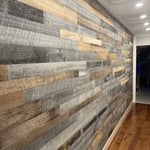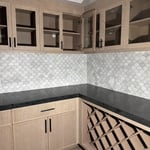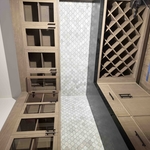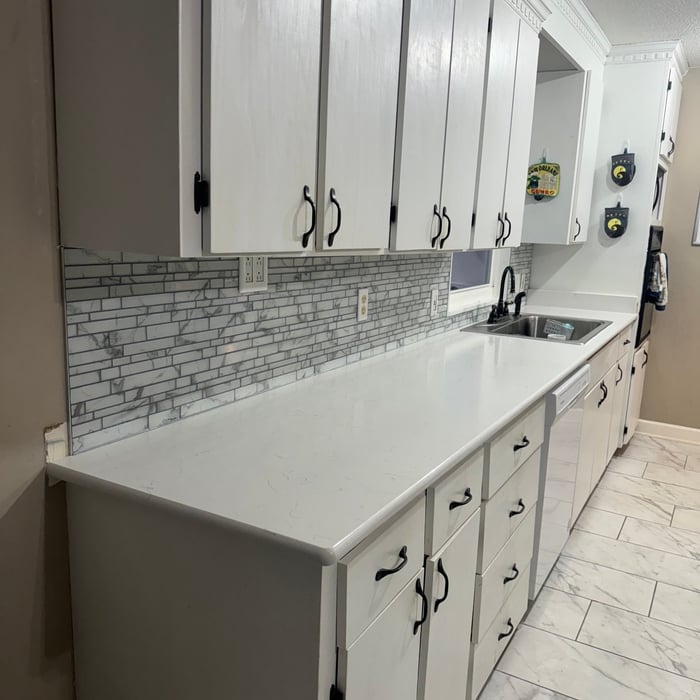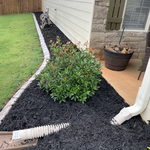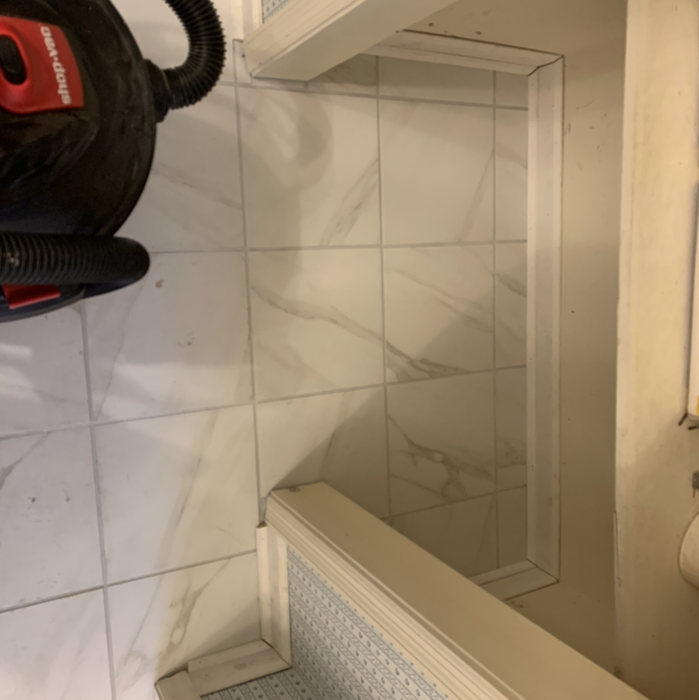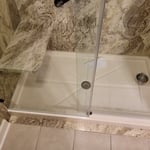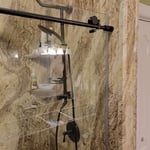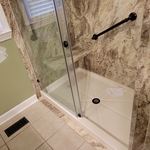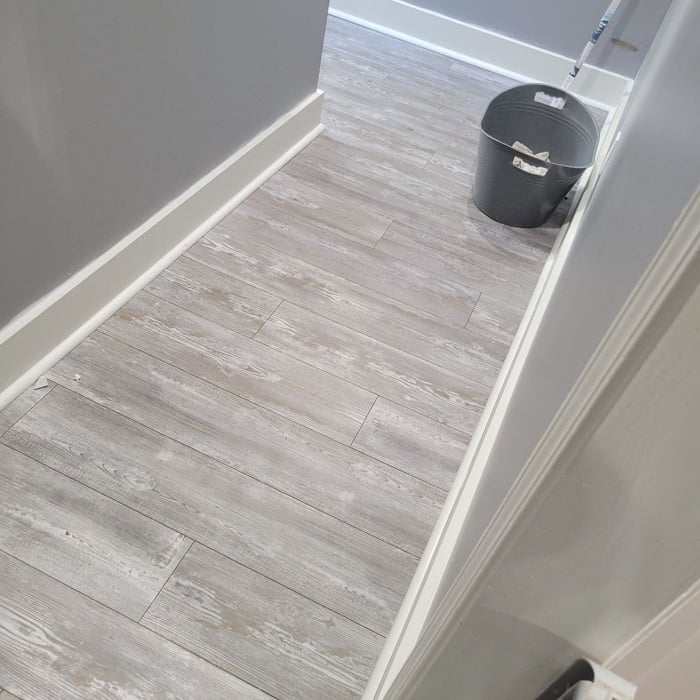


"Tiled a side porch for me. Very professional and helpful salesperson. Quick estimate within my budget; told me exactly what supplies I needed to purchase; came on time for all scheduled appointments; did a great job with installation and cleaned up all work areas before leaving ! All persons I dealt with were most kind and courteous. Fran Woods"
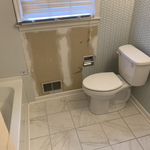
"I am extremely pleased with the tile work in my bathroom. The attention to detail is truly remarkable, and the grout lines are absolutely flawless. The team was professional, diligent, and maintained a clean workspace throughout the entire process. If you are seeking a skilled and dependable tile expert, I wholeheartedly recommend Ruva Tile LLC."
We pride ourselves on reliability, communication, integrity and quality work. We are experts in our trade. We look forward to earning your business! Please call directly at 864-323-3534!!
JC Full Flooring Installations is a locally owned and operated business with over 20 years of experience. For any and all types of home projects call us in today.
Grout and caulk are commonly used together, especially in bathrooms. Grout goes between the tiles and keeps them sturdy and in place on the walls or floor. Caulk goes in corners or where two different materials meet (like where the bathtub meets the tile) to create a waterproof seal. However, they are not interchangeable—you shouldn't use caulk to adhere tile and shouldn’t use mortar if you need a waterproof seal.
For best results, you should remove the toilet in a bathroom before removing tile or installing new tile. If you don’t remove the toilet, it will be harder to fully waterproof the tile around the toilet, which could increase the risk of mold growth or plumbing leaks. If you have trouble removing the toilet, hire a plumber to help.
The tile spacing you should use will depend on the tile and where you’re installing it. Choosing the right tile spacers to maintain a consistent gap between your tiles is tricky. Generally, tile spacing shouldn’t be less than 2 millimeters on walls and 3 millimeters on floors because of stress relief requirements. Getting it wrong can result in uneven tiles and early repairs.
No, you don’t technically need a cement backer board for a wall tiling project, but not using it risks disastrous moisture damage. Cement is naturally water-resistant, whereas drywall soaks it in, which can lead to warping or mold growth. Always use a backer board treated with a waterproof membrane for bathrooms and other chronically damp areas to ensure complete tile shower waterproofing.
If you hire a professional to lay tile, you can expect to pay $3 to $15 per square foot for labor. For a 100-square-foot tiling project, that would equal $30 to $150 in labor. These costs may increase if you need extra services (such as tile removal, wall repair, or waterproofing). For example, tile removal costs an additional $2 to $7 per square foot.
The Cross Hill, SC homeowners’ guide to ceramic tile services
From average costs to expert advice, get all the answers you need to get your job done.
Whether it’s on your floor, walls, or shower, ceramic tile can add style to your space. So, how much does ceramic tile installation cost? Let’s break it down.
Ceramic tile as a flooring option boasts a long list of advantages over other surfaces. However, there are also some key drawbacks worth considering. We’ve rounded up both the pros and the cons of ceramic tile into a helpful list.
You don’t always need a pro for ceramic tile installation. Follow these seven simple steps to transform the floor of any room in your home into the perfect space.
Renovating your bathroom? From classic chic to contemporary cool, we’ve got the lowdown on the best tile for shower walls and the greatest shower floor tiles.
Looking for new bathroom tile to freshen up your space? Use this guide to find the best tile for your bathroom floor for appearance, longevity, and durability.