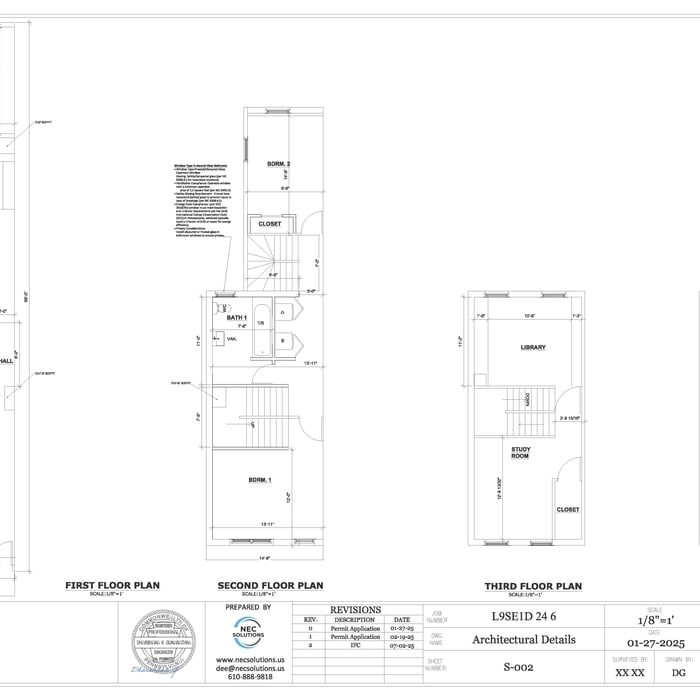




Top-rated structural engineers.

Get matched with top structural engineers in Scenery Hill, PA

Enter your zip and get matched with up to 5 pros

Need a pro for your structural engineering project in Scenery Hill, PA?

Select your specific project to find the pro for you.

Find Structural engineers in Scenery Hill

Avatar for NEC Solutions, LLC
NEC Solutions, LLC
5.0(
14
)

Serving Scenery Hill, PA and surrounding areas

In business since 2015

Free estimates

Emergency services offered

"Dee is a solid guy and excellent engineer. My project required him to design and create the engineering specs to navigate our town's permitting process. His thoroughness exceeded my expectations. I recommend and trust Dee on any future project."
Swimming Pool permit
E&S Detail
Proposed Design
Electric Plan

+10

Response time7 hrs
Recommended by54%of homeowners
Gerhart Engineering Company
4.0(
162
)

Serving Scenery Hill, PA and surrounding areas

In business since 1988

Free estimates

"Tim, is extremely Knowledgeable in his field. He showed up on time and he was pleasant and nice to work with. Tim put together drawings for a retainer wall I had built. I was very pleased with the drawing. He certified the drawing and signed off. Tim, thanks a lot. I highly recommend Tim if you need an experience Engineer that deals with retainer walls. Wanda. Langhorne, PA -Residence Customer."
Zhang Retaining wall in Sewickley, PA
 Custom drillrig@Wallanpaupack Dam
 D4 drilling for 100 kip anchor
 Installing residential seepage bed
 Tolans drill rig for extinguishing mine fire

+23

Recommended by91%of homeowners
Ed Brenkus
4.1(
57
)

Serving Scenery Hill, PA and surrounding areas

In business since 1992

"Ed responded to our request for a structural engineer consult very quickly, and was able to come out and give us a consult within 2 hours (and on a Saturday). His assessment of the detached garage walls of a home we are about to buy provided both us and the sellers much more peace of mind in moving forward with the deal; he provided options that would likely be more permanent (which is what we wanted) and cost less to repair, and represented the objective opinion we needed. All the contractors we had talked to were just confusing and upsetting us with differing recommendations and cost estimates. We highly recommend Ed Brenkus..."
Recommended by19%of homeowners
Structural Engineering questions, answered by experts

If you intend to do the majority of the work yourself, you can pay to hire an architect or a structural engineer to ensure your home remains structurally sound. They can help with the planning to make sure everything is up to code and safe for your family. On the other hand, if you’re not sure your home will be completely safe when you’ve completed the project, let a pro do the job.

Foundation cracks that are 1/8 inch wide or less, aren’t uneven across the gap, and don’t continue widening over time are usually just normal settling cracks and don’t suggest structural issues. Horizontal cracks and stair-step cracks on foundation walls, any cracks that continue widening, are wider than 1/8 inch, or where one side juts out beyond the other, are often indicative of structural damage.

Water can seep into porous materials like wood beams, floor joists, and roof rafters within minutes, but they’ll need to see prolonged exposure before you have structural damage. Mold can start growing within 24 hours, and mold can eat away at the structural components over time. Wood rot is more of a concern, though. Wet and dry rot are fungal infections that set in in moist conditions and rapidly deteriorate wood, causing major structural damage within just a few months in some cases.

According to the Earthquake Country Alliance—a public and private alliance in California that works to improve earthquake and tsunami readiness—reports that unreinforced masonry, such as stone, bricks, and hollow clay tiles, is more susceptible to earthquake damage. The mortar between bricks isn’t as stable as other building materials and methods.

A freestanding brick wall that's only one brick thick can usually stand six to eight feet high. If you need a higher wall, it should be at least two bricks thick for adequate stability, and it might require a footing to support the added weight. Additionally, some areas have regulations and codes dictating how high a brick wall can be, so check with local code enforcers to ensure your proposed wall complies with any regulations.

The Scenery Hill, PA homeowners’ guide to structural engineering services

From average costs to expert advice, get all the answers you need to get your job done.

What do you need done? We’ll find top pros.
  • 🌱 "Mow a small front yard"
  • 🛠 "Fix a leaking pipe under the sink"
  • 🏠 "Repair shingles on an asphalt roof"