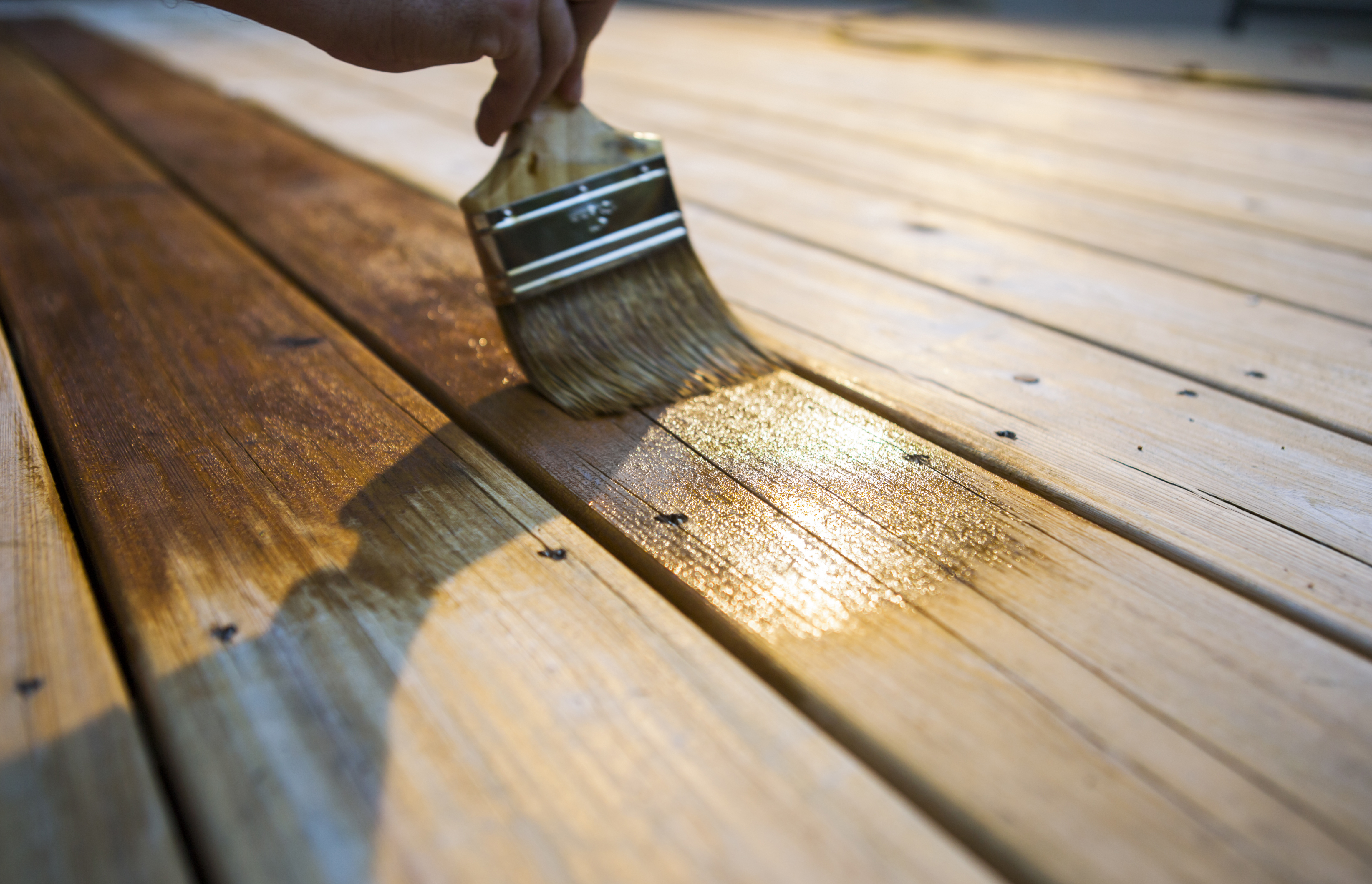
"We weren't that happy with the results. It was a few years ago, and the surface is still pretty much intact. He had to use a primer and deck paint, rather than stain, and the primer showed through in several places as bright white marks against the dark brown stain. He left the extra paint so we could refinish where we wanted. We don't want or expect any follow up at this time. I understand that the deck needed a lot more work than the worker expected. So, my experience may not be a fair representation of this particular contractor. "
No, you don't need to stain Ipe decking, although you can if you want to change the color. You will, however, need to apply a UV coating if you don't want the natural color to fade. Speak to a deck staining specialist near you to discuss the best options if you want to stain your decking. And remember that you’ll need to seal your Ipe wood deck annually to protect it from scratches and Mother Nature.
Before installing a new railing, check the condition of the deck frame and joists, especially around the perimeter where posts attach. If boards are loose, soft, or show signs of rot, the structure may need repair. A deck pro can inspect your framing to confirm it meets load-bearing requirements.
PVC decking might be long-lasting, but this synthetic material lacks the natural aesthetic or sustainability of wood decking. If you want to match your decking to your new garden furniture or just freshen up the faded surface, it’s not usually possible to paint PVC decking. When comparing PVC to composite decking, PVC is pricier and more prone to warping in hot regions.
Be careful when choosing a product to help you remove ice from your wood deck. Never use sand, gravel, or salt, since these items can damage and scratch the wood. Instead, look for chemical de-icers that are marked as safe for wood decks or use hot water to melt snow and ice.
Yes, deck pier blocks can be used as an alternative to traditional deck footings, particularly for small or low-to-the-ground decks. Unlike poured concrete and buried post footings, deck blocks don’t require digging or pouring. However, their use is regulated by local building codes, and they may not be permitted in areas prone to high winds, earthquakes, or hurricanes. Always consult your local building codes before choosing them for your deck project.
The Mount Vernon, OR homeowners’ guide to deck maintenance services
From average costs to expert advice, get all the answers you need to get your job done.
The cost to paint a pool deck depends on the dimensions and material, the type of paint, and whether you DIY. Read on to help determine a project budget.
Discover steel deck framing costs, including material, labor, and installation factors. Learn how to budget and choose the best option for your home project.
Deck maintenance is vital to protecting a wooden deck. Cleaning, staining and sealing a deck after pressure washing will add years to its lifespan. Protect a deck by following these deck maintenance tips for cedar and other types of wood materials.
Finding maintenance-free decking that works for your home, budget, and lifestyle can be challenging. This guide lists the 7 best low-maintenance deck materials.