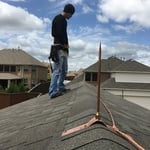
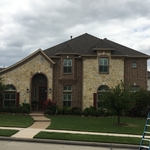
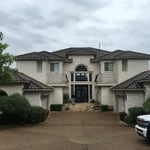
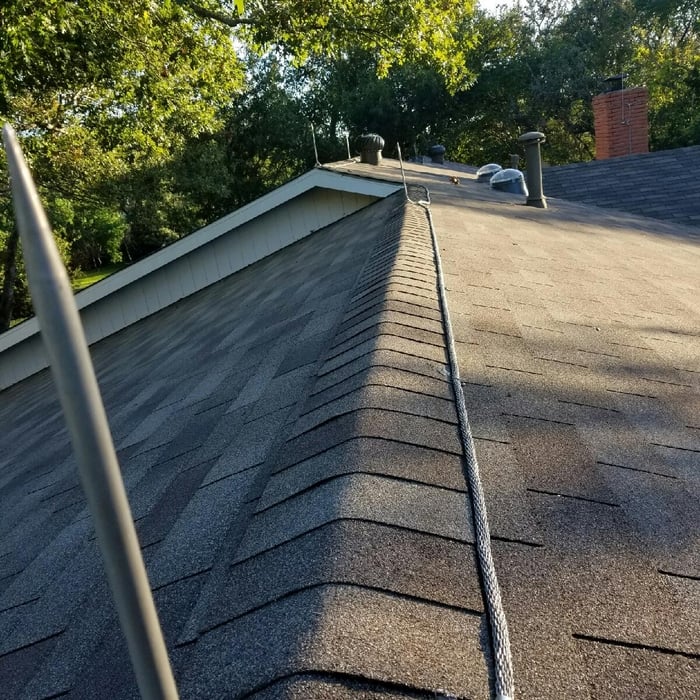
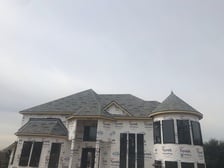
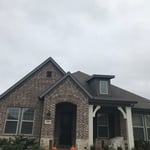
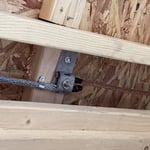
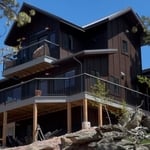
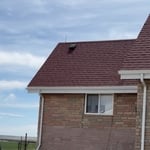
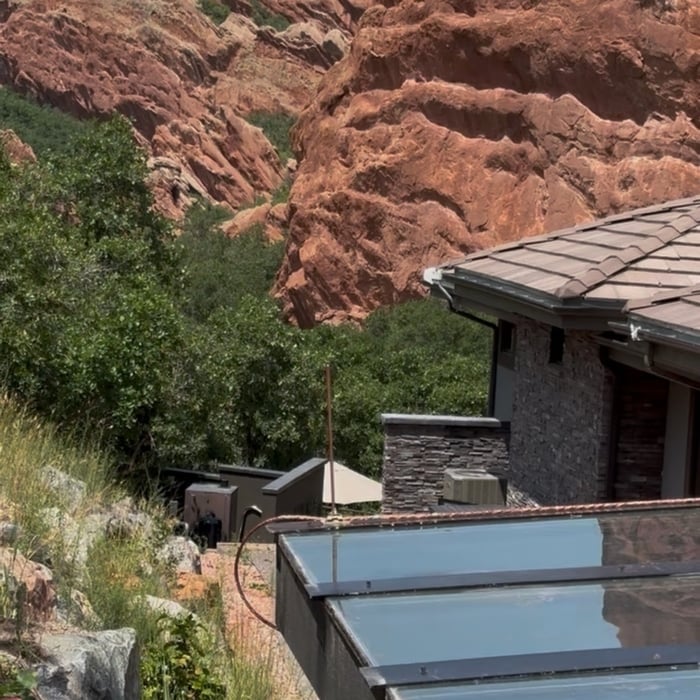
J Corrigan Lightning Rods Has been in business for over 50 plus years. We specialize in all your lighting rod needs. We also provide high quality customer service. We do service in the states of Texas, Colorado, Louisiana, Oklahoma, Mississippi and Alabama. Please give us a call today.
The modern suburban and small town home of today has become an ideal lightning target. The home owner would do well to recognize lightning for the destructive force that it is and protect against this major life and fire hazard.\n\nDonohue's Lightning Rods is based in Missouri, near the factory where most of the residential and commercial lightning rod supplies are manufactured. Jim travels regularly to Texas, Louisiana, Arkansas, Missouri, Kansas, Montana, Wyoming, Colorado, and New York. Call today to find out when Jim will be in your area. For installations outside Missouri, Kansas, or Texas, Jim waits until there are a few customers lined up, thus being able to provide the same quality services at affordable prices.\n\n\n**WE DO NOT DO ELECTRICAL SERVICES.** (ONLY LIGHTNING RODS)
Certified Lightning Protection, Inc., is a dedicated team of lightning protection and grounding specialist with over 40 years experience servicing the Texas/ Oklahoma region. Our team strives to combine the most advanced technology with unparalleled customer service. Give us a call today, we look forward to working with you!
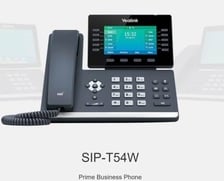
Our Company provides a one-stop solution for all of your voice, internet, and telecom needs. Leveraging the Cloud we provide your Office state-of-the-art telephones for little or no upfront cost striving to keep your monthly costs the same. Sound too good to be true? Give us a call and we will show you how.
Western Star Lightning Protection is a leading lightning protection and lightning rod installation company that services all western states. As members of NFPA, we only use UL-listed materials. We have the experience and expertise to install lightning protection systems that meets the highest safety standards. Contact us for quotation and you will find that prices are truly affordable. We take great pride in our experience, expertise, quality, and customer service that we provide to meet the consumer's needs. It is our mission to provide excellent workmanship and complete customer satisfaction from start to completion of a project. In order to understand the needs and expectations of our customers, we take great care to work and communicate with every customer in a professional manner. Our reputation is based on service, safety, and quality, regardless of how large or small the job.
Hi, my name is Blake Smith. I’ve been doing electrical work for the last 5 years doing service or new construction so I’m very well versed in all aspects of my field
Summit Electrical Solutions is a Native American-owned and operated business in Southern Oklahoma, providing high-quality electricians with high-quality solutions. We are in the business of serving our customers.
We are committed to excellence every aspect of our business. We uphold a standard of integrity bound by fairness, honesty, and personal responsibility. Our distinction is the quality of service we bring to our customers. Accurate knowledge of our trade combined with ability is what makes us true professionals. Above all, we are watchful of our customer's interests and make their concerns the basis of our business.
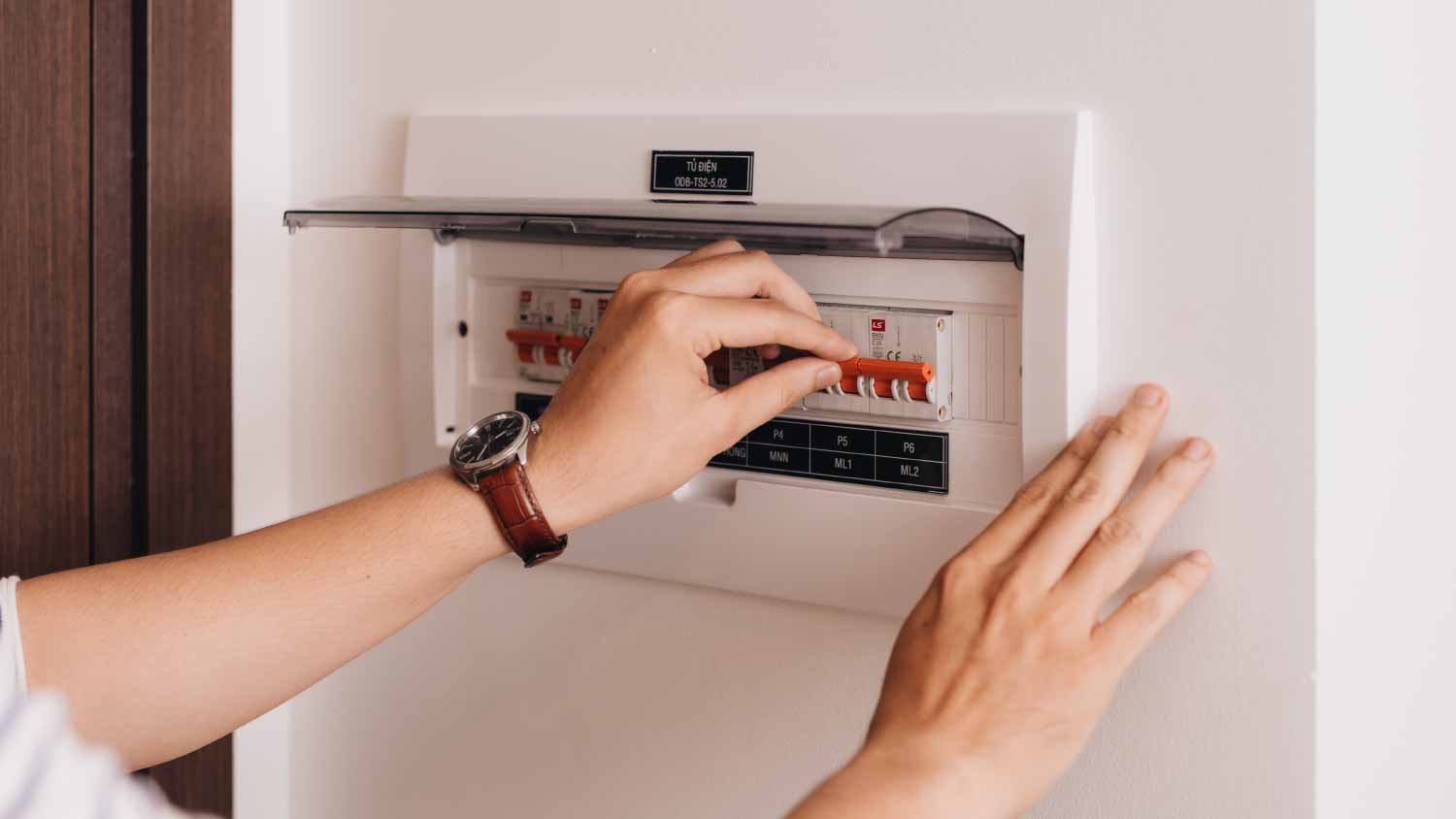
You should install a 25-amp breaker for your outdoor electrical outlet. If your outlet is only for use in an outdoor kitchen area for standard appliances, then a 15- to 20-amp circuit breaker should work. However, you will need to install a GFCI receptacle or breaker to ensure that the breaker trips on contact with water.
The total cost to install a 120V outlet will depend on the type of outlet you choose, labor costs, and any customizations. Standard 120 volt outlets usually cost $3 to $5 each. But say, for example, you customize your 120V outlets with USB ports, you’ll end up paying a bit more at $13 to $22 per outlet. When it’s all said and done, you can expect to pay around $175 for each new 120V outlet and $125 each for replacement.
The standard voltage for United States power outlets isn’t shared around the world, and neither is the shape of the power connector. This is why you need travel adapters when spending time abroad. Where the United States typically uses 110/120V outlets, outlets in Europe typically use 220/240V. Power outlets can vary in other ways around the world, too. Not everyone uses the 60Hz frequency, for example, and not everyone even uses AC power in outlets. Always do your research when traveling to see what you need.
GFCI stands for Ground Fault Circuit Interrupter, a standard safety addition to home power outlets. In rooms where moisture is more likely, like the bathroom and kitchen, GFCI outlets stop the current when certain kinds of shorts are detected, preventing shocks. Both GFCI and the similar AFCI (Arc Fault Circuit Interrupter) outlets are polarized and have clear indicators on the receptacle where hot wiring should go.
Electric water heaters use a high amount of electricity, so they’re best for homeowners who subsidize their electric bill with solar or who live in an area with inexpensive electricity. For others, gas water heaters versus electric water heaters may be the more cost-effective solution, with the added bonus of heating water quickly and efficiently. No matter which you choose, you can lower your water temperature as low as possible to keep costs down.
The Oakland, OK homeowners’ guide to electrical services
From average costs to expert advice, get all the answers you need to get your job done.
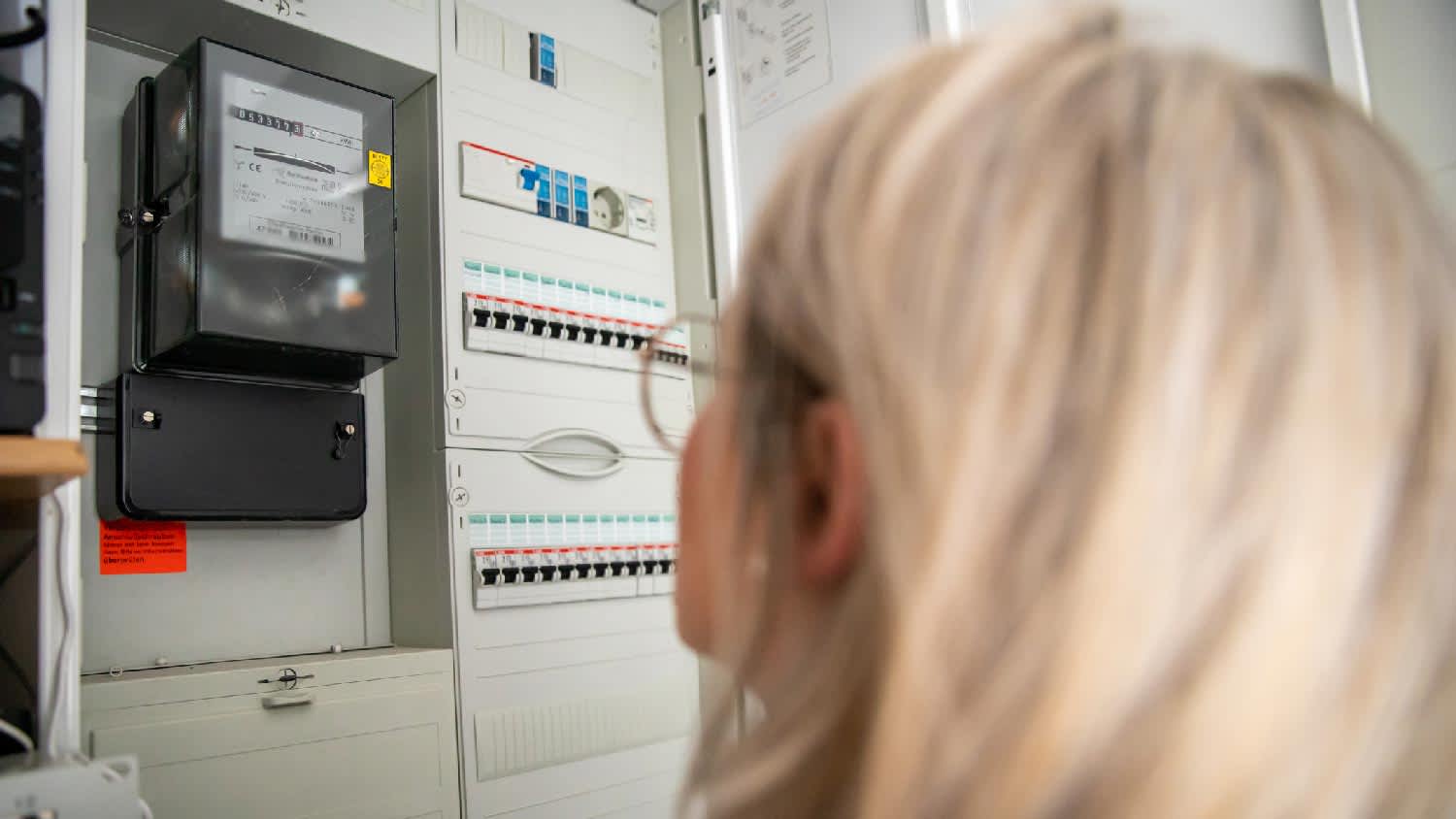
Is it time to upgrade your electrical panel? For the sake of safety, find out sooner than later by exploring our top signs that it’s time for an upgrade.