



Top-rated drywall pros.

Get matched with top drywall pros in Shelby, OH

Enter your zip and get matched with up to 5 pros

Need a pro for your drywall service project in Shelby, OH?

Select your specific project to find the pro for you.

TRUSTED BY SHELBY, OH HOMEOWNERS

  • Average homeowner rating star icon5
    Average homeowner rating
  • Verified reviews icon16
    Verified drywall services reviews

Find Drywall pros in Shelby

Avatar for Precision Drywall Installation & Repair
Precision Drywall Installation & Repair
4.9(
43
)
Drywall - InstallDrywall - RepairDrywall - Install - For Business+1 more

Serving Shelby, OH and surrounding areas

Approved

In business since 2006

Free estimates

Credit card accepted

"Albert did an excellent job repairing our ceiling which had water damage from leak in our air conditioning. He arrived 2 days to complete the plaster job . We are pleased with ceiling which had a pattern. Can't tell any difference in the pattern that he repaired. Would recommend Albert for any plastering or drywall job."
4 neighbors recently requested a quote
Recommended by79%of homeowners
...
Showing 1-10 of 121
Drywall questions, answered by experts

Although they have similar applications, spackle and joint compound are not the same. Their primary differences lie in their composition, consistency, and ideal use cases.

Spackle is composed of gypsum and binding agents, making it thicker than joint compound. It dries quickly and is easy to sand, which makes it ideal for small wall repair projects like filling nail holes or patching minor damage.

Joint compound, also known as drywall mud, consists of limestone and gypsum. It is primarily used for large-scale projects, such as taping and finishing the seams on newly installed drywall. It tends to shrink more than spackle and can be more difficult to spread.

While both products can be used to fill small depressions and cracks, spackle cannot replace joint compound for taping and mudding new drywall. Conversely, you can often use joint compound for small patching jobs typically done with spackle.

The two most common drywall thicknesses for ceilings are 1/2-inch and 5/8-inch. For most standard residential applications, 1/2-inch drywall is sufficient and widely used. It provides adequate support and is lighter and easier to handle during installation compared to thicker sheets. However, 5/8-inch drywall is often used for specific cases where additional benefits are needed. It is heavier but provides superior sound dampening and fire resistance. You should consider using 5/8-inch drywall for ceilings in commercial buildings, between a garage and a living space, or above a finished basement to meet building codes or for enhanced soundproofing.
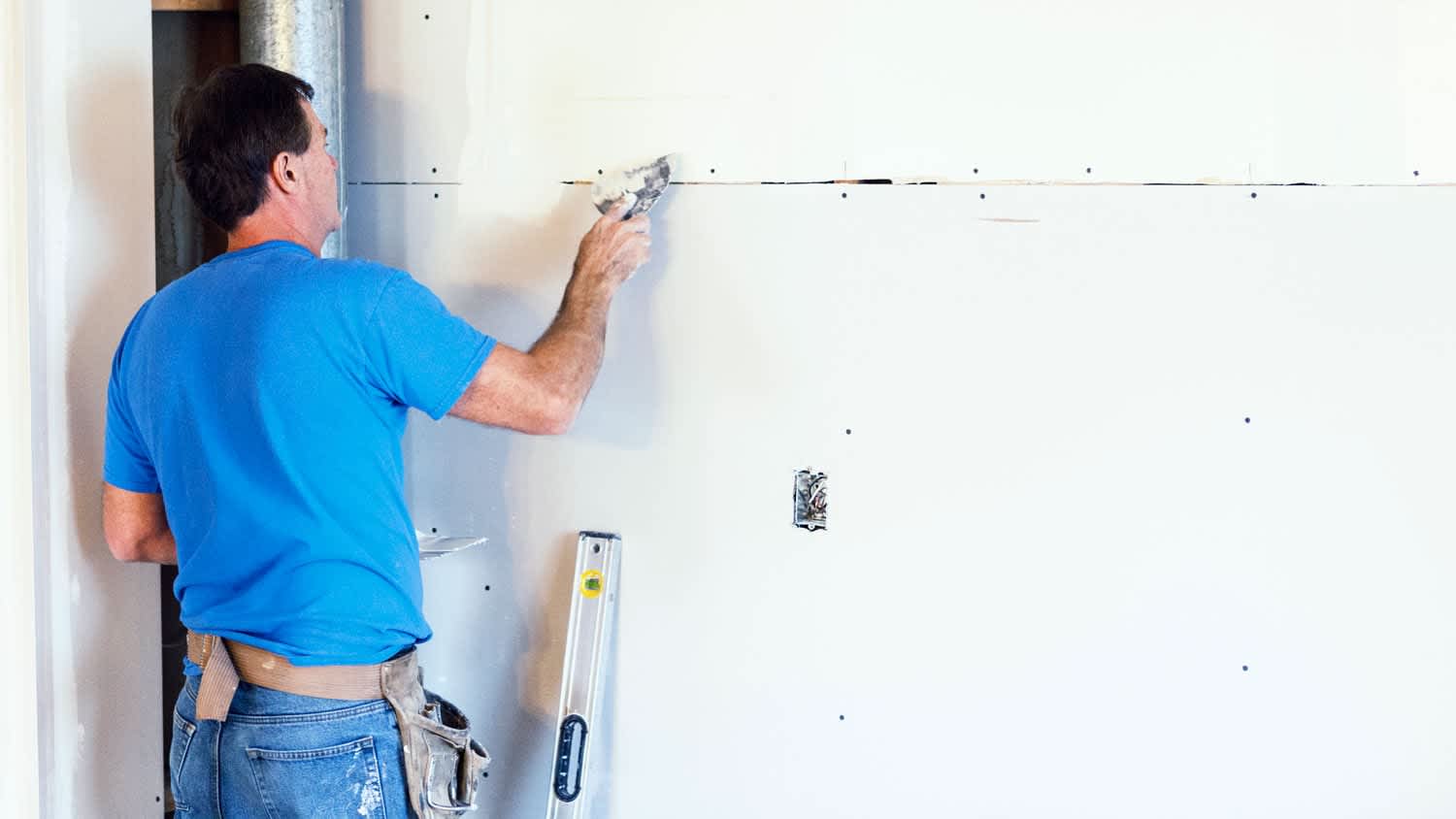
To maintain plaster walls, inspect them regularly for cracks and seal them early. Clean the walls by dusting regularly or using a gentle, damp cloth. It's also important to avoid moisture exposure. Repainting as needed will help maintain the wall's appearance and longevity.

Wall anchors are suitable for drywall and plaster walls, which are common in most homes. However, different wall materials may require specialized anchors. For concrete or masonry walls, you'd typically use concrete anchors. When dealing with other wall types, such as brick or tile, specific anchors designed for those materials may be necessary. Always consult with a hardware specialist or check the manufacturer's recommendations to ensure you select the appropriate anchors for your specific wall type.

The easiest way to cut holes in drywall for electrical boxes is to use a spiral saw with a drywall router bit. Hang the drywall without cutting out a hole for the box, but make sure you measure and mark where the box is located on the wall. Once you screw in the drywall sheet, drill a small hole into the box void, insert the spiral saw bit, and move it around the edge of the box using the inside wall as a guide. You can also use an oscillating multi-tool with an electrical box cutout for fast, professional results.

The Shelby, OH homeowners’ guide to drywall services

From average costs to expert advice, get all the answers you need to get your job done.