

Top-rated excavation pros.

Get matched with top excavation pros in Amherst, OH

Enter your zip and get matched with up to 5 pros

Need a pro for your excavation project in Amherst, OH?

Select your specific project to find the pro for you.

TRUSTED BY AMHERST, OH HOMEOWNERS

  • Average homeowner rating star icon4.9
    Average homeowner rating
  • Verified reviews icon52
    Verified excavation services reviews

Find Excavation pros in Amherst

Avatar for All Out Plumbing & Excavation
All Out Plumbing & Excavation
4.8(
9
)

Serving Amherst, OH and surrounding areas

Approved

In business since 2020

Free estimates

Customers say: Quick response

"Job was done quickly, efficiently, and properly. Would use them again, no doubt about it! The price was very reasonable. The crew was very courteous. My job was the installation of a new hot water tank. I removed and drained the old tank and they not only installed the new tank, but they also removed the old tank without me having to ask them to do that portion of the job. GREAT EXPERIENCE WITH THIS COMPANY!"
Response time1 day
Recommended by77%of homeowners
Avatar for Lunsford Group LLC
Lunsford Group LLC
5.0(
10
)

Serving Amherst, OH and surrounding areas

Approved

Super Service Award Winner

In business since 1996

Free estimates

Emergency services offered

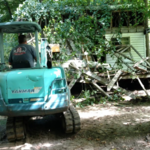
"Tear down and removed garage. They were very efficient and cleaned entire area. Very satisfied with their work. I will definitely hire for more projects."
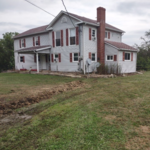
House before chimney removal.
Completed project!
Masonry construction!
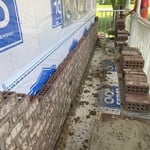
Completed brick veneer!
Needs some contrast!

+4

Response time2 days
3 neighbors recently requested a quote

Recommended by37%of homeowners
Avatar for Lakeside Excavating & Concrete, LLC
Lakeside Excavating & Concrete, LLC
5.0(
1
)

Serving Amherst, OH and surrounding areas

Approved

In business since 2020

Free estimates

Credit card accepted

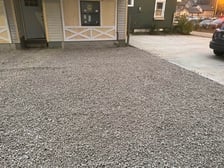
"I had them redo my gravel driveway. They dug out the old stone and dirt since my driveway was flooding. They graded it, brought in new stone, and spread it evenly. He was on time and reasonably priced. I was happy with the final result and would hire him again."
Response time9 hrs
Response rate89%
Recommended by100%of homeowners
...
Showing 1-10 of 132
Excavating questions, answered by experts

Call 811 to locate and mark the gas lines at least three days before digging. In many areas, you can dig within 18 inches of the lines, though in some locations, the distance may be further. Check local regulations, as you may need a utility company representative onsite when digging. Document your calls to 811 and precautions taken to avoid gas lines. A homeowner can be held liable for hitting a gas line in some cases, but contacting the proper authorities and following all guidelines can offer protection.

Most residential basements are 8 to 10 feet deep. You can dig deeper depending on building codes, but it does become more difficult. You’ll likely need to install stronger foundation walls and additional supports to handle the increased load. Depending on the water table, you may also need a water management system. Clay soil can support a deeper foundation than sandy soil. A structural engineer will be able to tell you the maximum, feasible depth.

The cost to drill a well varies, with a national average of around $5,500 for a 150-foot well. However, prices can fluctuate significantly based on several factors, including your location, the required well depth, geological conditions, local regulations, and the specific drilling methods used. For the most accurate cost assessment, it is best to research and get quotes from local well-drilling professionals in your area.

Excavation is priced in cubic yards, so you’ll need to find the volume of the area in order to calculate costs. Multiply the length, width, and proposed depth of your excavation site, then convert it into yards to get the volume. Multiply this figure by the price per cubic yard.

Most homeowners can measure by hand to get a rough estimate, even if it’s tedious. You may want to pull out a tape measure or use a string to help mark the area.

To locate an underground downspout, you should start by identifying where the above ground gutter drains. Look for an entry point, such as a pipe or elbow leading into the ground. Follow the surface path for signs like depressions, landscaping disruptions, or wet areas after rain. You can use a metal detector or plumber’s snake to trace the pipe underground. For deeper pipes, a professional locator tool or camera inspection may be necessary. Visual markers or utility maps can also guide the search.

The Amherst, OH homeowners’ guide to excavation services

From average costs to expert advice, get all the answers you need to get your job done.