
Top-rated tree service pros.

Get matched with top tree service pros in Colton, NY

Enter your zip and get matched with up to 5 pros

Need a pro for your tree service project in Colton, NY?

Select your specific project to find the pro for you.

TRUSTED BY COLTON, NY HOMEOWNERS

  • Average homeowner rating star icon4.8
    Average homeowner rating
  • Verified reviews icon13
    Verified tree services reviews

Find Tree service pros in Colton

Brolex Tree Service
4.3(
7
)
Tree RemovalTree Removal - For BusinessTree Trimming+1 more

Serving Colton, NY and surrounding areas

In business since 2017

Free estimates

Emergency services offered

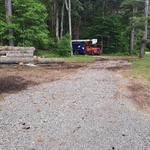
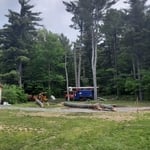
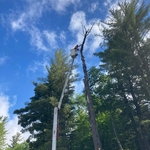
"Very personalized service provided for the removal of 2 downed trees (1 medium sized and 1 very large tree.) Also did lot clearing from private road to water access. Provided before and after pictures and was in constant contact with myself and real estate agent with updates as to the progress of the work. Would definitely recommend to others and will hire hire again in the spring of 2022 for any additional lot clearing, if needed. Hired a family business because customer service is extremely important to me - and Brock Archer and company provided excellent customer service."
Response time2 hrs
Response rate100%
Recommended by71%of homeowners
Millers Tree Service
New to Angi
Tree RemovalTree Removal - For BusinessTree Trimming+1 more

Serving Colton, NY and surrounding areas

In business since 2018

Free estimates

Emergency services offered

Millers Tree Service is committed to excellence in every aspect of our business. We uphold a standard of integrity bound by fairness, honesty, and personal responsibility. Our distinction is the quality of service we bring to our customers. Accurate knowledge of our trade combined with ability is what makes us true professionals. Above all, we are watchful of our customers' interests, and make their concerns the basis of our business.

Showing 1-10 of 37
Tree Service questions, answered by experts

In most cases, you should not use a pruning seal on trees after trimming. Applying a sealant can interfere with the tree's natural healing process, and it does not guarantee protection from pathogens. Instead of sealing the cut, the best practice is to support the tree's natural recovery by providing it with plenty of water and a dormant-style fertilizer. However, there are exceptions. Pruning seals may be recommended for very vulnerable species, like elm trees, in areas where dangerous diseases such as Dutch elm disease are prevalent. In these specific situations, the protection offered by a sealant can outweigh its downsides. For advice tailored to your situation, especially after cutting large branches, it is best to consult a local tree trimming professional.

Pruning is an effective way to prevent a diseased branch from infecting the rest of the tree. If the infection isn’t caught early enough and the pathogen has spread to the trunk or the majority of the branches though, it is too late to prune off the affected areas and you’ll likely need to remove the tree.

It’s not as common for Dutch elm disease to affect other types of trees, especially if the surrounding trees aren’t elms. However, it is possible for DED to spread to other trees, particularly in northern states, like Minnesota. In fact, it’s a good idea to use geography to identify wood and determine which types of trees are in your yard. 

Unfortunately, the complex and shallow root system of elm trees makes surrounding elm trees particularly vulnerable to DED. Early discovery is key!

You can start your search for a reputable arborist online by looking for professionals who hold the proper licensing and are fully insured. Next, read through some online reviews to see what kind of service the expert brings to the table, and confirm that they don’t have a history of complaints with the Better Business Bureau. Finally, you can ask the professional for a list of references and then call them to ask questions about the service, professionalism, value, and more that the expert brings to the table.

In general, trees should be planted no closer than 15 to 20 feet from your foundation. For larger trees with far-reaching roots like maples, oaks, or poplars, a good guide is to plant as many feet from your home as the tree’s height is expected to reach at maturity. Some trees, like elms and willows, should only be planted far from where their roots may encounter sewer or water lines.

The Colton, NY homeowners’ guide to tree services

From average costs to expert advice, get all the answers you need to get your job done.