









Top-rated ceiling fan pros.

Get matched with top ceiling fan pros in Cloudcroft, NM

Enter your zip and get matched with up to 5 pros

Need a pro for your ceiling fan service project in Cloudcroft, NM?

Select your specific project to find the pro for you.
Ceiling Fans questions, answered by experts

Essential tools for ceiling fan installation include a ladder, screwdriver, pliers, wire strippers, and a circuit tester. If the ceiling is angled or features unique configurations, ensure the availability of a compatible mounting bracket.

Fan power is measured by CFM, or cubic feet per minute. For every 1,000 feet of square footage in your attic, you need a minimum of 700 CFM. Steeper roofs may need larger fans or about 840 CFM.  You can figure the size of attic fan you need by multiplying the square footage of your attic floor by 0.7. (multiply by 1.2 for a steep roof and 1.15 for a dark roof). That number is the CFM required for your fan to run efficiently.

There are many types of ceiling fans available, each designed for different spaces and needs. Standard ceiling fans are the most common type and work well in most rooms. Low-profile ceiling fans are better suited for rooms with low ceilings. Smart ceiling fans can be controlled with a smartphone or voice commands. For larger spaces with ceilings between 10 and 25 feet high, large ceiling fans are ideal. Dual-motor fans have two motors to produce more airflow in multiple directions. You can also find energy-efficient or Energy-Star models that can be up to 60% more efficient, as well as fans with built-in lights or retractable blades.

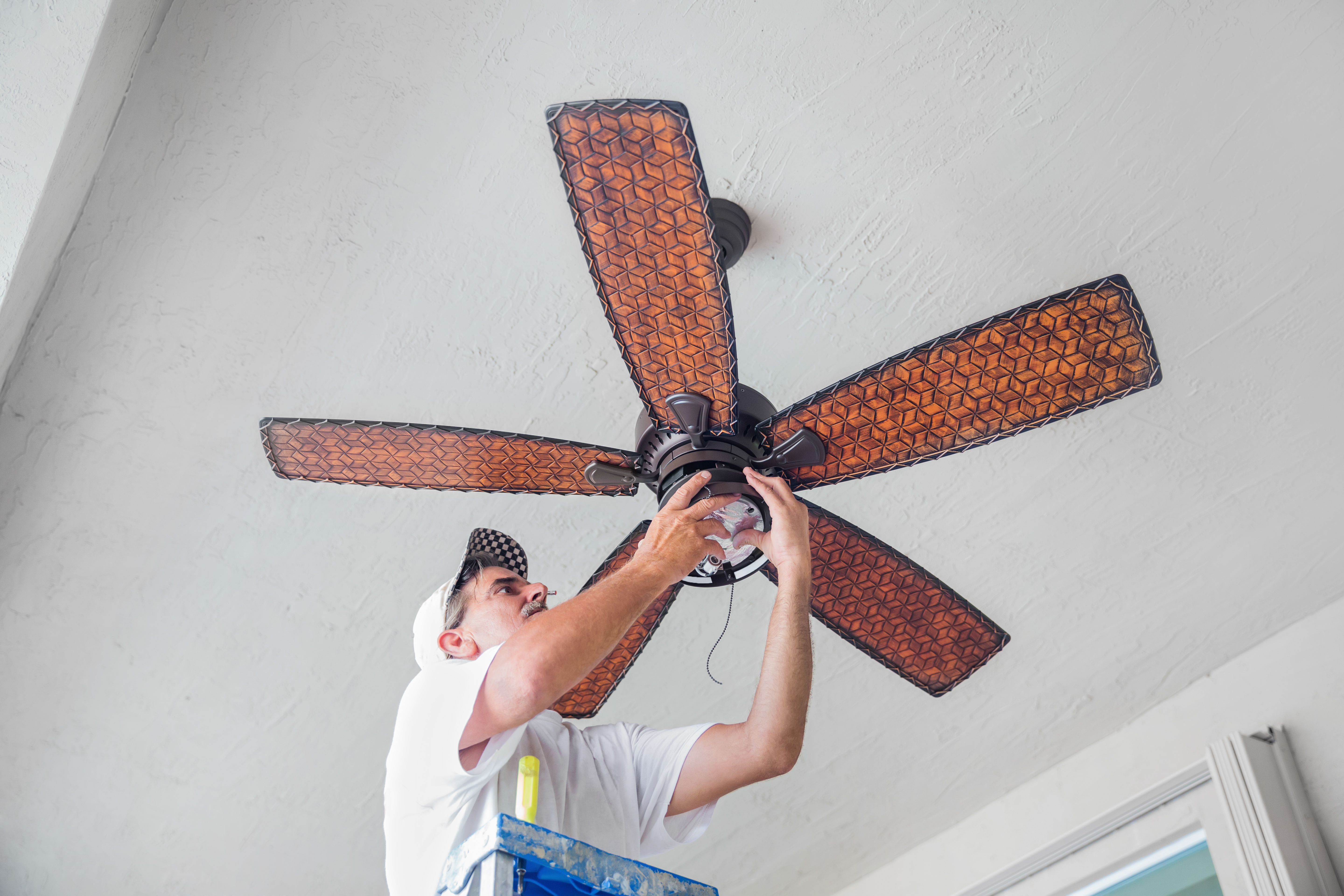
Whether you can install a ceiling fan yourself depends on if you're replacing an existing fixture or installing one where no wiring exists. If you are replacing an existing fan, an experienced DIYer may be able to do the job, which can save on labor costs. This work typically doesn’t require a permit, but there’s always a safety risk when dealing with electrical components, so hiring a pro is still a good idea, especially if you aren't handy. Keep in mind you may need a special ladder for high or vaulted ceilings. However, if you are installing a new ceiling fan where there is no current fixture, you must hire a licensed electrician. In most areas, it is required by law that a professional runs new wiring and pulls the necessary permits. Attempting to install wiring yourself can be dangerous and a code violation.

There are several telltale signs to let you know that your ceiling fan needs servicing or replacement. For instance, if it’s wobbling, rotating too slowly, or if your ceiling fan is making noise such as squeaks, buzzes, and thumps, it’s time to have it looked at by a professional. Not only may it indicate a potential problem with the fan itself, but it could also signal a red flag that it’s improperly assembled or there’s an issue with the wiring.