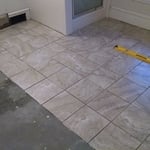
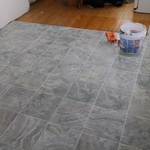
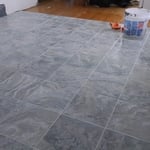
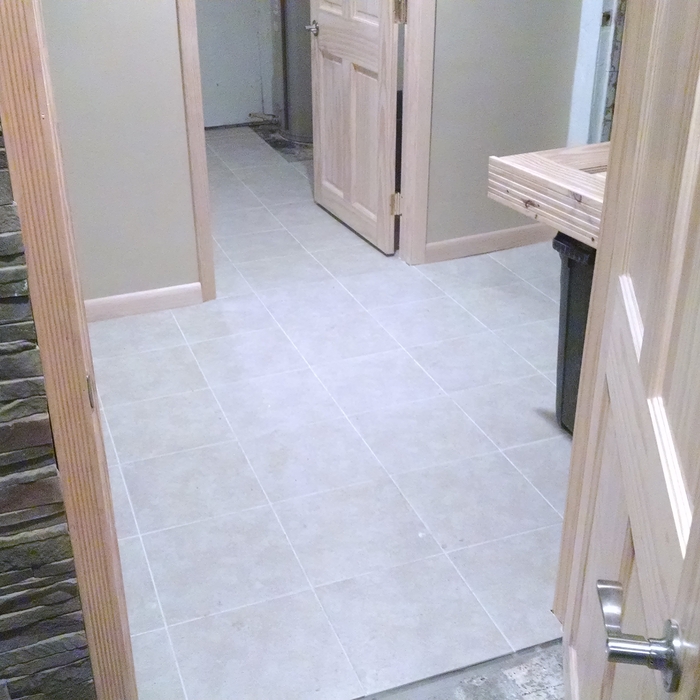
"Very conscientious and personable. He doesn't charge you by the hour so you get good value for your money. He is an excellent installer and I give him a 5 star rating."
701 Tile Setters specializes in any and all tile work. We handle both residential and commercial, working with both stone and granite. We look forward to earning your business!
At Shaina Rutherford Flooring & Design, we are your premier choice for all your tile work. We have provided high quality work and friendly customer service with several years experience. Call today!
You generally cannot change the color of the natural stone, such as making granite countertops darker or lighter. Some people claim that certain chemicals will lighten or darken granite, but those will damage the stone and not provide uniform, expected results, so it’s better not to try. Similarly, some people ask whether they can stain over granite. Granite is beloved for its stain-resistant finish, so you probably won’t get the best outcome if you try to stain over granite to make it darker.
Instead, consider honing, painting, or applying another material over the top of the granite to make it appear darker.
While caulking is handy for quite a bit of jobs, it’s still limited. Any crack or gap larger than 1/4 inch is best left for a more intensive repair job. When you hire house painters, they should run a thorough check to see what they need to repair before they start the job.
Large repairs that caulking typically won’t do well with include cracks or holes larger than a 1/4 inch, rotted wood, or metal surfaces, such as garage doors.
To properly maintain natural stone surfaces, use pH-neutral cleaners for regular cleaning and avoid acidic substances that can cause damage or etching. It is also important to reseal the surfaces periodically, especially for porous stones, to protect the finish, maintain appearance, and ensure longevity.
The cost of stone restoration typically ranges from $5 to $10 per square foot. The final price depends on several factors, including the type of stone, the extent of the damage, the level of polish required, and the labor intensity of the job.
The frequency for sealing granite countertops depends on several factors, including the type of sealant used, the color of the granite, and how heavily the countertops are used. As a general guideline, resealing is often recommended every 12 to 18 months, but some sources suggest it could be as often as every few months or at least once a year.
The type of sealant is a major factor: water-based sealants may need reapplication every six months to a year, while more durable solvent-based sealants can last for five to 10 years. Additionally, factors like heavy kitchen traffic, frequent use of acidic cleaners, and lighter granite colors may require more frequent sealing to prevent staining.
To determine if your countertops need resealing, you can perform a simple water test. Place a few drops of water or a wet paper towel on an inconspicuous area of the granite. After 10 to 15 minutes, check the spot. If the water has beaded up, the seal is still intact. If the water has been absorbed and darkened the stone, it's time to apply a new coat of sealant. You can choose to seal the granite yourself or hire a professional to ensure it's done correctly.
The Walhalla, ND homeowners’ guide to granite restoration services
From average costs to expert advice, get all the answers you need to get your job done.
Countertop repair costs may be the deciding factor between replacing or repairing your counter. Let’s break down the cost to repair, resurface, or relaminate.
Granite countertops last 15 to 100 years based on usage and maintenance. Here’s how long your granite countertops will last and ways to increase their lifespan.
Granite countertops need a sealant to prevent staining and other lasting damage. Learn how to seal granite countertops to keep them in great shape for longer.