
Top-rated concrete leveling pros.

Best concrete leveling pros near Mount Pleasant, NC

Enter your zip and get matched with up to 5 pros

Need a pro for your concrete leveling project in Mount Pleasant, NC?

Select your specific project to find the pro for you.

Top-Rated Concrete leveling pros in Mount Pleasant - Updated Nov 2026

Avatar for Foundation Doctor
Foundation Doctor
4.7(
30
)
Concrete - Injection Leveling - MudjackingConcrete - Injection Leveling - Mudjacking - For Business

Serving Mount Pleasant, NC and surrounding areas

Approved

In business since 2017

Free estimates

Warranties offered

"We have evaluated foundations prior to repair and specified how the repair should be completed. After repairs are completed, we are often required to go back and verify that they have been completed correctly. We are pleased to say that Foundation Doctor does excellent work and are wonderful to work with."
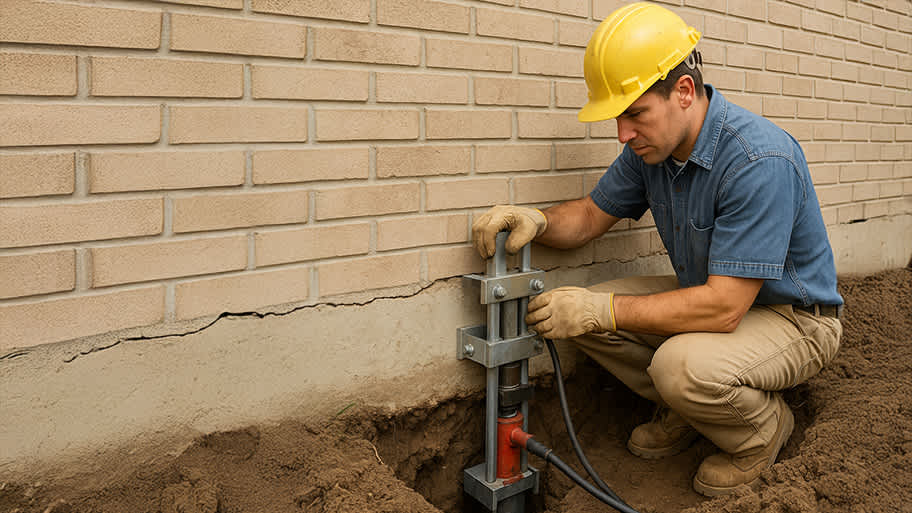
Installing Helical Piers in Charlotte
Meet the Foundation Doctor Team
Response time1 day
53 neighbors recently requested a quote
Recommended by86%of homeowners
A&S Siteworks
New to Angi
Concrete - Injection Leveling - MudjackingConcrete - Injection Leveling - Mudjacking - For Business
Serving Mount Pleasant, NC and surrounding areas

Approved

“My name is Damian Anderson, owner of A&S Siteworks. We provide professional grading, excavation, drainage, and landscape construction services with a strong focus on quality, communication, and detail. We work hard to make projects smooth from start to finish and build long-term relationships with our clients

Avatar for CNT Foundations, LLC
CNT Foundations, LLC
3.9(
67
)
Concrete - Injection Leveling - Mudjacking

Serving Mount Pleasant, NC and surrounding areas

In business since 2004

Free estimates

Warranties offered

"They provided an evaluation and free estimate. I did not need their service, but they were prompt and courteous and provided me with other service recommendations. I would hire them if I ever have foundation needs."
Chimney Repair
Response time1 day
Recommended by81%of homeowners
Showing 1-10 of 40
Concrete Leveling FAQs, answered by experts

The polyurethane used for polyjacking will expand and cure in 15 to 30 minutes. After that point, your slab will be safe to walk on and even drive on in the case of a sidewalk or concrete driveway. Double-check with your concrete lifting specialist to confirm a curing timeline, as products can differ.

Trenching and boring are two distinct methods for installing underground utilities. Trenching involves digging a channel using equipment like an excavator, trencher, backhoe, or shovel. While it is a simpler process, it causes significant disruption to the surface, landscaping, and surrounding ecosystems.

Boring, also known as directional boring, is a less invasive alternative that uses a drill to create a tunnel for utility lines without disturbing the surface. This method is more precise and is ideal for installations that need to go underneath buildings, roads, or bodies of water. Although boring is less disruptive, it is generally more expensive than trenching.

Generally speaking, push piers—or steel piers—are the best option for underpinning, as they reach down to solid bedrock to find support for your foundation rather than relying on soil, which could be subject to the same issues as the soil directly below your foundation. However, the best underpinning method for your home depends on your location, how far down the bedrock is, and the type of soil in your area. Helical piers are usually the best option for sandy soil or in areas where the bedrock is too deep to use steel piers.

Polyjacking can be a permanent solution to sunken concrete if you also address the underlying issue—like poor drainage—at the same time. The polyurethane material itself can last as long as or even outlast the concrete you’re lifting it with. Your sunken concrete issue will likely return if you don’t couple polyjacking with proper drainage to prevent future soil movement and sinking.

A good slump height really depends on the project, but there is a use for nearly all slump levels. For example, low slumps are best in projects that require structure, such as curbs and roads. High slumps often require additional reinforcement, but they flow more freely into hard-to-reach spaces.

The Mount Pleasant, NC homeowners’ guide to concrete leveling services

From average costs to expert advice, get all the answers you need to get your job done.