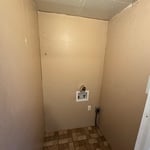
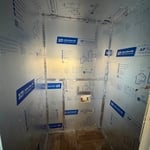
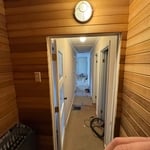
"Petey was very professional, thorough and helpful. Seth and him were very nice and made sure my texture wall was completed to my liking. Thank you so much!!"
"Professional and cost conscious. Very efficient and kept in touch about timeline. Great with communication when doing bid and during project. Highly recommend."
Hi, this is ProTapers! We specialize in high-quality drywall installation and professional taping/finishing. With over 20 years of experience (serving clients since 2003), we take pride in delivering smooth, clean finishes that are ready for paint.\n\nWhether you need new drywall, repairs, or full taping services, we handle jobs of all sizes with attention to detail and reliable turnaround times.\n\n✔ Drywall installation & repair\n✔ Taping, mudding, and finishing\n✔ Smooth, paint-ready results\n✔ Over 20 years of experience\n\nWe’re committed to getting the job done right the first time. Feel free to reach out for a quote or to discuss your project!\n\n— ProTapers
"Great customer service they arrived on SAID time ON time. They didn't leave until the job was completed. I spotted one small flaw but nothing to complain about other than that they did a great job. They cleaned up behind themselves. I had to disposed of all the trash myself but they did put all the trash in bags and sat them outside nice and neat and it was also in the contract that the customer is responsible for disposal of trash. It was not a surprise. This properly why the cost was reasonably priced. I will use them again."
Hello I'm david,\n\nMy whole goal is to help people build or repair the things they can't do alone.\n\nI'm an up and coming contractor with a lot of knowledge and ambition.
Drywall can be toxic to the environment and to humans in some cases. As drywall breaks down in a landfill and comes in contact with other organic chemicals, it can create hydrogen sulfide gas or leach into the groundwater. Additionally, the CDC recommends methods for controlling the inhalation of drywall dust when handled. While the common ingredients of drywall—gypsum, silica, and mica—are naturally occurring, they can cause irritation in some humans.
You can skim coat plaster, but it’s better to repair the plaster itself. A skim coat is a thin coat of drywall joint compound spread over the surface of a wall. The result is a flat finish that looks pleasing, but part of the appeal of plaster is its imperfections and aesthetic. Skim coating is best when limited to drywall applications.
While fumigation chemicals cannot pass through solid objects, they will seep into any openings in walls, doors, or other closed spaces. This allows them to get into tight places where pests may be hiding and causing damage, like termites ruining the foundation of your home. It also means that your home needs to ventilate for 48 hours before returning to ensure that no harmful chemicals remain in your space.
The easiest way to tell if a wall is load bearing is to check if it’s an exterior wall or if it runs perpendicular to the joists above and below it (or parallel to beams). Exterior walls are almost always load-bearing, and walls that run under beams or parallel to them are also usually load-bearing. There are exceptions to these rules, and walls that don’t fit into these categories can still be load-bearing. If you’re unsure, hire a structural engineer to look at your home to assess whether or not the wall is structural.
Although they are used for similar tasks, spackle and joint compound are not the same. Joint compound, also known as drywall mud, consists of limestone and gypsum and is primarily used for large-scale projects like taping and finishing seams on new drywall. Spackle is composed of gypsum and binding agents, making it a thicker compound best suited for small wall repairs like filling nail holes or cracks, as it dries quickly and is easy to sand. For small repairs, either product can be suitable. However, you can use joint compound for small jobs in place of spackle, but you cannot use spackle for large-scale taping and mudding projects.
The Potosi, MO homeowners’ guide to drywall services
From average costs to expert advice, get all the answers you need to get your job done.
Drywall texture can create an attractive finish and add dimension to your home’s walls. This guide breaks down the factors that influence the cost to texture drywall.
Installing drywall is the most common way to finish your home’s interior. Use this drywall installation cost guide to see what your project is likely to cost.
Whether you want to spruce up a few dents and dings or fix a large surface area, investing in drywall repair costs can return your walls to a smooth, flush look.
Understanding the plaster vs. drywall debate is key to giving your home’s walls the perfect finish. Learn more about the pros, cons, and costs with our advice.
The terms drywall and Sheetrock are often used interchangeably, but one is a brand and one is a specific product. Find out which one you need in this guide.
Thick gaps and extra joint compound can alter the look of drywall. So, should drywall be butt up against a wall? Review this guide for seamless installation.