



Top-rated energy efficiency auditors.

Get matched with top energy efficiency auditors in Diamond, MO

Enter your zip and get matched with up to 5 pros

Need a pro for your energy efficiency auditing project in Diamond, MO?

Select your specific project to find the pro for you.

Find Energy efficiency auditors in Diamond

Avatar for Shelby Taylor Trucking
Shelby Taylor Trucking
5.0(
2
)
Energy Audit - For BusinessHome Energy Audit

Serving Diamond, MO and surrounding areas

In business since 2017

Free estimates

Credit card accepted

"I needed inspiration of foundation and roof. The contractor from the other company didn't inspect foundations anymore but Taylor trucking company could do this for us. Turns out they were the company who replaced the roof we have on now several years ago."
Response time2 days
Recommended by100%of homeowners

Tri State Solar Power, LLC
New to Angi
Home Energy Audit

Serving Diamond, MO and surrounding areas

In business since 2019

Free estimates

We take great pride our experience, expertise, quality, and customer service that we provide to meet the consumers' needs. It is our mission to provide excellent workmanship, and complete customer satisfaction from start to completion of a project. order to understand the needs, and expectations of our customers, we take great care to work, and communicate with every customer a professional manner. Our reputation is based on service, safety, and quality, regardless of how large or small the job.

Avatar for Natural State Contracting Group, Inc.
Natural State Contracting Group, Inc.
New to Angi
Home Energy Audit

Serving Diamond, MO and surrounding areas

In business since 2003

We are a locally owned company providing quality service to homebuilders and homeowners in Northwest Arkansas. We pride ourselves on professional and neat installations with only qualified installers performing your work. We strive to meet the specific needs of each homeowner or builder by discussing your home's individual requirements prior to installation. Our work is never finished until you are completely satisfied and happy. \n\nWhether you need new construction installation, remodel or just adding extra insulation for comfort and energy efficiency, you can count on Don Foster's Insulation. Please call us today; we are looking forward to serving you.

Energy Efficiency Auditing questions, answered by experts

Costs depend on the property size, audit complexity, and whether additional testing (e.g., blower door) is included.

Dehumidifiers typically use 300 to 700 watts of electricity per hour, whereas portable dehumidifiers use about 40 watts per hour. The exact amount of electricity your dehumidifier will generate depends on its capacity and energy efficiency. Generally, higher-capacity dehumidifiers generate more electricity than lower-capacity units, but they also usually have better energy efficiency over the long run.

There are a few ways to reduce your electricity bills if you use window AC units to keep cool. Set the unit temperature at least 1 degree higher than it is currently to reduce costs. Keep the unit clean for it to run efficiently. You may want to hire a window AC specialist near you to inspect the unit once a year and keep it in tip-top shape.

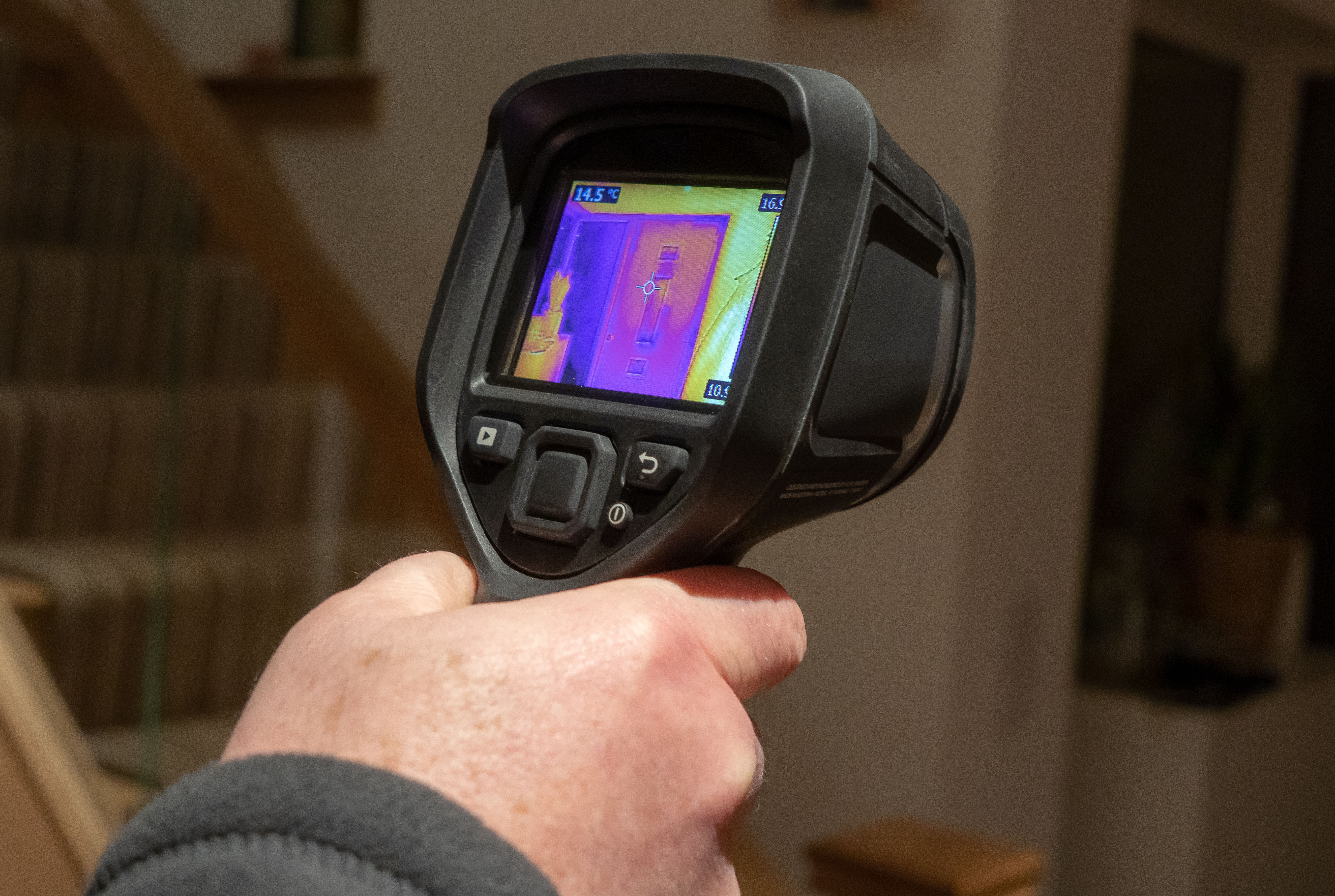
When installing a new furnace, it's a good time to consider other projects that can enhance your home's energy efficiency. A great first step is to get a home energy audit, which will identify areas for improvement. Common recommendations include sealing or replacing windows and adding insulation to the attic. These upgrades can help you save money on monthly utility costs. You might also consider installing a smart thermostat to make heating your home more convenient and efficient.

To determine the right size generator for your house, you should calculate the total wattage of the appliances and devices you want to power during an outage. List all essential items, note their start-up wattages, and add them together.

Here are some typical wattage requirements for common appliances:

  • Refrigerator: 600 watts

  • Large dehumidifier: 700 watts

  • Large window air conditioner: 1,400 watts

  • Water heater: 3,000 to 4,500 watts

  • Electric furnace: 5,000 to 25,000 watts

A 7,500-watt generator might be sufficient for essentials like a refrigerator, freezer, well pump, and lighting circuits. However, for high-demand items like a water heater or furnace, a whole-home generator is a better choice. A portable generator may be enough if you only need to power a few critical items.

While home square footage can offer a rough estimate, it is not always a reliable indicator. For reference, here are some typical generator sizes based on square footage:

  • 1,000 sq ft: 6–9 kW

  • 1,500 sq ft: 7–10 kW

  • 2,000 sq ft: 10–14 kW

  • 2,500 sq ft: 12–16 kW

  • 3,000 sq ft: 16–20 kW+

For the most accurate sizing, consult a professional who can calculate your home's peak and average power consumption and recommend the optimal generator.

The Diamond, MO homeowners’ guide to energy efficiency auditing services

From average costs to expert advice, get all the answers you need to get your job done.