



Top-rated energy efficiency auditors.

Best energy efficiency auditors near Carthage, MO

Enter your zip and get matched with up to 5 pros

Need a pro for your energy efficiency auditing project in Carthage, MO?

Select your specific project to find the pro for you.

Top-Rated Energy efficiency auditors in Carthage - Updated Nov 2026

Avatar for Shelby Taylor Trucking
Shelby Taylor Trucking
5.0(
2
)
Energy Audit - For BusinessHome Energy Audit

Serving Carthage, MO and surrounding areas

In business since 2017

Free estimates

Credit card accepted

"I needed inspiration of foundation and roof. The contractor from the other company didn't inspect foundations anymore but Taylor trucking company could do this for us. Turns out they were the company who replaced the roof we have on now several years ago."
Response time2 days
Recommended by100%of homeowners
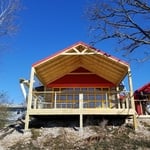
Tri State Solar Power, LLC
New to Angi
Home Energy Audit

Serving Carthage, MO and surrounding areas

In business since 2019

Free estimates

We take great pride our experience, expertise, quality, and customer service that we provide to meet the consumers' needs. It is our mission to provide excellent workmanship, and complete customer satisfaction from start to completion of a project. order to understand the needs, and expectations of our customers, we take great care to work, and communicate with every customer a professional manner. Our reputation is based on service, safety, and quality, regardless of how large or small the job.

Avatar for Natural State Contracting Group, Inc.
Natural State Contracting Group, Inc.
New to Angi
Home Energy Audit

Serving Carthage, MO and surrounding areas

In business since 2003

We are a locally owned company providing quality service to homebuilders and homeowners in Northwest Arkansas. We pride ourselves on professional and neat installations with only qualified installers performing your work. We strive to meet the specific needs of each homeowner or builder by discussing your home's individual requirements prior to installation. Our work is never finished until you are completely satisfied and happy. \n \nWhether you need new construction installation, remodel or just adding extra insulation for comfort and energy efficiency, you can count on Don Foster's Insulation. Please call us today; we are looking forward to serving you.

Energy Efficiency Auditing FAQs, answered by experts

It’s not recommended to turn off your breaker box in hopes of saving electricity. Breaker boxes were not designed to constantly be switched on and off. Therefore, turning off breakers unnecessarily can cause costly damage that outnumbers any energy savings. Only flip your breakers if absolutely necessary when troubleshooting an electrical issue.

String lights require electricity, but not an excessive amount, especially when compared to other lighting fixtures. LED rope lights, for instance, consume around one watt per foot. Running six or seven light strings simultaneously should only cost you around $10 to $15 each month. You can save even more money by remembering to turn off your lights during daylight hours. 

To determine the right size generator for your house, you should calculate the total wattage of the appliances and devices you want to power during an outage. List all essential items, note their start-up wattages, and add them together.

Here are some typical wattage requirements for common appliances:

  • Refrigerator: 600 watts

  • Large dehumidifier: 700 watts

  • Large window air conditioner: 1,400 watts

  • Water heater: 3,000 to 4,500 watts

  • Electric furnace: 5,000 to 25,000 watts

A 7,500-watt generator might be sufficient for essentials like a refrigerator, freezer, well pump, and lighting circuits. However, for high-demand items like a water heater or furnace, a whole-home generator is a better choice. A portable generator may be enough if you only need to power a few critical items.

While home square footage can offer a rough estimate, it is not always a reliable indicator. For reference, here are some typical generator sizes based on square footage:

  • 1,000 sq ft: 6–9 kW

  • 1,500 sq ft: 7–10 kW

  • 2,000 sq ft: 10–14 kW

  • 2,500 sq ft: 12–16 kW

  • 3,000 sq ft: 16–20 kW+

For the most accurate sizing, consult a professional who can calculate your home's peak and average power consumption and recommend the optimal generator.

Wood windows fall in the middle of the window frame materials when it comes to energy efficiency. They’re more insulating than aluminum and vinyl, but they aren’t as efficient as fiberglass or composite frames. If you love the look and lifespan of wood windows and want to maximize efficiency, you can upgrade to double-pane or triple-pane glass and consider window tinting and low-emissivity (low-E) coatings to minimize heat transfer.

After you receive your audit and report, review the findings and determine which of the prescribed changes you want to make to improve your home’s energy efficiency. Start by contacting the type of professionals recommended by the auditor who can help you remedy the issues discovered during the audit. Prioritize the projects by urgency, importance, and budget. Then, gather estimates from several professionals, remembering to verify any necessary licensing and experience information.

The Carthage, MO homeowners’ guide to energy efficiency auditing services

From average costs to expert advice, get all the answers you need to get your job done.