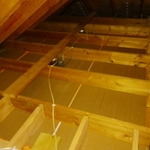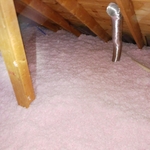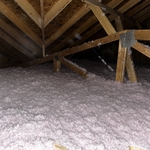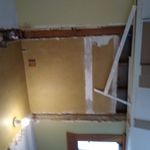


Top-rated drywall insulation pros.

Get matched with top drywall insulation pros in Billings, MO

Enter your zip and get matched with up to 5 pros

Need a pro for your drywall insulation project in Billings, MO?

Select your specific project to find the pro for you.

TRUSTED BY BILLINGS, MO HOMEOWNERS

  • Average homeowner rating star icon4.5
    Average homeowner rating
  • Verified reviews icon35
    Verified drywall insulation services reviews

Find Drywall insulation pros in Billings

Avatar for Affordable Insulation
Affordable Insulation
4.9(
26
)
Blown-In Insulation - Install or Upgrade

Serving Billings, MO and surrounding areas

Approved

In business since 2018

Free estimates

Small jobs welcome

"Two men showed up and they got to work after setting things in place. Will was very plesant and explained what they did. My home is 104 years old and I found out his home was older than mine so I felt he knew the importance of the insulation for my home. I had very minimal in place and he assured me it would be much better now. I appreciated the time spent and the work preformed. I would recommend this company to anyone needing insulation for their home."
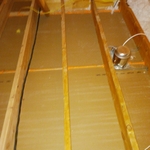
Air sealing process
Air sealing process
Blown in insulation
Blown in insulation
Response time12 hrs
Response rate97%
28 neighbors recently requested a quote
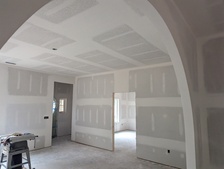
Avatar for Keller's Drywall
Keller's Drywall
4.0(
51
)
Blown-In Insulation - Install or UpgradeInjection Insulation - Install

Serving Billings, MO and surrounding areas

Approved

In business since 2005

Free estimates

Emergency services offered

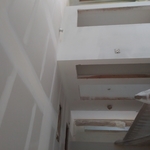
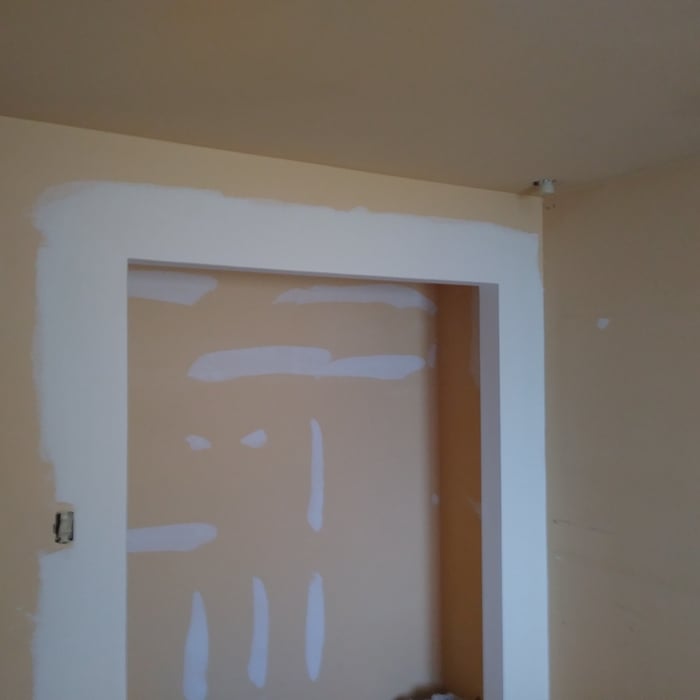
"If you need a drywall guy Dusty is great! Not only did he do a wonderful job with the drywall, he cleaned up after himself. Plus he did an awesome job of matching the stamp pattern finish the rest of the ceiling had!"
Remodel
Patches
After.
Remodel
Closet

+58

Response time1 day
5 neighbors recently requested a quote
Recommended by94%of homeowners
Avatar for Show-Me Energy Solutions LLC
Show-Me Energy Solutions LLC
5.0(
13
)
Blown-In Insulation - Install or Upgrade

Serving Billings, MO and surrounding areas

Approved

In business since 2023

Free estimates

Warranties offered

"Did great work within time given. Kept communication open before, during until project completed. Also gave future recommendation on other issues that need to be address. Very please and satisfied during the process and job completion. Also price was very reasonable. Highly recommend ShowMeEnergy Solution for others that needs crawlspace insulated u won't be disappointed in their workmanship"
Open cell
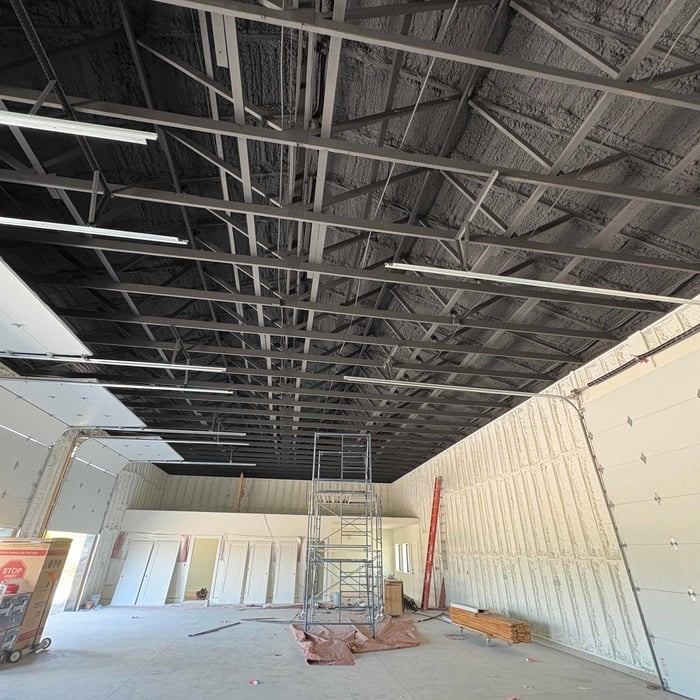
Walls  & Roof deck sprayed
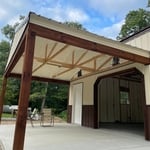
Porch
Response time2 days
Response rate90%
33 neighbors recently requested a quote
iFOAM of Northwest Arkansas
New to Angi
Blown-In Insulation - Install or UpgradeInjection Insulation - Install

Serving Billings, MO and surrounding areas

Approved

In business since 2022

Free estimates

Credit card accepted

We take great pride in our experience, expertise, quality, and customer service that we provide to meet the consumer's custom needs. It is our mission to provide excellent workmanship and complete customer satisfaction from start to completion of a project. In order to understand the needs and expectations of our customers, we take great care to work and communicate with every customer in a professional manner. Our reputation is based on service, safety, and quality, regardless of how large or small the job.

Showing 1-10 of 31
Drywall Insulation questions, answered by experts

A 50-pound mirror can be hung on drywall, but only if it has the support of strong hardware. Ideally, you can find the studs behind the drywall and attach the mirror to them; this will give your mirror better stability. Otherwise, confirm that you are using anchors appropriate to the weight of the mirrors. Another technique is to use French cleats—two pieces of wood that fit together, with one piece attached to the wall and the other to the mirror. This allows the weight to be distributed over a wider area.

Plaster can be a difficult DIY to master, especially if you plan to plaster an entire room, rather than patch a small area. Before you begin a plaster DIY project, you need to know which tools and type of plaster to use. It's also important to know how to prepare the surface and apply the plaster for a smooth finish. If that all sounds like a lot of work, you may prefer hiring a local plaster repair contractor to do the job.

A common cause of separation between a wall and the ceiling is truss lift—this can happen to the ceiling of rooms directly under the attic when the seasons change and wood building materials dry out, shrink, and shift. Roof trusses often dry out at different speeds, and if the bottom pieces dry out faster than the top pieces, they can shrink and pull the attached drywall away from ceilings and walls, causing cracks. Fortunately, truss lift is only a cosmetic problem, not a structural problem, and you can fix it by separating the ceiling drywall from the roof trusses, and patching the cracks.

Knowing what causes drywall damage can help stop it before it starts. Here are some of the most common causes of drywall damage: 

  • Water damage from roof leaks or leaky pipes. 

  • Small holes caused by doorknobs, minor accidents, and rodent infestations. 

  • Wall dents stemming from moving furniture and minor accidents. 

  • Wall cracks that form from a settling foundation or seismic activity. 

  • Nail pops from nails and screws in the walls. 

  • Large holes that are caused by accidents with heavy objects, children and pets, or sporting equipment.

Although they have similar applications, spackle and joint compound are not the same. Their primary differences lie in their composition, consistency, and ideal use cases.

Spackle is composed of gypsum and binding agents, making it thicker than joint compound. It dries quickly and is easy to sand, which makes it ideal for small wall repair projects like filling nail holes or patching minor damage.

Joint compound, also known as drywall mud, consists of limestone and gypsum. It is primarily used for large-scale projects, such as taping and finishing the seams on newly installed drywall. It tends to shrink more than spackle and can be more difficult to spread.

While both products can be used to fill small depressions and cracks, spackle cannot replace joint compound for taping and mudding new drywall. Conversely, you can often use joint compound for small patching jobs typically done with spackle.

The Billings, MO homeowners’ guide to drywall insulation services

From average costs to expert advice, get all the answers you need to get your job done.