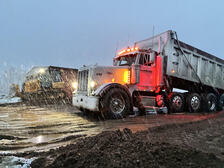
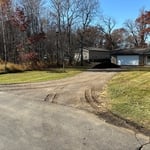
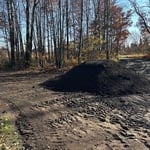
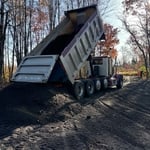
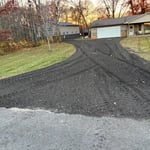
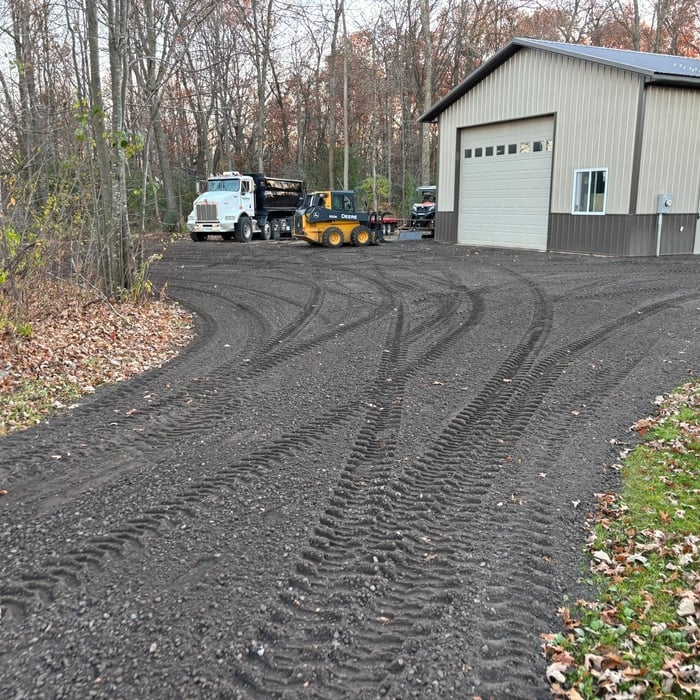
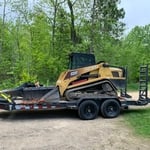
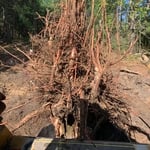
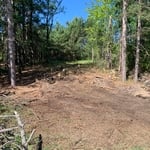
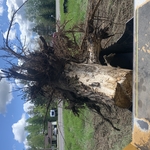
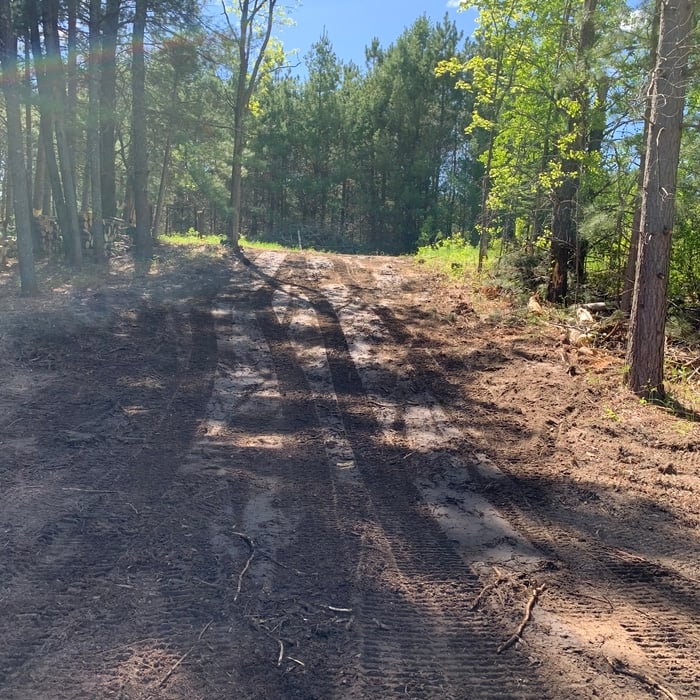
At Budreau Companies LLC, we specialize in precision excavation for residential and commercial projects. From grading and leveling to cutting and filling, our team handles every aspect of site preparation efficiently and safely. Using dozers, skid steers, excavators and laser grading systems, we ensure accurate, consistent results.\nOur commitment to quality, clear communication, and reliability sets us apart. Whether it’s a small residential lot or a large commercial site, we deliver professional workmanship and dependable service every time. With Budreau Companies LLC, your project is prepared right, on time, and on budget.\n\n
We are a husband/wife duo committed to all your junk hauling , cleaning , and organizing needs! We also do land clearing and a bunch more. You can count on us to answer the phone and give you a quality product in a timely manner!
Hello my name is Josh Lombard owner of J and C’s Outdoor services LLC where we can help you with any outdoor needs from concrete, lawn care, spring/fall clean ups, gutter cleaning, landscaping, snow removal! I’ve been in this line of work for about 6-7 years now ranging from residential to commercial from past experience! We mainly focus on residential work at J and C’s Outdoor services LLC. Striving for not only the best quality but the best hospitality as well! If you’d like to receive an estimate or have any questions, don’t hesitate to call!
Were a locally owned and operated company that values honesty and integrity and treats your home as if it were our own. We offer a variety of General Contractor Home Improvement services that are customizable to each individual project. We specialize in Additions and Kitchen Remodels, but also offer a wide range of expertise for a variety of other projects. We pride ourselves on the quality of our work as well as our commitment to outstanding results. We look forward to building lasting relationships and guarantee your satisfaction!
PH Excavating, is the premier excavating company offering excavating services to our clients in the Menahaga Mn area. We are known to pay exquisite attention to detail while making your satisfaction our number one priority.
We are a locally owned and operated company that values honesty and integrity and treats your home as if it were our own. We have many years of experience to give you confidence that we are your number one choice for your next home project. You will find us to be competitively priced with close attention to the details of each and every project that we are involved with. We look forward to building lasting relationships and guarantee your satisfaction!
Shepard Excavating & Septic Service is your number one expert in Laporte! Our passion and experience shine through on every job, big or small. We pride ourselves on attention to detail and building long-lasting business relationships with our clients. Call today for a free estimate!
Gielen Construction Services is the premier professional contracting company offering a wide variety of residential and commercial services to our clients in Cass and Itasca County. We are known to pay exquisite attention to detail while making your satisfaction our number one priority.\nPlease call us today to schedule your appointment with Minnesota's true professionals at work for you! @ 218-244-3234
With several years experience, we work hard to bring each customer the best possible service and quality available. We look forward to working with you on your next project. We welcome your questions and thank you for your interest.
Eden Trails & Excavating, LLC is committed to excellence in every aspect of our business. We uphold a standard of integrity bound by fairness, honesty, and personal responsibility. Our distinction is the quality of service we bring to our customers. Accurate knowledge of our trade combined with ability is what makes us true professionals. Above all, we are watchful of our customers' interests, and make their concerns the basis of our business.
No, you typically cannot use metal detectors to find your sewer line. Most sewer lines are made of non-metallic materials such as PVC, clay, or cast iron, which are not detectable by standard metal detectors. Metal detectors are designed to locate metallic objects, so they won't be effective for identifying the path of a non-metallic sewer line. To locate your sewer line accurately, it's best to use other methods.
As a general rule, the protected area should be about 1½ times as wide as the canopy of the tree’s leaves. This digging measurement can vary by tree species and the age of the tree. Of course, that can be a lot of fencing for larger trees, which is why our first step is about making difficult decisions on which trees to save.
It takes one hour to dig a 10-foot trench by hand. Use a trenching shovel with a sharp tip and a long head. Plan for more time if your soil is heavy or rocky. Consider renting a trencher if you’re digging a long or deep trench or if you have challenging soil or terrain.
Trenching and boring are two distinct methods for installing underground utilities. Trenching involves digging a channel using equipment like an excavator, trencher, backhoe, or shovel. While it is a simpler process, it causes significant disruption to the surface, landscaping, and surrounding ecosystems.
Boring, also known as directional boring, is a less invasive alternative that uses a drill to create a tunnel for utility lines without disturbing the surface. This method is more precise and is ideal for installations that need to go underneath buildings, roads, or bodies of water. Although boring is less disruptive, it is generally more expensive than trenching.
A trench that is less than 5 feet deep often doesn't require a protective system. Most residential trenches will not go this deep (the typical residential drainage trench is just 18 inches deep). In the event that an excavator needs to dig more than 5 feet beneath the surface, a protective system is required unless the excavation is in entirely stable rock.
The Remer, MN homeowners’ guide to excavation services
From average costs to expert advice, get all the answers you need to get your job done.
Excavation costs $1,500 to $6,300 for most residential projects—but it depends on factors like the size of the area. This guide will help you plan a budget.
You can't have an in-ground pool without digging into the ground. How much does pool excavation cost, and can you take it on yourself? Our guide explains.