





Top-rated excavation pros.

Best excavation pros near Park Rapids, MN

Enter your zip and get matched with up to 5 pros

Need a pro for your excavation project in Park Rapids, MN?

Select your specific project to find the pro for you.

Top-Rated Excavation pros in Park Rapids - Updated Nov 2026

Smith Skidsteer & Excavation, LLC
5.0(
14
)
Landscape - Minor Grading or Resloping

Serving Park Rapids, MN and surrounding areas

Approved

In business since 2022

Free estimates

Customers say: True professional

"Caleb and his crew came through and cleaned up all the trees in my front yard, and removed all the limbs of the tree over the house. With his recommendation, I also had some additional limbs removed and and extremely grateful for the speed and fair pricing. Would highly recommend Smith Skidsteer & Excavation. Will do business with them again!"
Response time1 day
Response rate94%
8 neighbors recently requested a quote

Avatar for J & C's Outdoor Services
J & C's Outdoor Services
New to Angi
Landscape - Minor Grading or Resloping

Serving Park Rapids, MN and surrounding areas

Approved

Free estimates

Emergency services offered

Small jobs welcome

Hello my name is Josh Lombard owner of J and C’s Outdoor services LLC where we can help you with any outdoor needs from concrete, lawn care, spring/fall clean ups, gutter cleaning, landscaping, snow removal! I’ve been in this line of work for about 6-7 years now ranging from residential to commercial from past experience! We mainly focus on residential work at J and C’s Outdoor services LLC. Striving for not only the best quality but the best hospitality as well! If you’d like to receive an estimate or have any questions, don’t hesitate to call!

Avatar for J.C.W. Builders, LLC
J.C.W. Builders, LLC
5.0(
2
)
Landscape - Minor Grading or Resloping

Serving Park Rapids, MN and surrounding areas

In business since 2020

Free estimates

Small jobs welcome

We take great pride in our experience, expertise, quality, and customer service that we provide to meet the consumer's needs. It is our mission to provide excellent workmanship and complete customer satisfaction from start to completion of a project. In order to understand the needs and expectations of our customers, we take great care to work and communicate with every customer in a professional manner. Our reputation is based on service, safety, and quality, regardless of how large or small the job. \n

Closet
Closet
Closet
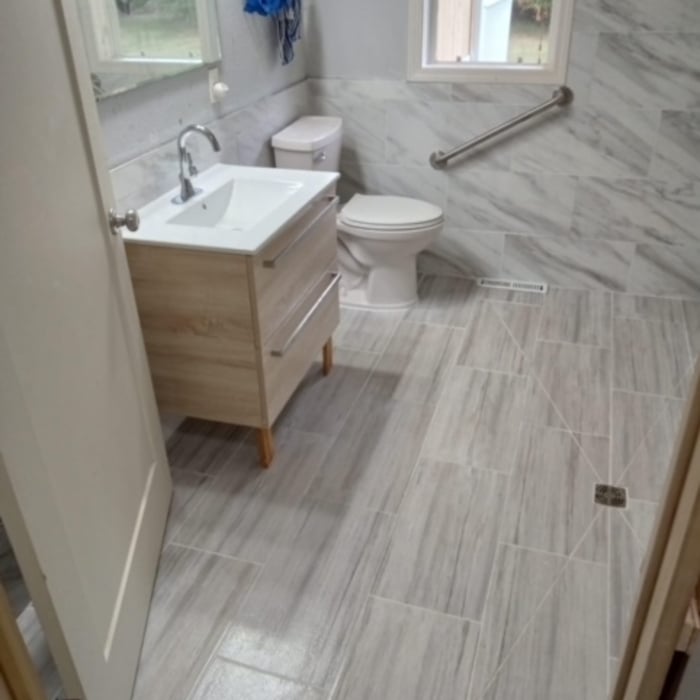
Dereks Bathroom
Bathroom Tile

+22

Response time2 days
Recommended by100%of homeowners
Showing 1-10 of 36
Excavating FAQs, answered by experts

The easier way to find buried sprinkler lines is to use the plan from the professionals who installed the system. If you don’t have professional plans, listen for running water on your lawn when you turn on the system. You may also spot wet areas, giving you an idea of where the heads are. Once you find the sprinkler heads, you’ll likely be able to connect the dots between them, revealing the system below.

Yes, chipmunk holes may have two or more entrances. Chipmunks can create an entire network of burrows. Having multiple entrances makes it easier for them when trying to escape from a predator, such as a snake, or if an entrance collapses due to flooding. Each entrance leads to the nesting chamber underground, which is where the chipmunk spends the majority of its time sleeping.

The digging depth will depend on the size of the trencher you use. Even smaller units can dig up to 4 feet deep, which is plenty for a DIY job. However, much larger trenchers can reach a depth of 18 feet and are better used by a team of pro contractors, not a single DIYer. As with all home improvement projects, use the right tool for the job and proceed with caution.

No, a ditch isn’t a trench. A ditch is an open, relatively shallow channel that’s carved out of the ground and used for drainage purposes. In contrast, a trench is a deeper excavation that’s entirely underground. Trenches have many uses, including gas lines, sewage systems, and electrical wiring. Unlike trenches, ditches don’t get filled back in with dirt after they’re dug.

The best type of soil to build on is a mixture of sand and clay, known as loam soil. Loam soil has the best combination of these soil types to build a foundation on. The clay particles help with water retention, so it won’t erode like sandy soil might, and the sandy particles help with drainage, so you won’t see unsafe soil expansion or have an increased risk of leaks from water sitting against your foundation.

The Park Rapids, MN homeowners’ guide to excavation services

From average costs to expert advice, get all the answers you need to get your job done.