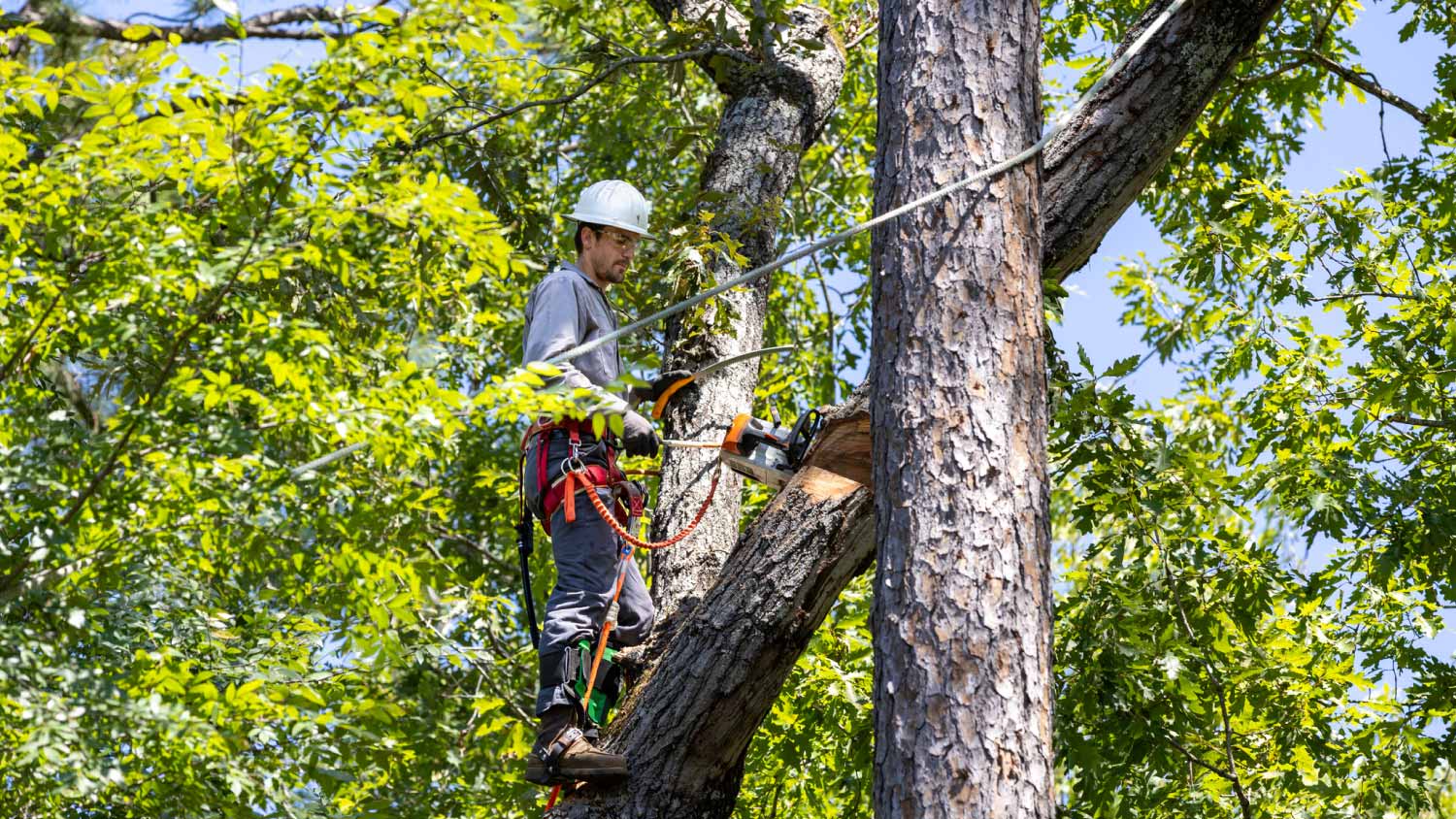







Top-rated arborists.

Get matched with top arborists in Longville, MN

Enter your zip and get matched with up to 5 pros

Need a pro for your arboricultural service project in Longville, MN?

Select your specific project to find the pro for you.

TRUSTED BY LONGVILLE, MN HOMEOWNERS

  • Average homeowner rating star icon5
    Average homeowner rating
  • Verified reviews icon14
    Verified arboricultural services reviews

Find Arborists in Longville

Avatar for Foth's Top Notch Tree Service, LLC
Foth's Top Notch Tree Service, LLC
5.0(
11
)
Tree RemovalTree TrimmingTree Removal - For Business+2 more

Serving Longville, MN and surrounding areas

Approved

In business since 2024

Free estimates

Emergency services offered

"Elliot and his crew did excellent work for us after a big storm, cutting up trees that had fallen across our road and cleaning up nicely before they left - fast, efficient, responsive, flexible and offered fair prices. I will definitely use them again, and recommend them enthusiastically to neighbors! Colin M., Deer River MN"
Response time2 days
Response rate97%
14 neighbors recently requested a quote
Avatar for WakeStar Lawn Service
WakeStar Lawn Service
New to Angi
Tree RemovalTree TrimmingTree Trimming - For Business

Serving Longville, MN and surrounding areas

Approved

In business since 2020

Credit card accepted

We are a locally owned and operated company that values honesty and integrity and treats your home as if it were our own. We offer a variety of quality cleaning and janitorial services. You will find us to be competitively priced with close attention to the details of each and every project that we are involved with. We look forward to building lasting relationships and guarantee your satisfaction!

Response time7 hrs
...
Showing 1-10 of 52
Arborists questions, answered by experts

A tree can grow back from its stump, but full regrowth is unlikely (especially for more stubborn conifer trees). Instead, trees are more likely to send up a number of shoots from the dead stump, which will try to develop into primary stems over time. In other words, it will start to look increasingly bushy. The goal of killing and drying out a tree stump is to prevent that from happening, as well as make the stump easier to completely remove.

A tree growing close to a house can pose several risks, but removal isn't always the only or best solution. Potential problems include roots growing into the foundation and causing structural cracks, branches damaging the roof or promoting moss growth, and debris clogging gutters, which can lead to water damage. Trees can also provide access for pests and encourage mold. However, a small, healthy tree may not be a problem, and for larger, established trees, strategic trimming can be a cheaper and more beneficial alternative to removal. It is generally recommended to take action for trees within 10 to 20 feet of your home, especially if they are unhealthy or encroaching. Your best bet is to consult a professional arborist who can assess the specific situation and provide expert advice.

No, you cannot throw branches from your neighbor’s tree back into their yard, nor can you discard leaves or other plant matter that originated from their yard back over there if it happens to land in your yard. You are responsible for cleaning up plant matter that made its way into your yard.

On average, tree removal costs around $750, with a typical range between $200 and $2,000. The final price depends on several factors, including the tree's height, trunk diameter, species, and overall health. Accessibility is also a key factor; costs will be higher if the tree is in a hard-to-reach area or located near structures like power lines or your home. Additional costs may apply for services such as stump removal (which can add $100 to $150), log-splitting, debris cleanup, and obtaining necessary permits. It is also customary to tip the professional, usually between $20 and $100.

Completely topping a plum tree is a risky business. Cut too much, and you’ll kill your tree. That said, you do need to trim the top of your tree to encourage bushy growth, maintain your tree’s vase shape, and limit size. 

A plum tree's central leader (or trunk) should never extend more than 3 feet above the highest branch. When you first plant your tree, cut the central leader so it’s 2 to 3 feet tall. As it grows, cut it back 12 to 20 inches until it reaches its desired height. Never prune more than one-third of the new growth.

The Longville, MN homeowners’ guide to arboricultural services

From average costs to expert advice, get all the answers you need to get your job done.