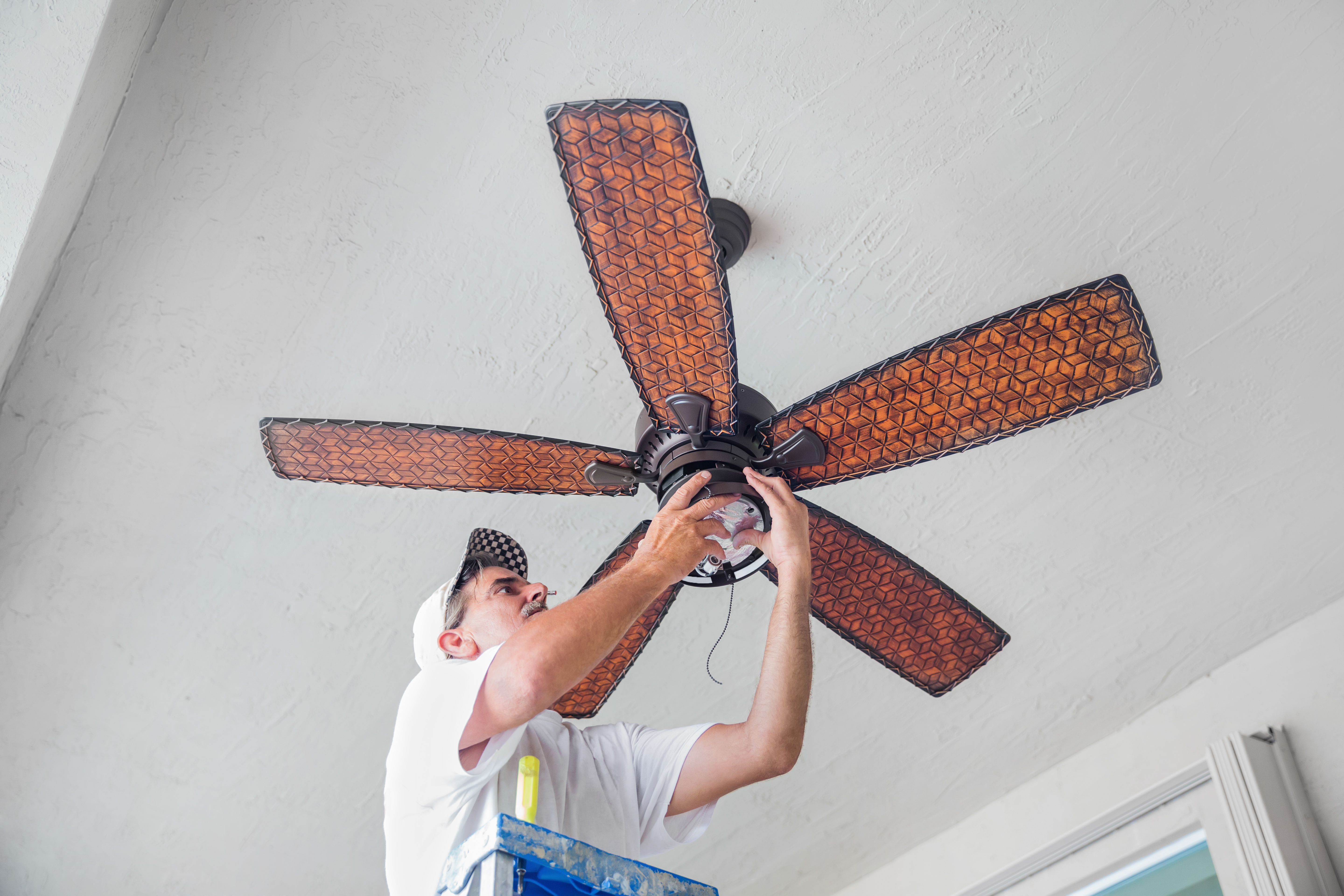






Top-rated ceiling fan pros.

Get matched with top ceiling fan pros in Wheeler, MI

Enter your zip and get matched with up to 5 pros

Need a pro for your ceiling fan service project in Wheeler, MI?

Select your specific project to find the pro for you.

Find Ceiling fan pros in Wheeler

Avatar for American Home Shield – Home Warranty
American Home Shield – Home Warranty
3.5(
5,688
)
Ceiling Fan - InstallCeiling Fan - Repair

Serving Wheeler, MI and surrounding areas

In business since 1971

Credit card accepted

"The furnace took 4 days to get approved( not counting a Sunday) the others were quick but the water heater had to be ordered so without hot water for a week. One ceiling fan was easy but within a year their policy changed and They would not install the one I purchased and had to get a new one approved and then ordered online and took several weeks to get straightened out. Not sure who was at fault, AHS, installer or scheduling with renter. Fee is usually $75 per visit"
Additional Photos
Additional Photos
Additional Photos
Additional Photos
Additional Photos

+2

Recommended by65%of homeowners
Taylor home renovations LLC
New to Angi
Ceiling Fan - InstallCeiling Fan - Repair

Serving Wheeler, MI and surrounding areas

Free estimates

Emergency services offered

Small jobs welcome

Taylor Home Renovations LLC is a locally owned remodeling company serving Lansing and the surrounding areas. We specialize in bathroom and kitchen remodeling, basement finishing, flooring, tile, drywall installation and finishing, painting, trim, siding, and general home repairs. We take pride in clear communication, dependable service, and quality craftsmanship on every project, large or small. Our goal is to provide honest pricing and results that are crafted right and built to last.

Ceiling Fans questions, answered by experts

Stainless steel or aluminum fans are long-lasting and have less air resistance. They are best for outdoor use as their durability helps them withstand unpleasant weather conditions. Their heavy weight requires a stronger motor, which leads to more noise than other blade materials.

Wooden fan blades are a classic, durable option. They are much quieter than metal fans and feature a wide range of styles and finishes to choose from. However, they can be damaged by moisture if not covered with plastic.

Plastic fan blades are lightweight, easy to clean, and versatile. There are various shapes and styles to choose from as plastic is easily molded and dyed. They will also deteriorate slower than other materials as they aren’t as susceptible to humidity and moisture.

If you’re replacing an old fixture with a ceiling fan, you usually won’t need a permit, but if your electrician runs new wiring for the fixture, you likely will need a permit. Building permits are necessary in most municipalities if you’re making changes to your electrical system, so even if you have partial wiring run to the area and need new wiring installed for added functionality, you’ll probably need a permit. Your electrician should be able to let you know if you need one, and they’ll typically file the paperwork for you.

Yes, ceiling fans come with a few other features that help with function, style, and convenience. Multi-speed fans can give you specialized control over the airflow. Consider getting one with an integrated light to save ceiling space. Some ceiling fans come with a remote control that enables you to change direction without climbing a ladder. Of course, you can also consider installing a wall switch to enjoy that convenience.

Yes, you can install a ceiling fan where a standard light fixture is, as the electrical wiring is often similar and may not need to be replaced. The most important step is to ensure the ceiling can support the fan's weight and motion. You will need to replace the existing light fixture's electrical box with a fan-rated electrical box, which is specifically designed to handle the extra weight and vibration. These boxes will be labeled as suitable for ceiling fan support and will indicate the maximum weight they can hold. Before you begin, also consider if you need an extension rod for a high ceiling or a special mount for an angled ceiling.

If you’re removing a ceiling fan without visible screws, start by locating the fan canopy—a round cover placed above the fan blades and motor. There should be a thin ring that can be turned counterclockwise to remove the canopy and reveal the screws. After unscrewing the fan, you can disconnect the wires and remove the entire fan from the mounting hardware. For safety, make sure the fan switch is turned off before you remove the canopy. It may be easier to remove the fan blades first, too.

The Wheeler, MI homeowners’ guide to ceiling fan services

From average costs to expert advice, get all the answers you need to get your job done.