



Top-rated electricians.

Get matched with top electricians in Union City, MI

Enter your zip and get matched with up to 5 pros

Need a pro for your electrical service project in Union City, MI?

Select your specific project to find the pro for you.

TRUSTED BY UNION CITY, MI HOMEOWNERS

  • Average homeowner rating star icon4.4
    Average homeowner rating
  • Verified reviews icon58
    Verified electrical services reviews

Find Electricians in Union City

Avatar for AAB Electric
AAB Electric
4.4(
8
)

Serving Union City, MI and surrounding areas

Approved

In business since 2019

Free estimates

Emergency services offered

"I recently hired AAB Electric for some electrical work, and I am extremely pleased with the results. They installed recessed lights and ceiling fans in my home, and the entire process went smoothly. The team was timely, arriving right on schedule, and very friendly, making the experience even better. The installation was done to my complete satisfaction, and everything looks and works perfectly. I will definitely be using their services again in the future and highly recommend them for any electrical work."
Response time3 days
7 neighbors recently requested a quote

Recommended by85%of homeowners
Avatar for PM Technologies
PM Technologies
5.0(
4
)

Serving Union City, MI and surrounding areas

Approved

In business since 1999

Free estimates

Emergency services offered

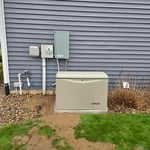
"We just had the generator installed today and are so pleased with the guys from PM Technologies from the electricians, helpers, and Ken the salesman. We couldn't have asked for nicer people to do our job."
Additional Photos
Additional Photos
20KW Kohler
Response time1 day
Response rate95%
45 neighbors recently requested a quote

Avatar for One Point Technology Group LLC
One Point Technology Group LLC
5.0(
2
)

Serving Union City, MI and surrounding areas

Approved

In business since 2017

Credit card accepted

Offers commercial services

One Pont Technology LLC is committed to excellence in every aspect of our business. We uphold a standard of integrity bound by fairness, honesty, and personal responsibility. Our distinction is the quality of service we bring to our customers. Accurate knowledge of our trade combined with ability is what makes us true professionals. Above all, we are watchful of our customers' interests and make their concerns the basis of our business.

Audiovisual
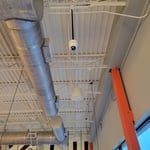
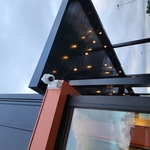
Outdoor Camera
Response time2 hrs
Response rate88%
Recommended by100%of homeowners
Avatar for Brian Rose
Brian Rose
New to Angi

Serving Union City, MI and surrounding areas

Approved

I built an entire barn dominium myself, from electrical, infloor heat system, plumbing, framing, drywall, finishing, shiplap, and trim. I am a 22 year member of Ironworkers local 292, I am an experienced welder/fabricator and have held unlimited thickness structural welding certs for 19 years.

...
Showing 1-10 of 59
Electrical questions, answered by experts

Yes, the majority of appliances that run at 240v will work with a 220v outlet, but will often run slower and may have a slight delay in turning on. This could also cause long term damage to the appliance being used, so it’s recommended to always use the correct voltage for your appliance and upgrade to a 240v outlet if needed.

Yes, pool pumps use a significant amount of electricity, making them one of the biggest energy consumers in a home. A pool pump can use up to three times as much electricity as a refrigerator. Typically, a residential pool pump consumes about 1 kilowatt-hour (kWh) for every hour it runs. Because pumps often need to run for about eight hours a day to properly filter the water, this can add up to an annual consumption of 3,000 to 5,000 kWh, which can cost between $480 and $800 per year based on average electricity rates.

The amount of electricity your pump uses depends on its size, energy efficiency, and daily run time. To lower your energy consumption, you can choose an energy-efficient or variable-speed pump, ensure it is correctly sized for your pool, and run it only for the minimum time required to keep the water clean.

The Occupational Safety and Home Administration (OSHA) requires an electrical panel to have a minimum of three feet (36 inches) of room from the front of the panel to the closest obstacle. In this case, the word obstacle refers to nearly everything, including walls, machines, and other fixed objects. Additionally, panels require at least 6½ feet of headroom in the area directly in front of the fixture. These requirements help ensure safe use of the panel and allow electricians plenty of room to work.

No, technically, the original Federal Pacific (FPE) breakers are no longer available. Stab-Lok® circuit breakers from the now-defunct Federal Pacific Electric Company (FPE) are no longer produced. However, the trademark and manufacture of the Stab-Lok® brand of breakers has been passed through a series of parent and subsidiary companies. Black and gray versions of the circuit breaker have been produced by these companies, with sales rights in the U.S. and Canada shifting back and forth.

How far you can run underground electric depends on the wire gauge (generally AWG) and the circuit voltage. Too much voltage drop in an electrical circuit can negatively affect performance, so the smaller the voltage drop, the better. Ideally, it shouldn't exceed 3%. The smaller the wire and the longer the run, the more significant the voltage drop. 

For example, with a 120-volt circuit, you can run 60 feet of 12 AWG cable without losing more than 3% voltage. With a 240-volt circuit, you can run 120 feet of 12 AWG wire while maintaining a voltage drop of 3% or less.

The Union City, MI homeowners’ guide to electrical services

From average costs to expert advice, get all the answers you need to get your job done.