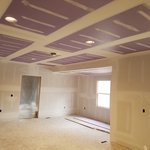
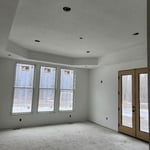
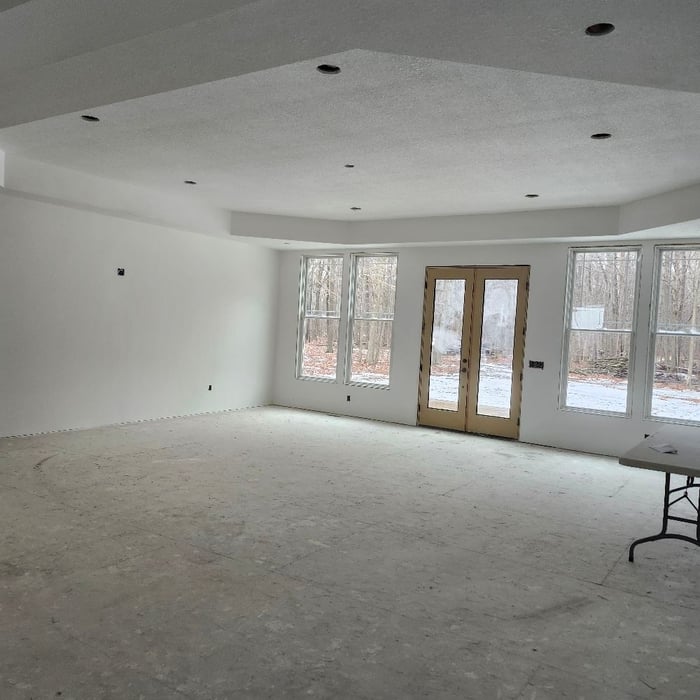
"Crawford's drywall has done many projects for us. Daryl does quality work and finishes drywall to perfection. The price is reasonable and we are always treated fair. I will be hiring Crawford's drywall without hesitation for all future drywall projects."
"Very professional. Wonderful to work with.
We hired them to put an addition on our home. They did everything very well : foundation, building the rooms, putting in insulation, drywall, painting, flooring, windows, roofing, plumbing, framing doors and windows, ductwork. They even built raised flower bed structures to go around the outside of the new addition.
They are a very talented and skilled company."
"Excellent job! They not only did the whole flooring work at my house, they basically renovated the entire place by installing new trims and painting every wall in the living room, bedrooms, kitchen and bathroom."
"I am very grateful and happy with the excellent work that this team did in my house. From the beginning they were very professional, responsible and careful with every detail. The floor was beautiful and the result exceeded my expectations. ?? You can see the commitment, dedication and love they put into their work. In addition to doing excellent quality work, they were very respectful and left everything very well done. Without a doubt, I recommend this team 100%. Thank you very much for transforming my house and leaving it so beautiful!"
With over 30 years experience, Jeff Williams has the knowledge and expertise for all of your commercial needs! We pride ourselves in quality work and pay close attention to details. Call us today for a free estimate!
Here at Lisa’s interior painting we strive to go beyond our clients expectations by creating an immaculate painting service. \n\nWe charge the most affordable prices compared to our competitors, so please don’t hesitate to call. Satisfaction guaranteed.
We pride our company on reliability, great communication, integrity, and quality work. We are experts in our trade and will do our best to keep you as educated as we can on your particular task or project. We look forward to earning your business! Book with us online or feel free to give us a call today!
You can repair plaster ceilings yourself after the cause of the ceiling damage has been addressed. However, the repair can easily take 5 hours and can be slightly challenging for those without previous experience. If you do decide to flex your DIY muscle, have a helper to help hold the ladder and pass you the tools for safety purposes.
You should leave a gap between drywall sheets because they naturally expand and contract along with the building framing as temperature and humidity change. Most pro drywall installers leave a gap of about ⅛ inch between drywall sheets, allowing the sheets to expand, contract, and shift without cracking or becoming damaged. If you don’t leave enough gaps between slabs, the edges will press against each other when they expand, and the pressure can cause visible cracks.
If the holes in the plaster are small, you can fill them with layers of patching plaster until they’re filled. After it dries, you can sand the plaster and paint over it. If the hole is much larger, consider using bonding plaster first and then a layer of patching plaster, completing the process with sanding and a layer of paint.
Although they are used for similar tasks, spackle and joint compound are not the same. Joint compound, also known as drywall mud, consists of limestone and gypsum and is primarily used for large-scale projects like taping and finishing seams on new drywall. Spackle is composed of gypsum and binding agents, making it a thicker compound best suited for small wall repairs like filling nail holes or cracks, as it dries quickly and is easy to sand. For small repairs, either product can be suitable. However, you can use joint compound for small jobs in place of spackle, but you cannot use spackle for large-scale taping and mudding projects.
You can put certain types of plaster over other types, but doing so isn't always the best idea. For example, putting a coat of gypsum over lime plaster is possible, but doing so will limit the lime plaster's breathability and potentially affect its performance.
Since cement plaster tends to leave a textured surface, no matter how much you smooth it, some people prefer to use gypsum plaster as a topcoat over cement plaster, creating a smoother surface.
The Moscow, MI homeowners’ guide to drywall services
From average costs to expert advice, get all the answers you need to get your job done.
Drywall texture can create an attractive finish and add dimension to your home’s walls. This guide breaks down the factors that influence the cost to texture drywall.
Installing drywall is the most common way to finish your home’s interior. Use this drywall installation cost guide to see what your project is likely to cost.
Whether you want to spruce up a few dents and dings or fix a large surface area, investing in drywall repair costs can return your walls to a smooth, flush look.
Understanding the plaster vs. drywall debate is key to giving your home’s walls the perfect finish. Learn more about the pros, cons, and costs with our advice.
The terms drywall and Sheetrock are often used interchangeably, but one is a brand and one is a specific product. Find out which one you need in this guide.
Thick gaps and extra joint compound can alter the look of drywall. So, should drywall be butt up against a wall? Review this guide for seamless installation.