

Top-rated bird control service pros.

Get matched with top bird control service pros in Manchester, MI

Enter your zip and get matched with up to 5 pros

Need a pro for your bird control service project in Manchester, MI?

Select your specific project to find the pro for you.

TRUSTED BY MANCHESTER, MI HOMEOWNERS

  • Average homeowner rating star icon4.6
    Average homeowner rating
  • Verified reviews icon284
    Verified bird control services reviews

Find Bird control service pros in Manchester

Daleys Wildlife Control
0.0(
1
)
Pest Control - Birds and BatsPest Control - Birds and Bats - For Business

Serving Manchester, MI and surrounding areas

In business since 2004

Free estimates

Daley's Wildlife Control is family owned and operated. Serving Jackson County and surrounding areas; we have years of trapping and wildlife experience, offering you complete services for your wildlife nuisance and damage problems. Daley's Wildlife Control attends conventions and seminars every year to keep at the top of are game on knowledge, service, and equipment to make sure we are always satisfying are customers at he highest level.

Recommended by100%of homeowners
Bird Control questions, answered by experts

An owl's worst enemy in the wild is often other raptors and environmental factors. Among the avian threats, larger owls or other birds of prey can pose a danger, engaging in territorial disputes or competing for food resources. Terrestrial predators like foxes, raccoons, and larger mammals may target owl nests or young fledglings. Environmental factors like severe weather conditions, habitat loss, and food availability changes can also significantly impact owl populations.

Trees that provide a habitat to bats and an abundance of bugs—their main food source—will attract bats to your yard. Because the North American landscape has changed so much in recent years, bats have a harder time finding trees with cavities to shelter in. If your yard has a dead or dying tree with a lot of sun exposure, bats will likely be drawn to it because trees with those features are less common.

The best time of year to remove bats is autumn until spring. In fact, many states have restrictions on bat removal, mandating it to start sometime in August and go up until May. For some states, the removal period stops in March. Your pest control pro should know of any restrictions and can help you pick an optimal time for removal.

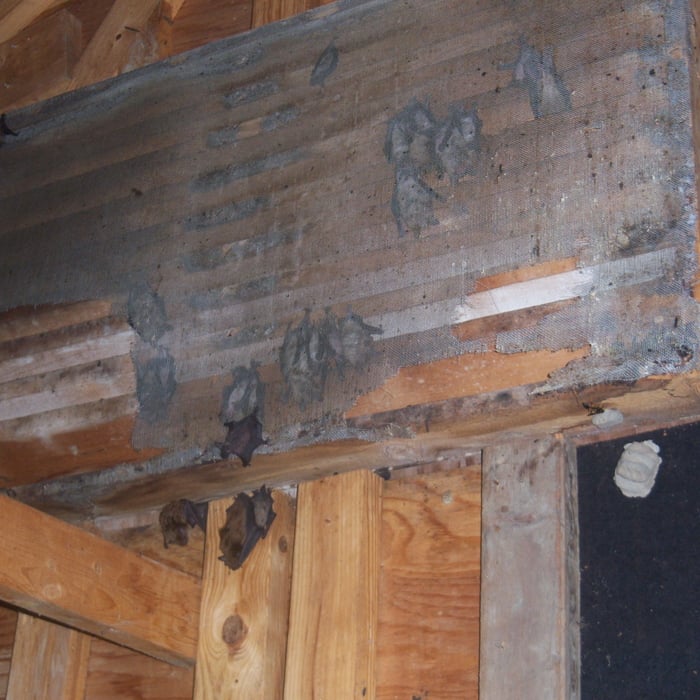
Chirping noises, droppings, scratches on the walls, and stains at entries and exits are all signs that you have bats in your house or, more specifically, your attic. Because bats are nocturnal, there’s a chance that bats have already infested your home before you start to see warning signs, so don’t delay if you notice anything. If you see a bat or two at sunrise or sunset near your property, that’s another telltale sign that they could be setting up shop inside your space.

Certain strong smells may help repel bats, though this is not a foolproof method and is best used in conjunction with other deterrence strategies. Scents like peppermint oil, eucalyptus, cinnamon, cloves, and mint are often suggested as natural remedies. To create a spray, you can mix two cups of warm water with half a cup of sugar and a few drops of your preferred essential oil. Apply this mixture using a spray bottle to possible entry points and throughout the affected area, such as an attic. While this home remedy is popular, evidence supporting its effectiveness is limited.

The Manchester, MI homeowners’ guide to bird control services

From average costs to expert advice, get all the answers you need to get your job done.