



Top-rated generator install pros.

Get matched with top generator install pros in Frankenmuth, MI

Enter your zip and get matched with up to 5 pros

Need a pro for your generator install project in Frankenmuth, MI?

Select your specific project to find the pro for you.

Find Generator install pros in Frankenmuth

Avatar for Electrician Near Me LLC
Electrician Near Me LLC
5.0(
15
)
Generator - Install - For Business

Serving Frankenmuth, MI and surrounding areas

Approved

Free estimates

Emergency services offered

Warranties offered

"Andrew came to our house between Ann Arbor and Plymouth at 8 PM on Tuesday when a storm caused an electrical outage. We had a generator but we're only getting partial power in the house. Andrew ran tests inside the house, determining that not enough power was coming into the house. He then started testing different areas of the generator until he found the part not working. Once he located the problem, he quickly fixed it. Because he didn't give up on me or my problem, he restored electricity, saving me hundreds from food spoilage in a refrigerator and freezer. I don't think most electricians would have stuck with the problem or been able or willing to fix the generator. If I could give more than 5 stars, I would."
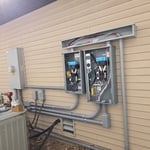
Service panels
Wholehouse Generator
New Panel
New construction
4 neighbors recently requested a quote

Mgen Power Systems, LLC
4.9(
9
)
Fixed Generator - InstallPortable Generator - Install

Serving Frankenmuth, MI and surrounding areas

In business since 2008

Free estimates

Mgen Power Systems, LLC, brings you peace of mind with a full line of reliable generac products backed by world-class service and support. Explore our product selection, then contact us so we can help you select the generac solution that is just right for you. Emergency power systems that can back up your entire home or business, or just the most essential circuits. Portable power products that let you take your electricity where you need it most, whether it is a tailgate party or a construction site. Power washer that makes it easy to tackle even your toughest cleaning projects.

Recommended by100%of homeowners
Avatar for Ajax Mechanical LLC
Ajax Mechanical LLC
4.4(
5
)
Fixed Generator - InstallFixed Generator - RepairGenerator - Install+4 more

Serving Frankenmuth, MI and surrounding areas

In business since 1988

Emergency services offered

Credit card accepted

"I was very impressed. I'd particularly note John's knowledge and creativity. After having two furnace servicers tell me there was nothing to be done, John kept going with the old one and was able to get it working. At less than what I had been charged to tell me it was impossible. Unfortunately, that only worked for less than a week and we went on to replace the furnace and put in a new chimney liner.
But I was very happy with the service.
"
Recommended by80%of homeowners
Showing 1-10 of 21
Generator Install questions, answered by experts

To determine the right size generator for your house, you should calculate the total wattage of the appliances and devices you want to power during an outage. List all essential items, note their start-up wattages, and add them together.

Here are some typical wattage requirements for common appliances:

  • Refrigerator: 600 watts

  • Large dehumidifier: 700 watts

  • Large window air conditioner: 1,400 watts

  • Water heater: 3,000 to 4,500 watts

  • Electric furnace: 5,000 to 25,000 watts

A 7,500-watt generator might be sufficient for essentials like a refrigerator, freezer, well pump, and lighting circuits. However, for high-demand items like a water heater or furnace, a whole-home generator is a better choice. A portable generator may be enough if you only need to power a few critical items.

While home square footage can offer a rough estimate, it is not always a reliable indicator. For reference, here are some typical generator sizes based on square footage:

  • 1,000 sq ft: 6–9 kW

  • 1,500 sq ft: 7–10 kW

  • 2,000 sq ft: 10–14 kW

  • 2,500 sq ft: 12–16 kW

  • 3,000 sq ft: 16–20 kW+

For the most accurate sizing, consult a professional who can calculate your home's peak and average power consumption and recommend the optimal generator.

A portable generator can supply power to selected appliances and circuits in a home, but it's generally not designed to handle the entire household's electrical needs simultaneously. Portable generators have limited wattage capacity, so they are only designed to power essential devices and electronics temporarily until local power is restored. If your power needs outweigh the capabilities of a portable generator, consider installing a whole-home generator instead.

Most homeowners won't be able to claim a home generator as a tax write-off. However, a whole-house generator may be tax-deductible in certain situations depending on its purpose. For instance, if it's needed to power essential medical equipment, it may qualify as a medical expense deduction. Also, in some cases, businesses can deduct a generator as a business expense if it supports operations. Always consult a tax professional to determine eligibility based on your specific circumstances and the applicable IRS regulations.

Sizing a generator is a careful process that requires calculating the electrical load of your entire house. You have to take into account every device you want to use and their wattage requirements, plus the wattage needed to start them, and look for a generator that can safely run all that at around 80% capacity.

In more practical terms, a small home can run on a 10,000-watt generator (and if you only want to power a few key appliances, much less than that). A mid-sized home may need something between 15,000 and 22,000 watts. Larger homes require 25,000 watts or more. 

No, you should never plug a generator directly into a wall outlet in your house. This practice is extremely dangerous, often illegal, and can cause "back-feeding," where power from the generator flows back into utility lines, creating a life-threatening hazard for utility workers. It can also damage your home's electrical system, including appliances like pumps and HVAC fans. If the main power is restored while the generator is connected, it can destroy the generator and cause an electrical fire. To safely connect a generator, you must use a professionally installed transfer switch or an interlocking kit, which prevents back-feeding by disconnecting your home from the utility grid before the generator provides power.

The Frankenmuth, MI homeowners’ guide to generator installs

From average costs to expert advice, get all the answers you need to get your job done.