








Top-rated generator install pros.

Get matched with top generator install pros in Auburn, MI

Enter your zip and get matched with up to 5 pros

Need a pro for your generator install project in Auburn, MI?

Select your specific project to find the pro for you.

Find Generator install pros in Auburn

Avatar for Town & Country Electric, Inc.
Town & Country Electric, Inc.
5.0(
45
)

Serving Auburn, MI and surrounding areas

In business since 1983

Free estimates

Emergency services offered

"Casey and his team did an excellent job installing can lights in my kitchen> Very professional and timely in completing the job. Highly recommend Casey and the team at Town and Country"
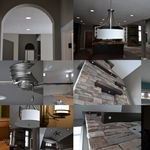
Collage of pictures
Craft Room Fixture
Coordinated Light Fixture Locations
Dining Room Fixtures
Grand Rapids Home

+13

Response time2 days
Recommended by100%of homeowners
Avatar for Next Generations Power, LLC
Next Generations Power, LLC
4.6(
24
)

Serving Auburn, MI and surrounding areas

In business since 2006

Free estimates

Credit card accepted

"Don was very pleasant to work with. He did forget to call me about when he would pick up the generator. But with the price and speed and workmanship made up for it."
Response time2 days
Recommended by95%of homeowners
Avatar for Ajax Mechanical LLC
Ajax Mechanical LLC
4.4(
5
)

Serving Auburn, MI and surrounding areas

In business since 1988

Emergency services offered

Credit card accepted

"I called John from Ajax to inspect my furnace as it had been "red
tagged-do not use" by another company and I wanted another opinion from a
local provider.  He was very knowledgeable and professional on the
phone, and came on time.  He thoroughly inspected the furnace, and used a
camera scan to look at the heat exchange that had been diagnosed as
cracked by another H&C company.  He spent close to an hour with me,
told me that there was no crack (hurrah) and also gave other pointers on
what could improve furnace performance.  He did not try to sell me anything and did not charge me for the visit.  He also suggested that if I doubted his diagnosis of  no problem,  that I could call Consumers Energy and have them come out to verify. 
Am planning on having him improve some poorly installed duct work,  and will not hesitate to call Ajax for my heating and cooling needs as I have two furnaces and two air conditioners. 
"
Recommended by80%of homeowners
Avatar for Always Wired LLC
Always Wired LLC
5.0(
1
)

Serving Auburn, MI and surrounding areas

In business since 2015

Free estimates

Credit card accepted

"Owner came out on my issue. Definitely knows what he is doing and had the job done very fast. Exceptional work, very very reasonably priced and just a friendly guy to deal with. Makes the customer feel that he appreciates the work he is doing for you. Always Wired will be my choice from now on."
Response time1 day
Link Electrical Contracting
New to Angi

Serving Auburn, MI and surrounding areas

In business since 2012

Free estimates

Credit card accepted

Link Electrial Contracting is Family owned and operated servicing the Pinconning and surrounding areas. With over 10 years professional experience, We provide full electrical services from switches up to new install for houses from the ground up. We take pride in always being prompt, punctual and professional with every project we complete. Call us today to schedule your next electrical project.

Showing 1-10 of 13
Generator Install questions, answered by experts

If you’re deciding between a solar battery versus a generator for the best backup power solution, you can take a few factors into consideration. Solar batteries are quiet while generators can be quite loud. Generators have a lower up-front cost, but they require fuel and ongoing maintenance while solar batteries are more expensive but don’t have many ongoing costs.

As a safety measure, you should always turn off the main breaker while operating your generator’s backup breaker. In addition, you should also switch off all appliance breakers so you don't have a power surge when the main breaker turns back on. And finally, turning off the main breaker prevents back-feeding, which endangers utility workers with the risk of electrocution. Back-feeding could also destroy the electrical circuits of your neighbors if they use the same power network.

Here’s what you can run with different wattages and types of generators:

Portable generator:

  • 2,000 watts can handle a large appliance like a freezer or refrigerator, plus a few smaller items like phones or computer chargers. 

  • 4,000 watts will keep two large appliances operating and a few smaller devices.

  • 8,000 watts should power most essential appliances and other devices, including a sump pump, well pump, or your dishwasher.

Partial to whole-house generator:

  • 20,000 watts and above will make it seem like your home’s power is still on.

While diesel is relatively stable, it won’t last nearly as long as propane and you may have to replace it if it sits unused for too long. Diesel can sometimes struggle to work efficiently or start engines during especially cold weather, so it’s not the best choice for every climate. Compared to fuels like propane and natural gas, diesel generators tend to be noisier and create more exhaust, which isn’t always ideal for home use.

To determine the right size generator for your house, you should calculate the total wattage of the appliances and devices you want to power during an outage. List all essential items, note their start-up wattages, and add them together.

Here are some typical wattage requirements for common appliances:

  • Refrigerator: 600 watts

  • Large dehumidifier: 700 watts

  • Large window air conditioner: 1,400 watts

  • Water heater: 3,000 to 4,500 watts

  • Electric furnace: 5,000 to 25,000 watts

A 7,500-watt generator might be sufficient for essentials like a refrigerator, freezer, well pump, and lighting circuits. However, for high-demand items like a water heater or furnace, a whole-home generator is a better choice. A portable generator may be enough if you only need to power a few critical items.

While home square footage can offer a rough estimate, it is not always a reliable indicator. For reference, here are some typical generator sizes based on square footage:

  • 1,000 sq ft: 6–9 kW

  • 1,500 sq ft: 7–10 kW

  • 2,000 sq ft: 10–14 kW

  • 2,500 sq ft: 12–16 kW

  • 3,000 sq ft: 16–20 kW+

For the most accurate sizing, consult a professional who can calculate your home's peak and average power consumption and recommend the optimal generator.

The Auburn, MI homeowners’ guide to generator installs

From average costs to expert advice, get all the answers you need to get your job done.