
Top-rated arborists.

Get matched with top arborists in Waterville, ME

Enter your zip and get matched with up to 5 pros

Need a pro for your arboricultural service project in Waterville, ME?

Select your specific project to find the pro for you.

TRUSTED BY WATERVILLE, ME HOMEOWNERS

  • Average homeowner rating star icon4.6
    Average homeowner rating
  • Verified reviews icon176
    Verified arboricultural services reviews

Find Arborists in Waterville

Avatar for Poulin Tree, LLC
Poulin Tree, LLC
5.0(
5
)
Tree RemovalTree TrimmingTree Removal - For Business+1 more

Serving Waterville, ME and surrounding areas

Approved

In business since 2017

Free estimates

Emergency services offered

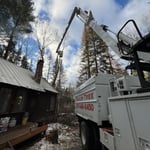
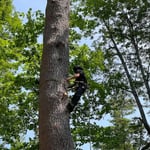
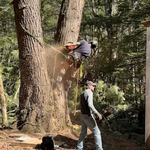
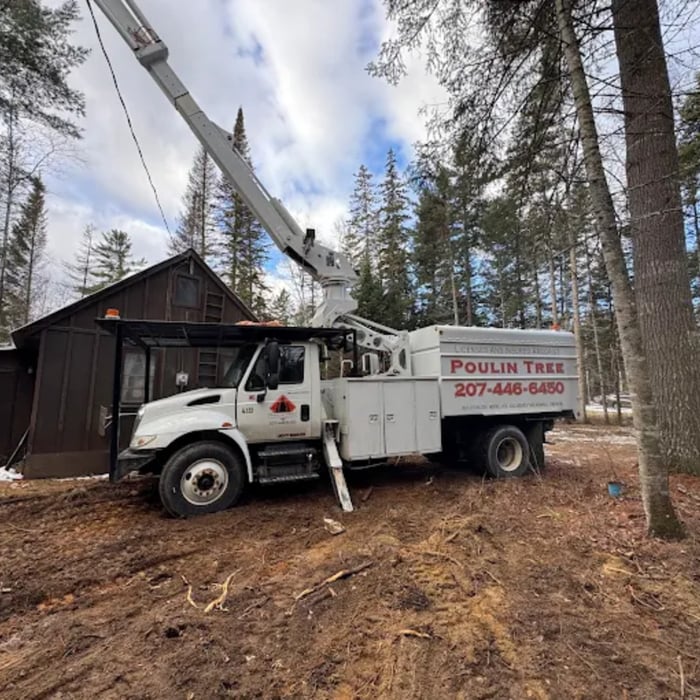
Poulin Tree LLC brings over two decades of arborist and logging expertise to serve our valued customers. With a team of seasoned professionals having 20+ years of experience in the field, we pride ourselves on delivering top-notch tree care services to Central and Mid-Coast Maine and surrounding areas.

Gallery
Gallery
Gallery
Gallery
Gallery

+3

27 neighbors recently requested a quote
Avatar for Brackett Properties LLC
Brackett Properties LLC
5.0(
8
)
Tree RemovalTree TrimmingTree Removal - For Business+1 more

Serving Waterville, ME and surrounding areas

Approved

In business since 2021

Free estimates

Offers commercial services

"The tree we had taken down was very big, and close to our home, and another building. Chris did a great job taking down the tree. We would definitely recommend this company. Would not hesitate to reach out again if we need to have another tree taken down. Thank you "Angie's" for the recommendation!!"
Response time2 days
14 neighbors recently requested a quote
Recommended by100%of homeowners

Clark Landscaping
5.0(
1
)
Tree RemovalTree Trimming

Serving Waterville, ME and surrounding areas

Approved

In business since 2011

Customers say: Quick response

We take great pride our experience, expertise, quality and customer service that we provide to meet the consumers needs. It is our mission to provide excellent workmanship and complete customer satisfaction from start to completion of a project. order to understand the needs and expectations of our customers, we take great care to work and communicate with every customer a professional manner. Our reputation is based on service, safety and quality, regardless of how large or small the job.

Response time1 day
Recommended by100%of homeowners
...
Showing 1-10 of 71
Arborists questions, answered by experts

Most trees can be successfully transplanted while they are young, but pines, walnuts, and some oak tree varieties are more difficult to move because their root systems grow deeper than most other trees. Also, trees adapted to sandy soil with wide root systems like beeches, willows, and aspens are harder to dig out because their roots spread much farther out from the trunk. In these cases, unless the trees are very young and small, it’s a good idea to consult a tree planting professional.

Generally, homeowners do not need permission to cut down a tree on their own private property, but there are several exceptions where a permit may be required. You might need a permit if the tree is particularly large, old, or a protected species, such as a heritage tree. Trees located near public property or power lines can also be subject to special rules. Additionally, many local governments and homeowners associations (HOAs) have regulations controlling which trees can be removed to manage an area's appearance or prevent the spread of invasive species. To avoid hefty fines, it is crucial to check with your local government and HOA to determine if a permit is needed before you begin.


Trees don’t usually grow back after being cut down. Some particularly robust tree species may start sending up new stems from a stump to recover, but those stems won’t become a “tree” like before. Generally, trees don’t recover from being entirely cut down, which is why it’s important to be careful when making a decision. When you cut down a tree, it’s a good idea to make plans to remove the stump, even if it’s unlikely to grow back.

If you don’t cut down a dead, dying, or diseased tree, it can become a nesting place for pests like mosquitos, bees, beetles, wasps, fly larvae, and more. Some pests will live in the tree, while others will feed off the decaying wood. Unhealthy trees are also more likely to fall over, potentially injuring people and causing damage to your property.

You don’t always need a permit to grind a stump, but you might need one depending on your location and the stump’s surroundings. Permits are often needed if the stump is part of a protected tree species, near public areas or utility lines, or close to environmentally sensitive zones like wetlands. Some cities also regulate noise and work hours. Always check local rules before grinding, and contact your city or county office if you're unsure.

The Waterville, ME homeowners’ guide to arboricultural services

From average costs to expert advice, get all the answers you need to get your job done.