




Top-rated locksmiths.

Get matched with top locksmiths in Wilson, LA

Enter your zip and get matched with up to 5 pros

Need a pro for your locksmith service project in Wilson, LA?

Select your specific project to find the pro for you.
Locksmiths questions, answered by experts

It is best to use a dry lubricant, such as a Teflon-based option, for door locks. Unlike popular oil-based lubricants, dry lubricants leave a non-stick, water-repellent coating that does not attract dust, dirt, and other debris. Using an oil-based lubricant can cause these particles to build up inside the lock, making it difficult to operate or even damaging the internal mechanism. You can find dry lubricants, some of which are made specifically for locks, at most hardware stores.

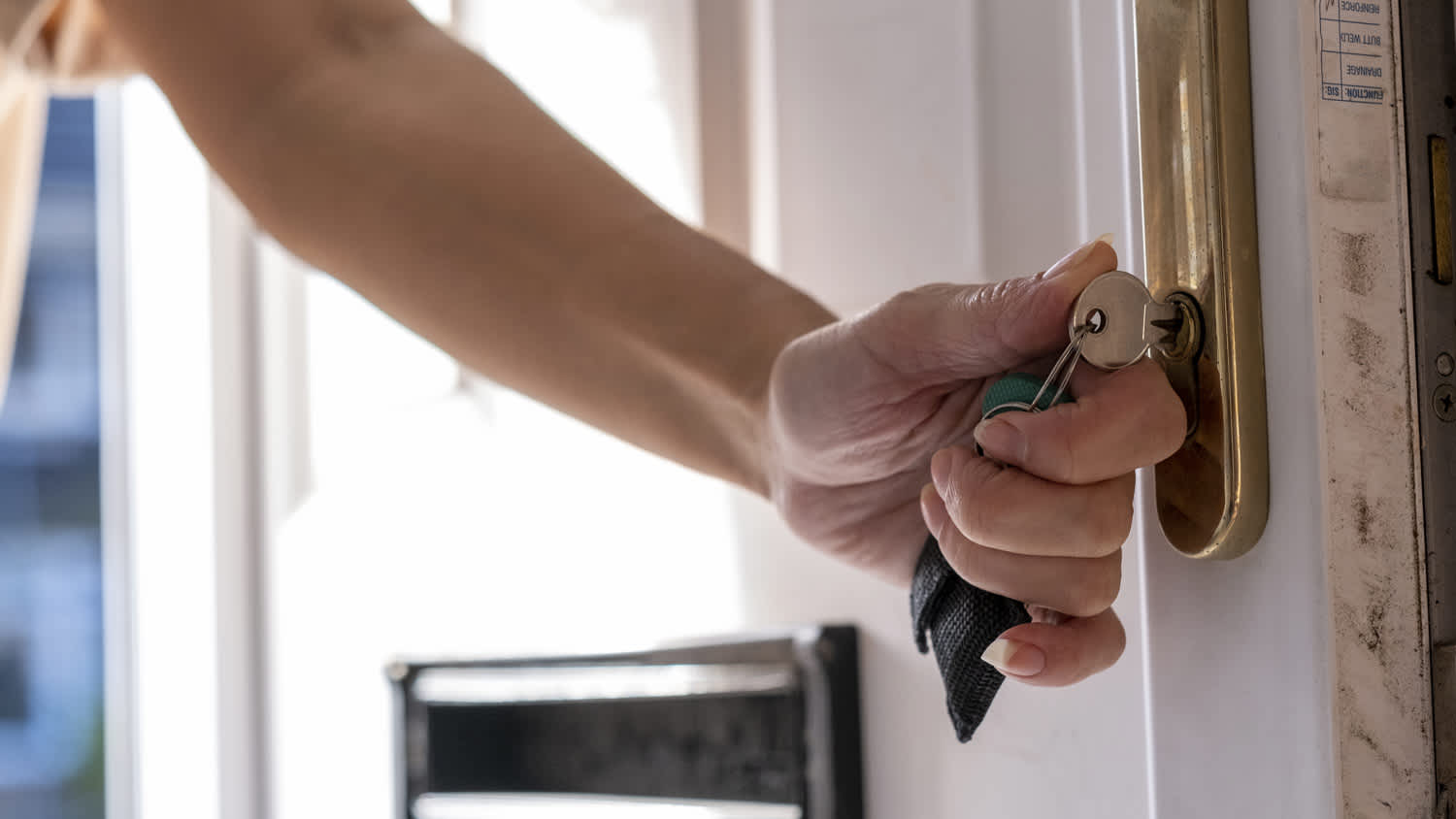
It could be difficult to get in and out of a lock for several reasons, such as the keyhole needing additional lubrication. Particles, debris, and dirt can also get into a lock, making a key stuck (the lubrication can help with the removal). 

Yes, as long as it’s thick enough for the deadbolt. Most interior hollow core doors are at least 1 1/2-inches thick, which is usually the minimum requirement for a deadbolt. You’ll want to find the lock block first before installing. Also, most hollow doors require additional reinforcement for locks, such as a reinforcement plate or plywood block.
Whether or not keyless door locks are safe and trustworthy depends on the visibility of the programming code—and a trespasser’s determination. Even if you carefully guard entry and programming codes, those trying to break in may be able to crack open the lock’s faceplate with a screwdriver and change the codes. The same goes for manual models.

Some find smart locks the safest option because it’s harder to manipulate codes without access to your phone. But it’s possible to get hacked even then. Consider installing an extended security system, like door and window alarms or surveillance cameras, to enhance security. 

Smart locks offer a similar level of safety to traditional or conventional locks because they often use comparable locking mechanisms, such as deadbolts. The primary difference is the access method: smart locks use a login or code instead of a physical key, which adds convenience. While not inherently safer, some smart locks have added security features that can deter intruders, like shutting down after too many incorrect code attempts or being harder to pick. For the best security, it's recommended to combine any lock with other home safety features like motion-activated lighting, security cameras, and window and door sensors.