





Top-rated paving pros.

Get matched with top paving pros in Ridgecrest, LA

Enter your zip and get matched with up to 5 pros

Need a pro for your paving service project in Ridgecrest, LA?

Select your specific project to find the pro for you.

Find Paving pros in Ridgecrest

Patch of Heaven Landscape and Facility Maintenance
4.8(
26
)
Gravel or Loose Fill Paving - Install, Spread or ScrapeInterlocking Pavers for Patios, Walks & Steps - Install

Serving Ridgecrest, LA and surrounding areas

In business since 2010

Free estimates

Emergency services offered

"Both my husband and I are very grateful for the services provided by Patch of Heaven. We have used their services for many years and know of their goal to have our lawns and landscaping as beautiful as possible. We are so very pleased to see them come and go each week. I know you will find their work to be efficient and most “eye pleasing”."
Additional Photos
Additional Photos
Additional Photos
Additional Photos
Additional Photos

+8

Recommended by95%of homeowners
LLP Energy Services
New to Angi
Asphalt Paving - Repair or PatchAsphalt Paving - Repair or Patch - For Business

Serving Ridgecrest, LA and surrounding areas

In business since 2008

Free estimates

We have over 4 years of experience in the business. Here at LLP Energy Services, we pride our company on reliability, great communication, integrity, and quality work. We are experts in our trade and will do our best to keep you as educated as we can on your particular task or project. We look forward to earning your business!\n\n

Larcart Construction
New to Angi
Interlocking Pavers for Patios, Walks & Steps - Install

Serving Ridgecrest, LA and surrounding areas

In business since 2017

Free estimates

Our mission at Larcart Construction is to continue the growth of our business by doing right by all of our clients. We love seeing that one of a kind smile on a home owners face at the end of a project! Larcart Construction stacks up with the competition and surpasses it with competitive prices, second to none workmanship and a prompt/responsive team! We give you quality that you can measure, and a finished product that will enhance your home forever. Call us today!\n

Showing 1-10 of 12
Paving Services questions, answered by experts

You can pour concrete over asphalt if it’s in good condition, thick, stable, and well-compacted. Concrete is more durable than asphalt and can extend the lifetime of your driveway without having to pay frequent asphalt driveway repair costs or replace it completely. 

But this is best reserved as a temporary solution based on budget restraints, as asphalt requires more frequent repairs and assessments than concrete. Once that concrete top is poured, it’ll be harder to accurately understand what’s happening beneath that layer, which could lead to more issues.

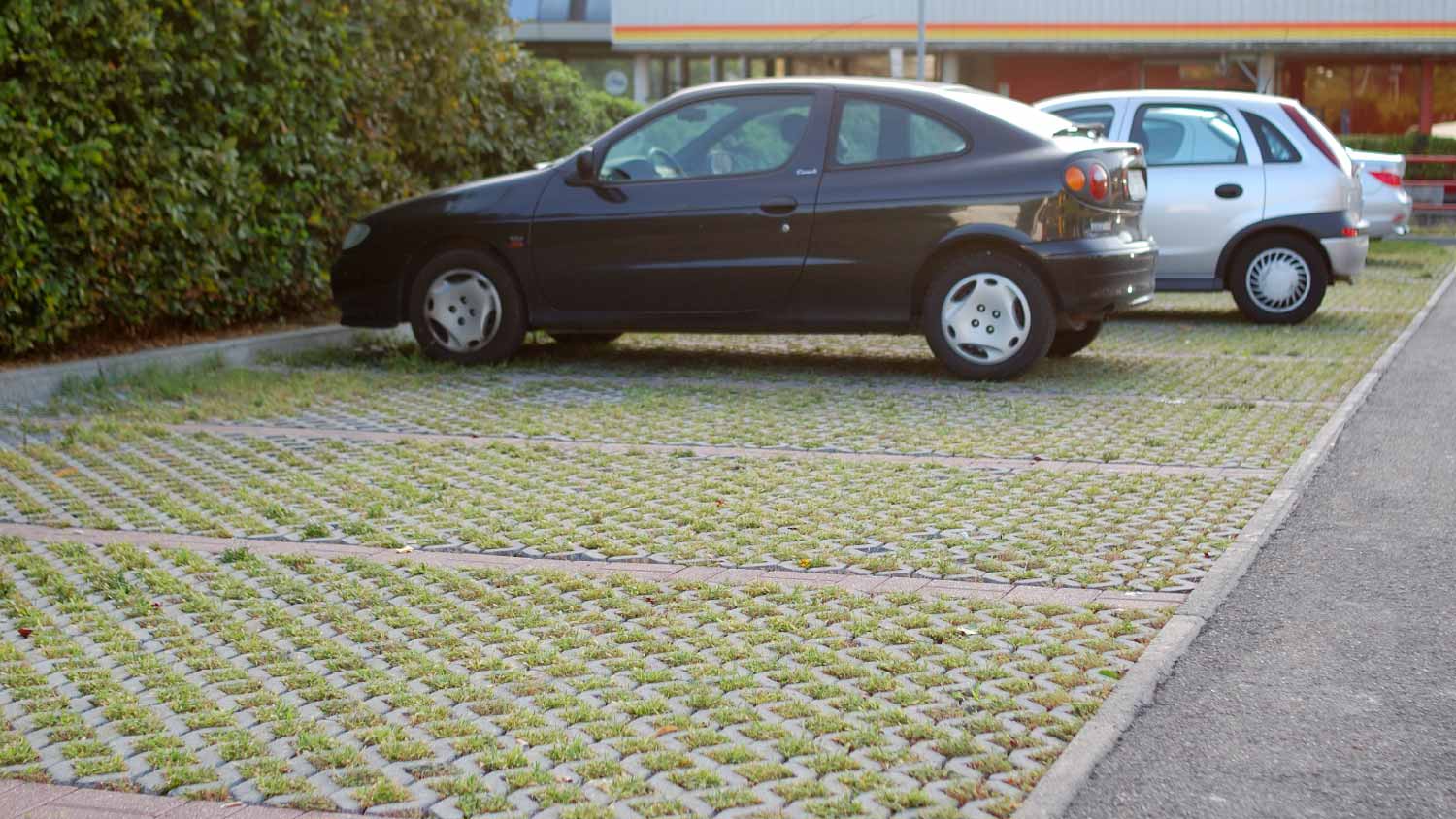
Professional installers often include a deep layer of crushed gravel under permeable pavers to allow more runoff to soak through into the soil below. Many installations will include multiple layers of gravel, with coarser aggregate at the base and finer aggregate that sits on top of that bottom layer. Above the gravel, you’ll often find coarse sand that helps reduce paver shifting over time. Some permeable paver designs include a water collection system set into the gravel layer to route runoff to a safe area for disposal.

Although you could try to lay stepping stones directly over grass, which speeds up the installation process significantly, this method often leads to a poor result over time. Even heavy paver stones will eventually slide or shift on top of the grass. Digging into the ground and following the steps we listed is the best way to lay stepping stones for a long-lasting result.

An asphalt driveway should be at least 3 inches thick over a compacted gravel base. Areas with poor drainage should have a thicker stone base. To install a new asphalt driveway over an existing driveway, the new asphalt should be at least 2 inches thick and the existing driveway should be in relatively good condition.

Asphalt and tarmac are not the same thing. Traditional tarmac, short for tarmacadam, uses tar as a binder to hold crushed stone together. Asphalt uses bitumen—a byproduct of crude oil—to bind aggregate. Though tarmac was once a go-to for roads, asphalt has become the modern standard. And these days, most surfaces referred to as “tarmac” are actually asphalt. So, while the names may overlap, the key distinction lies in the binder—tar for tarmac and bitumen for asphalt.

The Ridgecrest, LA homeowners’ guide to paving services

From average costs to expert advice, get all the answers you need to get your job done.