






Top-rated asphalt driveway pros.

Get matched with top asphalt driveway pros in Louisa, KY

Enter your zip and get matched with up to 5 pros

Need a pro for your asphalt driveway service project in Louisa, KY?

Select your specific project to find the pro for you.

Find Asphalt driveway pros in Louisa

Avatar for A&K Power Washing LLC
A&K Power Washing LLC
4.7(
26
)
Concrete Driveways & Floors - Install- For BusinessConcrete Driveways - Install

Serving Louisa, KY and surrounding areas

In business since 2012

Emergency services offered

Credit card accepted

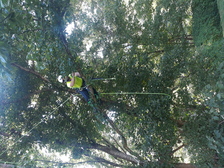
"The crew was so polite . The project looks great! No matter what I asked them to do they acomplished the task. My house was damaged by woodpeckers and they had to repair that damage before they could start. All suggestions by Anthony and Karen were wonderful. My house looks brand new!!! "You get what you pay for.""
Additional Photos
Additional Photos
Additional Photos
Additional Photos
Additional Photos

+29

Recommended by95%of homeowners
Avatar for A&J Handyman & General Remodel LLC
A&J Handyman & General Remodel LLC
5.0(
10
)
Concrete Driveways & Floors - Install- For BusinessConcrete Driveways - Install

Serving Louisa, KY and surrounding areas

In business since 2013

Free estimates

Credit card accepted

"I saw this refit of a bi-fold closet door to French door opening and thought it would help my problem of the doors jumping the track. I explained what I wanted, he simplified the process, and fixed all the closets. Now I have much more access to the closets and they look great. They also fixed my broken gate while they were at my house. They were so professional and even cleaned up their minimal mess."
Additional Photos
Additional Photos
Additional Photos
Additional Photos
Additional Photos

+3

Recommended by100%of homeowners
Showing 1-10 of 50
Asphalt Driveways questions, answered by experts

Several materials are suitable for steep driveways. Gravel and crushed stone are affordable options that provide good traction. Permeable pavers—such as plastic, rubber, or concrete—filled with gravel or crushed stones are also excellent, as they allow water to drain without causing erosion and perform well in ice and snow. Another option is resin, which can be coated with an anti-slip finish and helps prevent puddles. For added stability, you can install a retaining wall to prevent pavers and gravel from shifting over time.
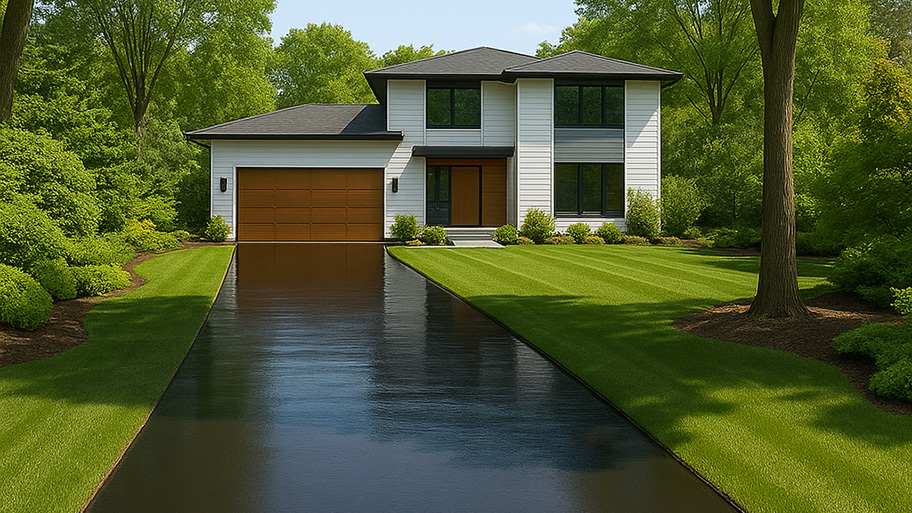
In most cases, you don’t need a permit to repave your driveway, although some exceptions exist. If you’re widening your driveway and plan on widening the apron as well, you’ll usually need a permit from the Department of Transportation in your area. This permit costs between $50 and $300 in most cases. Most municipalities will also require a certified and insured contractor do the work relating to the apron and curb cut. You can contact your building department or ask your paving company if you need a permit. Your driveway professional will usually pull the permit for you.

When comparing installation costs, asphalt is often less expensive upfront than concrete. Asphalt prices typically range from $7 to $15 per square foot, while concrete can range from $3 to $18 per square foot. However, long-term costs should also be considered. Concrete driveways generally last longer (up to twice as long) and require less maintenance, which can make them more affordable over their lifespan. While asphalt has a lower installation cost and is easier to repair, it requires more frequent maintenance, such as sealing, which can add up over time. Therefore, while concrete is more expensive initially, its durability may offset the cost in the long run.

Asphalt edging secures the sides of your driveway to prevent crumbling and cracking over time. Most driveways have edges with a 45-degree grading. This helps transfer some of the stress from the asphalt to the ground underneath. If your driveway doesn’t have proper edging, the pressure from your car may break down the edges over time.

Asphalt and tarmac are not the same thing. Traditional tarmac, short for tarmacadam, uses tar as a binder to hold crushed stone together. Asphalt uses bitumen—a byproduct of crude oil—to bind aggregate. Though tarmac was once a go-to for roads, asphalt has become the modern standard. And these days, most surfaces referred to as “tarmac” are actually asphalt. So, while the names may overlap, the key distinction lies in the binder—tar for tarmac and bitumen for asphalt.

The Louisa, KY homeowners’ guide to asphalt driveway services

From average costs to expert advice, get all the answers you need to get your job done.