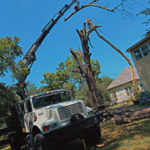




Top-rated tree service pros.

Get matched with top tree service pros in Columbus, KS

Enter your zip and get matched with up to 5 pros

Need a pro for your tree service project in Columbus, KS?

Select your specific project to find the pro for you.

Find Tree service pros in Columbus

Avatar for DryRidge Tree Works
DryRidge Tree Works
New to Angi

Serving Columbus, KS and surrounding areas

Approved

In business since 2024

Free estimates

Emergency services offered

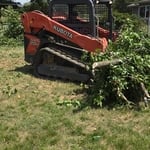
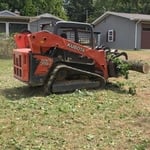
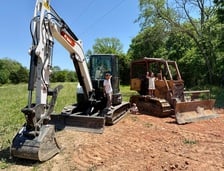
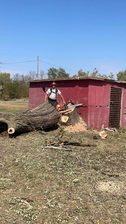
We specialize in safe, efficient, and environmentally responsible tree trimming and land clearing solutions. Whether you're preparing a site for construction, reclaiming overgrown property, or removing or trimming trees, our experienced team delivers precision and care with every job. With top-tier equipment and a commitment to customer satisfaction, we help you clear the way for your next big project. Reach out to us today and get a quote. We would love to help you!\n\n* We Do USE LARGE EQUIPMENT( SKID STEER) MUST HAVE ROOM AND BE OKAY TO ENTER EXIT YARDS IF PROJECT IS IN YARD

Response time1 day
Bill's Best Mowing Service
New to Angi

Serving Columbus, KS and surrounding areas

Approved

In business since 1969

Free estimates

Bill's Best Lawn Mowing Service is committed to excellence in every aspect of our business. We uphold a standard of integrity bound by fairness, honesty and responsibility in all of our jobs. We are a locally owned and operated business with more than 50 years of experience serving Joplin, MO and surrounding areas. There is no job too big, or too small for our team. Call today and let us put our experience to work for you!

Avatar for J's Tree Service
J's Tree Service
5.0(
6
)

Serving Columbus, KS and surrounding areas

In business since 2024

Free estimates

Small jobs welcome

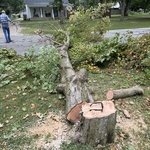
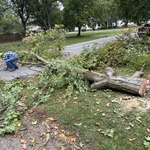
"Answered promptly, and quickly came to remove a large tree from our yard. The crew worked long hours and completed the job neatly and as directed. Very personable and professional. Highly recommend."
Response time2 hrs
Recommended by16%of homeowners
...
Showing 1-10 of 53
Tree Service questions, answered by experts

In most cases, you should not use a pruning seal on trees after trimming. Applying a sealant can interfere with the tree's natural healing process, and it does not guarantee protection from pathogens. Instead of sealing the cut, the best practice is to support the tree's natural recovery by providing it with plenty of water and a dormant-style fertilizer. However, there are exceptions. Pruning seals may be recommended for very vulnerable species, like elm trees, in areas where dangerous diseases such as Dutch elm disease are prevalent. In these specific situations, the protection offered by a sealant can outweigh its downsides. For advice tailored to your situation, especially after cutting large branches, it is best to consult a local tree trimming professional.

If executed correctly your tree should survive after being transplanted to a new spot. However, effective transplanting requires six months, careful root pruning, safe transport to the new location, and replanting in prime soil conditions. You’ll also need an appropriately sized root ball for a complete tree transplant. A good rule of thumb is that, for every inch in diameter, your tree’s root ball needs to be around 11 inches. So a tree with a diameter of six inches needs a root ball of approximately 66 inches.

Most experts recommend removing a tree that has sustained more than 25% loss in the limbs, trunk, or circumference of the bark. Doing an initial trimming of damaged and dangling branches, but then waiting a few days of monitoring to decide how much more you might need to cut can help you better assess the total damage to the tree. However, consulting a tree maintenance pro to make this determination the best course of action before removing a tree.

It's easy to misidentify trees that appear to be maple trees due to similarities in leaf shapes. Sweetgum, sycamore, and yellow poplar all have leaf shapes and appearances similar to maples. The fact that around a dozen maple tree varieties exist, only about half of which are considered common, makes misidentification an often typical occurrence.  

Cutting down a tree next to power lines is never a DIY job, and it’s a good idea to contact your utility company first. In most cases, the utility company will need to take care of any tree problems within 10 to 15 feet of power lines. If you want to remove the tree for aesthetic reasons, hire a pro to do the job. Trying to cut trees near power lines yourself can create many safety hazards, and you could be liable if you inadvertently cause damage to electrical equipment.

The Columbus, KS homeowners’ guide to tree services

From average costs to expert advice, get all the answers you need to get your job done.