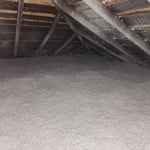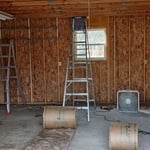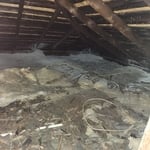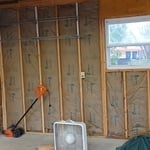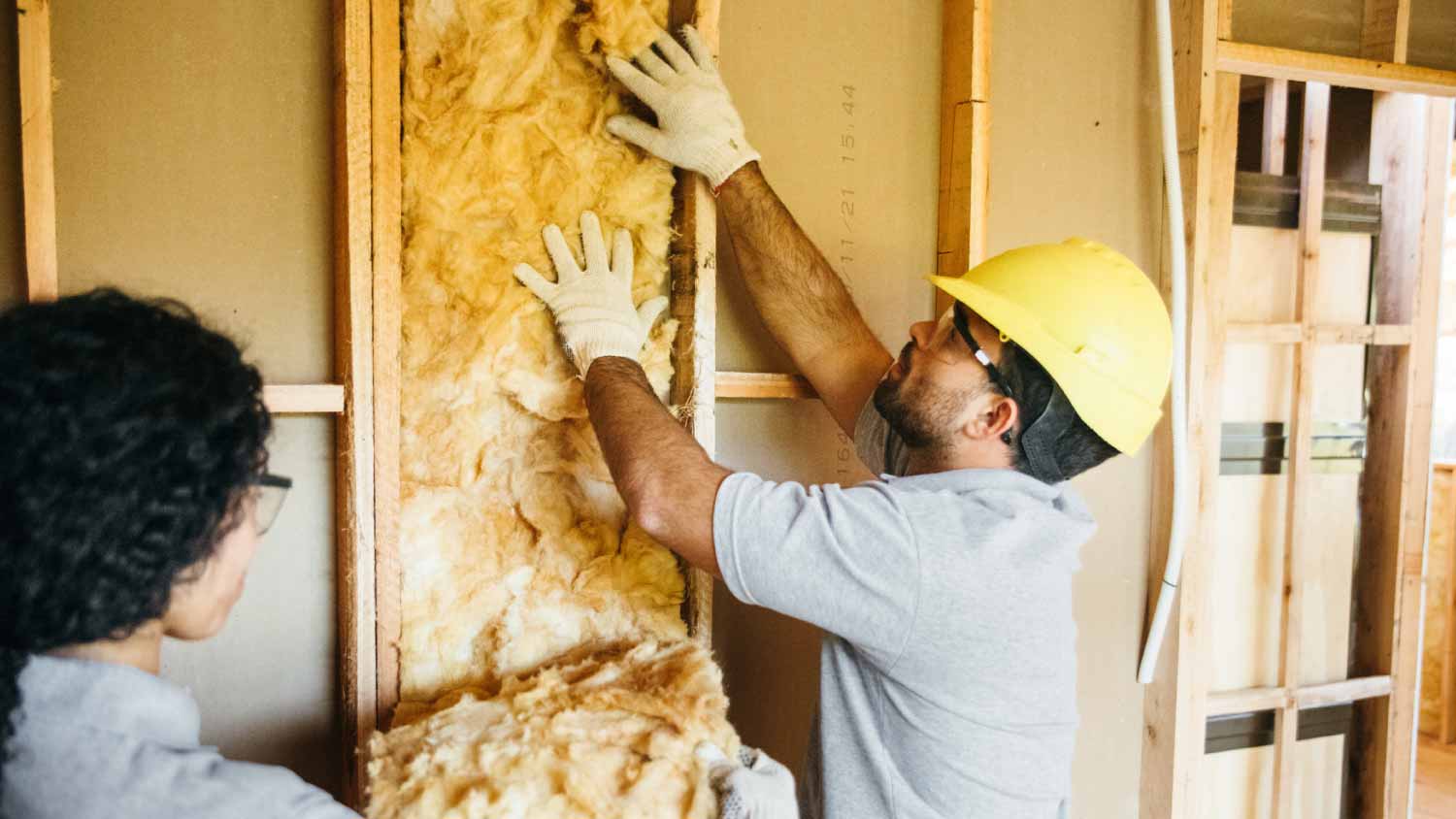
"Great group of guys. Very professional and efficient. Brandon and his crew fixed me up with my insulation needs. Hands down will use them again. Get ahold of ikonik insulation llc for all your insulation needs."
We pride our company on reliability, great communication, integrity, and quality work. We are experts in our trade and will do our best to keep you as educated as we can on your particular task or project. We look forward to earning your business! Book with us online or feel free to give us a call today!\n\n
I’m a hardworking person who doesn’t like to leave projects half finished or looking sloppy, I can be a bit of a perfectionist. I’ve always fixed and built almost everything I needed myself and I take pride in being self sufficient. I’ve been an electrician for a year and half now and before that I was fabricating aerators for private residences. I have a wife and two children, so I can handle the chaos of a whole house remodel even if you decide to alter any details halfway through.
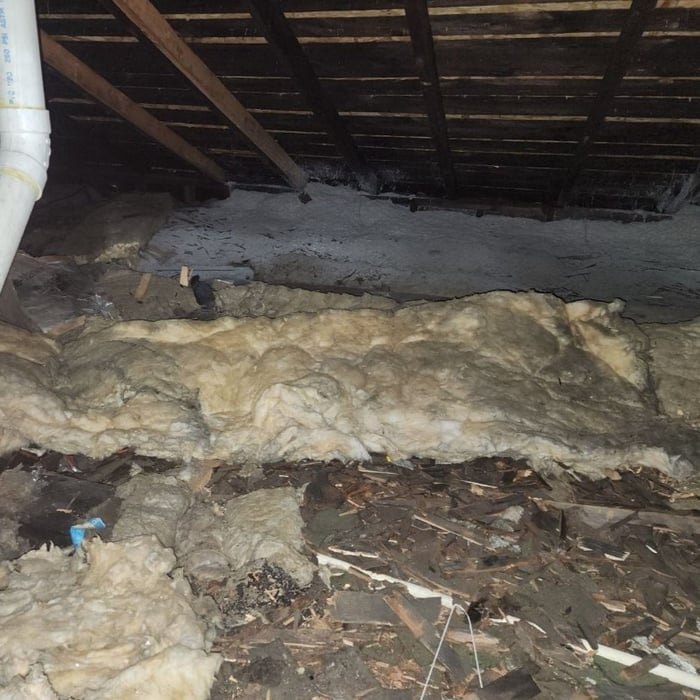
"We contacted Angie’s List for recommendations for Blow-in Insulation to refresh older insulation in our attic. Three companies we recommended to us. Two phoned the next day. I never heard from the third. I told both I was gathering information and would call to schedule an estimate. I called and scheduled two companies, including USA Insulation, to come make an estimate. One company called one minute before scheduled and wanted to re-schedule. Chris from USA was on time. We were pleased with his offer and accepted. He scheduled the installation for the next day. William and his helper arrived, set everything up, and went to work. I checked regularly and photographed the attic. When they were through, they thoroughly cleaned the area. We were quite pleased. Shortly after completion, Michael, a company inspector, arrived to check the work. I would give the company an A+."
We pride our company on reliability, great communication, integrity, and quality work. We are experts in our trade and will do our best to keep you as educated as we can on your particular task or project. We look forward to earning your business!
"It was a small job. They sealed the vents to the crawlspace, then, since there was already solid insulation panels on the walls, put a vapor/moisture barrier, in the form of a tarp, 4 feet wide and as long needed, completely around the crawlspace. It was then sealed to the walls with "nails" and adhesive. This seals the wood frame of the house from the 'Outside", the ground, which is the floor of the crawlspace. A 20 mil thick, quite heavy, "floor" was installed, also in the form of a tarp, It went up the walls about 3 feet and was taped to the 'tarp" on the walls, using a tape made for this application. The piers were wrapped with the same stuff and taped to seal the inside from the outside. the "floor" is also a vapor/moisture barrier, but, heavy enough to walk on if needed. This basically makes the crawlspace another room, rather than the outside. Our house is one year old and was already getting mold on the floor joists. Since the air in the crawlspace will now be heated in the winter and cooled in the summer, just like the rest of the house, the mold and cold (52 degrees) floors we experienced last winter will hopefully be eliminated. We shall see when dumb winter gets here."
*OWENS CORNING PLATINUM CONTRACTOR* COMMERCIAL & RESIDENTIAL SERVICES There are many reasons why DWC ROOFING COMPANY is the choice for many home-owners in Indiana. However, if we could summarize all of those reasons into three simple words they would be: quality, service and professionalism. We provide our customers with one of the industry’s highest quality products, we follow up the project with quality service, and we conduct our business with standards of the professional conduct. Let’s look at each concept in more details: Quality: Everything we do projects quality. Our products, our people, our service, our installations, and our warranties. Service: This all important element after the project must be responsive to our customer’s needs, must be the fastest in the industry and must support our warranty and sales representatives to the utmost. Professionalism: This must be present in every person and in their activities, from courteous and honest telephone contact, to ethical and forthright sales presentations, to first class installation and service after the sale. Award winning. Additional DBAs - DWC Roofing, DWC Roofing Co.
Although they have similar applications, spackle and joint compound are not the same. Their primary differences lie in their composition, consistency, and ideal use cases.
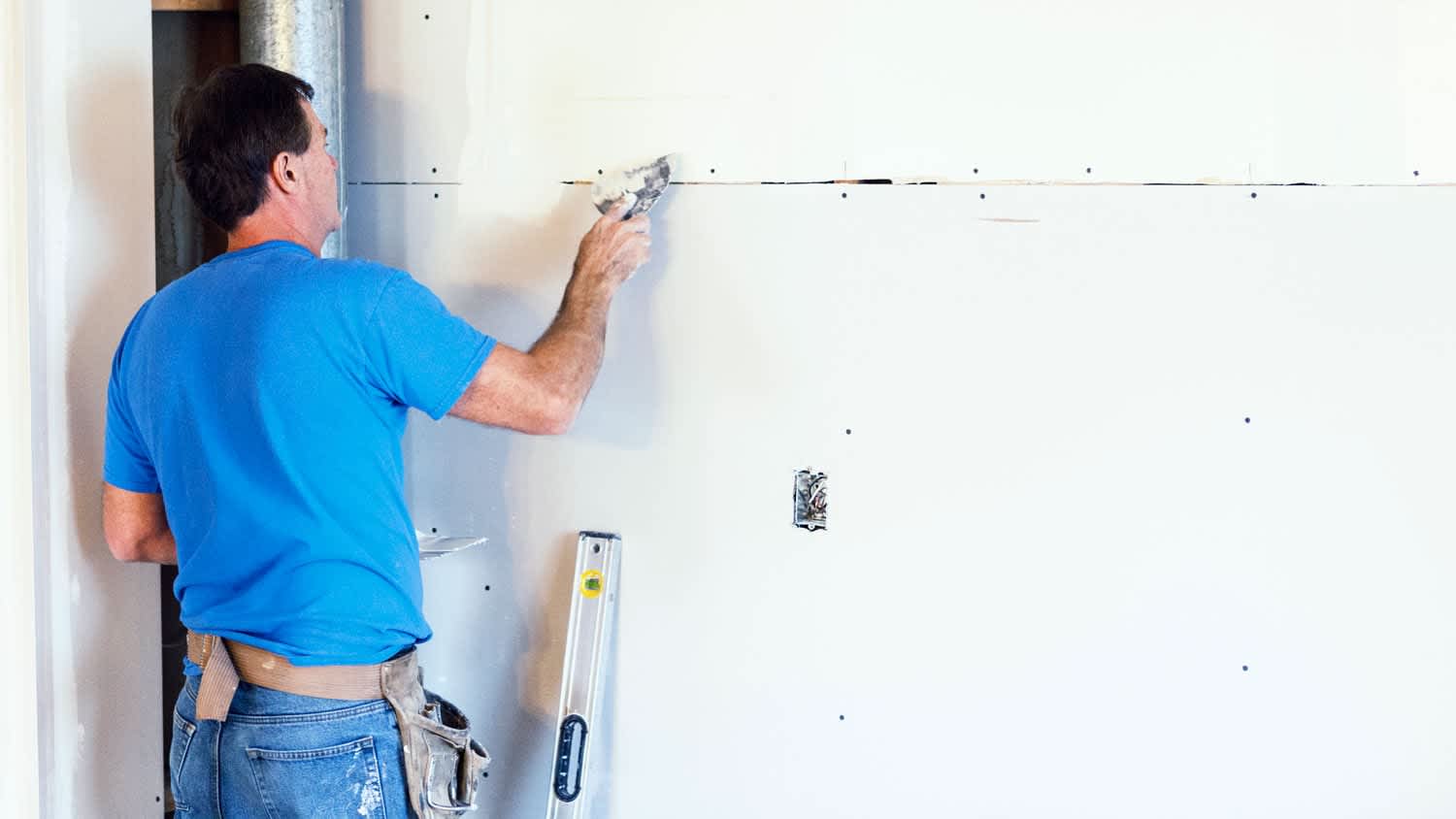
Spackle is composed of gypsum and binding agents, making it thicker than joint compound. It dries quickly and is easy to sand, which makes it ideal for small wall repair projects like filling nail holes or patching minor damage.
Joint compound, also known as drywall mud, consists of limestone and gypsum. It is primarily used for large-scale projects, such as taping and finishing the seams on newly installed drywall. It tends to shrink more than spackle and can be more difficult to spread.
While both products can be used to fill small depressions and cracks, spackle cannot replace joint compound for taping and mudding new drywall. Conversely, you can often use joint compound for small patching jobs typically done with spackle.
You can put drywall mud over paint to even out the surface or entirely resurface it. Sand the surface with 280-grit sandpaper, vacuum the debris and dust with a shop vac, and clean it with a slightly damp cloth. Allow the surface to dry. Apply drywall primer, especially if you’re skim-coating an entire wall. Apply the right type of drywall mud over the surface and smooth it with a trowel. Allow the layer to cure fully, then sand it before applying another layer or painting it.
When used correctly, drywall patch kits can work well. However, there are limitations. Specifically, these kits can only cover holes up to 5 inches in diameter. For anything larger than that, you’ll need to cut out the affected section of drywall and replace it with a new piece. That’s a far more complicated process that involves buying the right type of drywall, finding the wall studs, cutting into your wall, and screwing the replacement drywall in place.
Plastering and skimming are two different techniques for finishing walls. Plastering involves applying a thick layer of a plaster mixture—typically containing gypsum, lime, cement, sand, and water—to create a new surface. This process often requires multiple coats and is used for repairing significant damage or creating decorative textures. Skimming, on the other hand, is a technique that involves applying a thin layer of drywall compound or joint compound over an existing surface to smooth it out, covering minor imperfections, small cracks, or uneven textures for a polished look. Plastering is generally more costly and labor-intensive than skimming. Although some people use the terms interchangeably, they refer to different processes and materials.
Plaster is a beautiful finish but is labor-intensive to install and remove. It’s vulnerable to cracking and more sensitive to moisture variance than drywall. Installing plaster on a new wall is an expensive process that can take days to weeks, depending on the scope. Removing a plaster wall can also be quite expensive and time-consuming.
The Washington, IN homeowners’ guide to drywall insulation services
From average costs to expert advice, get all the answers you need to get your job done.
How much does it cost to insulate a garage? Discover insulation options, prices, and expected and unexpected circumstances that affect the project cost.
New insulation can make your home more comfortable and boost energy efficiency. Use this insulation cost guide to get an accurate estimate for the installation.
Thick gaps and extra joint compound can alter the look of drywall. So, should drywall be butt up against a wall? Review this guide for seamless installation.
When you’re building a new home, it’s a good idea to get multiple inspections. Learn about the benefits of a pre-drywall inspection during construction.