

Top-rated excavation pros.

Get matched with top excavation pros in Mount Vernon, IN

Enter your zip and get matched with up to 5 pros

Need a pro for your excavation project in Mount Vernon, IN?

Select your specific project to find the pro for you.

Find Excavation pros in Mount Vernon

Highline Excavation
New to Angi
Landscape - Minor Grading or Resloping

Serving Mount Vernon, IN and surrounding areas

Approved

Hi, I'm Isaiah, owner of Highline Excavation. I provide dependable excavation services throughout Owensboro, Bowling Green, Henderson, Evansville, and the surrounding areas. Whether you need a building pad, grading/sloping, trenching, gravel driveway installation or repair, land clearing, small demolition, or junk removal, I show up on time, work hard, and treat every job like it's my own property. If you're looking for honest work, fair pricing, and someone who takes pride in doing the job right the first time, I'd love the opportunity to earn your business. Reach out for a free estimate!\n

1 neighbors recently requested a quote
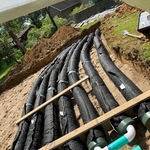
Jack Hahn Excavating, Inc.
5.0(
1
)
Building Site - Preparation and ClearingExcavation - Major Grading or ReslopingLandscape - Minor Grading or Resloping

Serving Mount Vernon, IN and surrounding areas

In business since 1979

Credit card accepted

Offers commercial services

Jack Hahn Excavating, Inc.is committed to excellence in every aspect of our business. We uphold a standard of integrity bound by fairness, honesty and personal responsibility. Our distinction is the quality of service we bring to our customers. Accurate knowledge of our trade combined with ability is what makes us true professionals. Above all, we are watchful of our customers interests, and make their concerns the basis of our business.

Response time3 hrs
Recommended by100%of homeowners
Showing 1-10 of 48
Excavating questions, answered by experts

Trenching and boring are two distinct methods for installing underground utilities. Trenching involves digging a channel using equipment like an excavator, trencher, backhoe, or shovel. While it is a simpler process, it causes significant disruption to the surface, landscaping, and surrounding ecosystems.

Boring, also known as directional boring, is a less invasive alternative that uses a drill to create a tunnel for utility lines without disturbing the surface. This method is more precise and is ideal for installations that need to go underneath buildings, roads, or bodies of water. Although boring is less disruptive, it is generally more expensive than trenching.

There are several methods to hollow out a tree stump, and the best one depends on your tools, experience, and priorities. Common methods include using a chisel and hammer, a chainsaw, or burning.

  • Chisel and Hammer: This is often considered the easiest approach for those with limited tools or experience, though it is the most time-consuming.

  • Chainsaw: Using a chainsaw is the fastest method, but it comes with significant safety risks, especially for inexperienced users.

  • Burning: This can be an effective method, but it is not recommended unless you can first drill holes into the stump. Without holes, the stump will be difficult to light and may not burn completely through.

A power drill with at least a ⅜-inch diameter bit can make the job quicker and easier, regardless of the primary method. While you can use a chisel or chainsaw without a drill, it will require more time and effort. Always wear protective goggles and thick gloves, as splinters are an inevitable risk.

The cost to drill a well varies, with a national average of around $5,500 for a 150-foot well. However, prices can fluctuate significantly based on several factors, including your location, the required well depth, geological conditions, local regulations, and the specific drilling methods used. For the most accurate cost assessment, it is best to research and get quotes from local well-drilling professionals in your area.

The best way to protect tree roots is to avoid the roots entirely by excavating outside the root radius of the tree. For nearby projects, it’s a good idea to construct a temporary retaining wall. But that’s not always possible, depending on the project and the root system. In these cases, consider using alternative equipment like an auger to tunnel under the ground.

Remember, tree roots can damage nearby cement foundations as they grow. If a tree is close enough to interfere with large excavations, it may be better to remove the tree than risk future problems.

Hardscaping often requires preparation of the ground in the area where the feature is being installed. This can include digging, compacting, and leveling the soil, ensuring adequate drainage, and removing any existing plants. The extent of preparation needed will depend on the type and size of the hardscaping feature being installed.

The Mount Vernon, IN homeowners’ guide to excavation services

From average costs to expert advice, get all the answers you need to get your job done.