






Top-rated radon detection and reduction specialists.

Get matched with top radon detection and reduction specialists in Crawfordsville, IN

Enter your zip and get matched with up to 5 pros

Need a pro for your radon detection and reduction project in Crawfordsville, IN?

Select your specific project to find the pro for you.

Find Radon detection and reduction specialists in Crawfordsville

Avatar for Epic Radon Solutions
Epic Radon Solutions
4.9(
140
)
Radon Gas - Abatement

Serving Crawfordsville, IN and surrounding areas

Approved

In business since 2021

Free estimates

Small jobs welcome

"They were easy to deal with and installed the system exactly as they described. We have yet to test the new radon levels, but have been assured it will work."
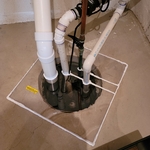
Standard Radon Mitigation
Response time12 hrs
Response rate90%
61 neighbors recently requested a quote
Avatar for SM Inspection Services LLC
SM Inspection Services LLC
4.9(
244
)
Radon Gas - AbatementRadon Gas - Testing

Serving Crawfordsville, IN and surrounding areas

In business since 2011

Free estimates

Emergency services offered

"I worked with Pam throughout the entire experience. She was wonderful. She contacted me quickly to schedule an appointment and also scheduled radon testing on my behalf. We had to reschedule due to a snow storm, but she was quick to contact me and arrange a new day. On the day of the appointment, she showed up on time. We spent a few hours at the house while she inspected it. She pointed out a few issues here and there. As soon to be first time homeowner, I really appreciated this. She sent the inspection report the following day. It included in depth details and pictures.
"
Recommended by97%of homeowners
Avatar for Master Services
Master Services
4.5(
197
)
Radon Gas - AbatementRadon Gas - Testing

Serving Crawfordsville, IN and surrounding areas

Free estimates

Emergency services offered

Warranties offered

"The gentlemen were kind, courteous and respectful. As I mention above, my slab was 8ft by 16 ft. Along one 16ft edge, the slab had dropped by about 4 inches. I don't know when it was installed, but I would guess it was part of the original construction (1954), and was enclosed probably in the 70s. The gentlemen arrived with 1 2ft bubble level and 2 digital levels which were perhaps 1ft in length. From there, they proceeded to place their 2 ft level so that its end touched the 16ft edge, the opposite end parallel to the 8ft dimension. They raised the level so the buble was centered and marked the adjacent brick wall about 1 inch up from its base. Did I mention the slab is 8 ft wide in the parallel dimension to their level? Did I mention the slab had dropped about 4 inches along that 16ft edge? I suggested they use my 4 ft level instead, which they really didn't, relying in their 2dt and 1ft levels instead. They raised the dropped edge about 2 inched, and the whole slab about one inch, resulting in the edge which was down 4 inches, being down only 3 inches now. At this point, cracks began to precipitate in the slab, so they suggested we stop, which I agreed. Then they suggested my 4ft level was inaccurate, and that their 2ft level was more accurate, reporting the slab only slightly out of level. At that point, I stacked their level on top of mine, and demonstrated that their level centered the bubble before mine did, but when my bubble was centered, so was theirs; their level was inaccurate with respect to mine! In the end I was told that, once the foam was fully cured, I could get a subsequent leveling. Unfortunately, they had no more open appointments until March. Meanwhile, that slab was under my laundry room, which I removed, temporarily supporting the roof with beams on the surrounding ground, and engineered joists. Since I'd rather wash my clothes at home than wait til March, I decided to level the build a floor over the slab instead, as the foundation for the new laundry room structure (enclosing the plumbing for the laundry room might also prove useful when the outside temperature falls below freezing soon). To be fair, when the job was quoted, I asked about the ability to lift the entire structure, and was assured that wouldn't be a problem, so the guy who quoted the job did not know I would tear the structure down. However, he surely knew there was a chance the slab would crack, and that if it did, they would not be able to address the remainder of the leveling until March. My general review is this: * Admit to the problems which could occur up front so that the consumer can make a wise choice, rather than selling the job with promises of making the slab level. I have no doubt that, give the time, they could make it level. But starting the job in October, and finishing it in March is not acceptable. * Have proper equipment and train your people to use it. Showing up with a 2ft bubble level and 1 ft digital levels, then not understanding that the lift indicated by a 2ft level, when brought to level, is only 1/4th the lift needed for an 8ft span is rank naivete on levels and similar triangles. Not knowing that the pinch of the vile, (or likely the curve, in the vile is offset to one edge, as their 2fter was) determines the accuracy of the level was just the final blow for my assessment of their competence. The fact that I wound up doing exactly what I was trying to avoid; build a wooden platform which was level on top of the sloped slab, makes it seem like a complete waste of $1700 to have them come to my house. I only hope that the result of the foam pumping is that any voids under the slab were filled, and that it now has a foundation under it which will not erode further. I am certain they do fine work, and the price I paid was in line with what i was expecting. The workmanship and apparent level of competence, however, was disappointing."
Before
After
Response time1 day
Response rate100%
Recommended by93%of homeowners
Radon Detection and Reduction questions, answered by experts

Options include sub-slab depressurization, crawlspace ventilation, and sealing cracks. Choose based on home construction and radon levels.

Yes, many systems include warranties for performance. Confirm terms with your installer.

No level of radon is technically safe, but since it is present everywhere, complete avoidance is impossible. The average radon level in homes across the United States is 1.3 picocuries per liter (pCi/L). The Environmental Protection Agency (EPA) recommends taking preventative measures if your home's radon levels are between 2 and 4 pCi/L or higher.

The cost for a radon mitigation system typically ranges from $800 to $1,500, with an average around $1,000. The final price depends on several factors, including the size of your home, the severity of the radon issue, and the type of system required. Your home's foundation type also significantly impacts the cost. For example, sealing and ventilating an unfinished basement might cost around $4,600, while encapsulating a crawl space without a foundation slab can range from $1,500 to $15,000.

The lifespan of a radon mitigation system depends on the type of system and its maintenance. With proper care, a system can last for many decades. Passive systems tend to last longer as they have fewer components that require replacement. Active systems, which have more moving parts like fans, generally have a shorter lifespan. For instance, water filtration devices and active pressurization systems require more frequent maintenance. While the system as a whole is durable, the radon fan in an active system typically has a lifespan of 5 to 10 years and will need to be replaced. As long as the fan is working, the mitigation system should function correctly.

The Crawfordsville, IN homeowners’ guide to radon detection and reduction services

From average costs to expert advice, get all the answers you need to get your job done.