






Top-rated mulch and topsoil pros.

Get matched with top mulch and topsoil pros in Gooding, ID

Enter your zip and get matched with up to 5 pros

Need a pro for your mulch and topsoil service project in Gooding, ID?

Select your specific project to find the pro for you.

Find Mulch and topsoil pros in Gooding

CT Landscaping
New to Angi
Lawn Care - Maintain and Mow a Lawn

Serving Gooding, ID and surrounding areas

Approved

In business since 2019

Free estimates

Credit card accepted

We take great pride in our experience, expertise, quality and customer service, that we provide to meet the consumer's needs. It is our mission to provide excellent workmanship, and complete customer satisfaction, from start to completion of a project. In order to understand the needs and expectations of our customers, we take great care to work and communicate, with every customer in a professional manner. Our reputation is based on service, safety and quality, regardless of how large, or small the job. Call us today!

Snow and Waste Valet, LLC
5.0(
1
)
Lawn Care - Maintain and Mow a Lawn

Serving Gooding, ID and surrounding areas

In business since 2015

Free estimates

Credit card accepted

With over 22 years of experience in the Landscaping, Sprinklers, and Snow Removal industry, we are the experts you need to take care of your home or business. We handle everything from Tree Removal to Snow Removal. We will treat your home as we would treat our own. Give Snow and Waste Valet, LLC, a call today, we look forward to working with you!

Response time8 hrs
Response rate100%
Recommended by100%of homeowners
Showing 1-10 of 32
Mulch and Topsoil questions, answered by experts

Mulching any time of year can attract termites, so there’s no added risk in the fall. The important thing to remember is that termites are attracted to rotting wood, so you need to lay a thin enough layer that won’t trap too much moisture and lead to rotting. A layer between 1 and 4 inches thick should provide all the benefits you’re looking for without attracting termites.

When you purchase mulch for delivery, it’s usually by the cubic yard, so you’ll want to convert your space to cubic yards to get the right amount. First, determine the square footage of the area you want to cover, and then determine how deep the bed of mulch will be—a good rule of thumb is around three inches. Multiply your square footage in feet by the depth in inches and divide by 324. You may want to add a ½ to one additional cubic yard to ensure you have enough.

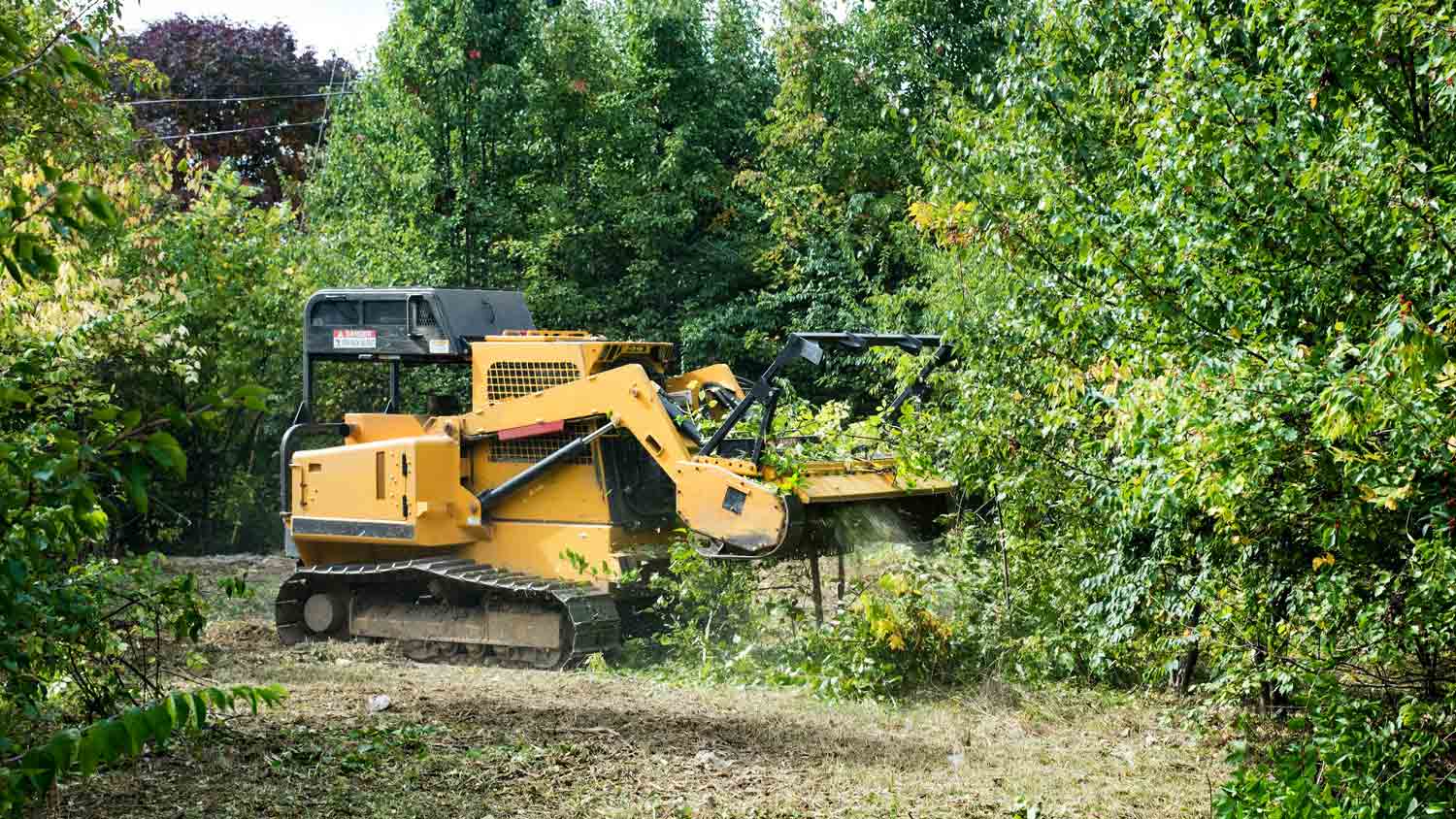
Some drawbacks of forestry mulching include leaving behind a thick mulch layer, not being suitable for extremely rocky areas, creating conditions that attract pests, and not being able to fully remove large trees and stumps. You may need to pay extra to have larger trees felled and stumps ground in order to fully clear your land.

Pea gravel can retain some heat, but it generally stays cooler than materials like concrete, asphalt, or stone pavers. Lighter-colored pea gravel reflects more sunlight and tends to stay cooler, while darker-colored gravel can absorb heat and become warmer to the touch.

The depth of your decomposed granite depends on its intended use, but around 3 to 4 inches is the most common depth. Driveways that need to support a lot of weight should be at a depth of no less than 6 inches. Walkways that won’t see a lot of weight but lots of foot traffic should be built at a depth of 3 to 4 inches, and patios should also be between 3 and 4 inches deep.

The Gooding, ID homeowners’ guide to mulch and topsoil services

From average costs to expert advice, get all the answers you need to get your job done.