"Best electric company in Kona! I’m absolutely blown away by the level of professionalism and dedication Ultimate Electric provided me on many of my renovation projects. 100% satisfied with Daniel and his crew. He is always on time every time, consistently fast, easy to deal with and fairly affordable. I highly recommend!"
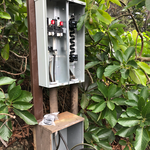
"It's about two hours after I shared my electrical issue on Angi when I received a call from Jordan West willing to help me out. He was in Hilo side and was about to head out to Kona. So he asked me about my electrical issues and I explained it to him. He asked me to take pictures of my main panel box and the type of breaker. I sent him the pictures and all the informations and he showed up hours later, did some tests, replaced the breaker and BOOM, there was light. Everyone in the house were happy. It only took him two minutes of work to restore back electricity to my home. I am forever grateful for this particular gentleman a job well done. Way to go Jordan West and your company. I will definitely hire him again whenever I encounter electrical issues in the future. Much Mahalo Jordan West."
"I have had a huge issue for 6 issues at my rental property...Several electricians came out, and could not find it, but Isaiah did...So the issue was a crazy voltage drop on all my circuits when I ran the washing machine. It turns out that when the place was built, multiple sizes of gauge wire were used, and a thin wire created a voltage drop. I can not say thank you enough for actually figuring it out. Isaiah also dropped the bill down to half price because I'm a brokie. Thank you so much."
How often you’ll replace your electric meter depends on what type of meter you have in your home. Induction meters can last around 10 years, while static meters will typically last around 20. If you’re unsure which kind of meter you have, a call to your electric company can help ease your mind.
Whether you need electrical upgrades depends on the electronics your game room includes. If your game room will have high-powered electronics, arcade machines, or a home theater, you may need to upgrade your electrical panel or add dedicated circuits. An electrician can assess your current system and provide an estimate for any necessary upgrades.
If only half of your outlet works, there are usually two possible causes: faulty wiring or a half-hot outlet. The first thing you'll want to do is check the circuit breaker panel to ensure that it's not tripped. If your circuit breaker isn't tripped, turn off the electricity and inspect the wiring to see if anything has come loose or corroded.
If you have a half-hot outlet, it means half of the outlet is controlled by a switch somewhere on the same circuit, which should be nearby. This is an intentional electrical design commonly found in rooms without overhead lights.
No, it’s extremely dangerous to cap off live electrical wires. Working with live wires puts you at serious risk of electric shock, which can cause injury or even be fatal. Whenever you need to cap off electrical wires or complete any electrical work in general, it’s essential to shut the power off at the breaker before you begin.
Upgrading your electrical panel is often worth the cost for safety, improved electrical performance, and potential long-term savings. A primary benefit is preventing electrical fires and other hazards from a malfunctioning panel, ensuring your household's safety. An upgraded panel also provides a steady flow of electricity, eliminating issues like flickering lights and frequently tripped breakers. It allows you to connect additional appliances without overloading the system, which is especially beneficial for older homes with 100-amp service that are prone to overheating. If you run large appliances like central air conditioning, heating systems, hot tubs, or saunas, you might consider upgrading to a 300- or 400-amp service to meet the higher electrical demand. Furthermore, an upgrade can lead to long-term savings on energy bills and potentially lower insurance costs.
The Keauhou, HI homeowners’ guide to electrical services
From average costs to expert advice, get all the answers you need to get your job done.
Before you hire a licensed electrical contractor, you should learn the cost to run electric from the road to your house so you can budget for the project.
Whether you’re shopping for a new home or simply doing a safety check on your current place, learn what factors influence an electrical inspection cost.
Is it time to upgrade your electrical panel? For the sake of safety, find out sooner than later by exploring our top signs that it’s time for an upgrade.