







Top-rated welders.

Get matched with top welders in Savannah, GA

Enter your zip and get matched with up to 5 pros

Need a pro for your welding project in Savannah, GA?

Select your specific project to find the pro for you.

Find Welders in Savannah

Avatar for Buddha's Mobile Welding
Buddha's Mobile Welding
5.0(
3
)

Serving Savannah, GA and surrounding areas

In business since 2015

"I knew this guy would be great just by his nickname, but his talent, work ethic and professionalism is unmatched by far from my past experiences. He came to me saw and did exactly what needed to be done in a timely manner and affordable price what more can you ask for. He is truly an 11/10 welder and person. He will be the only person I hire for jobs in the future!!"
Response time30 mins
Recommended by33%of homeowners
...
Showing 1-10 of 78
Welding questions, answered by experts

The average cost for a welding project is about $300, with typical costs ranging from $125 to $490. However, prices can be as low as $125 for very small jobs or exceed $1,200 for large or complex projects. Welders typically charge an hourly rate between $65 and $150, depending on their experience, and many charge a minimum fee to cover overhead and travel expenses. The total cost is influenced by several factors, including labor, the cost of materials like metal rods and shielding gas, the type of metal being welded, the project's size and complexity, and your geographic location. For a precise quote, it's best to ask a local welder for an estimate based on your specific project.

Some welding projects, such as repairing pipes or fences, require travel, whereas others, like furniture repair, do not necessarily require the welder to come to you. Travel and overhead factor into the overall cost of your welding project. Some of the most common welding projects include:

  • Metal furniture repair: $35–$100

  • Pipe repair: $200–$1,000

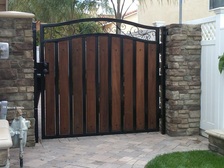
  • Small gates: $550–$750

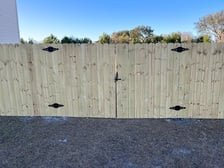
  • Fencing: $1,200–$1,800

  • Fabricated sheet metal welding: $750–$2,500

Cutting rectangular ductwork requires careful measurements and the right technique. Use a measuring tape and pencil to mark the cutting lines accurately. Tin snips are excellent for straight cuts on smaller ducts. For more extensive or thicker rectangular ducts, a reciprocating saw with a metal-cutting blade is effective. 

Ensure the duct is well-supported and secure while cutting to prevent wobbling and maintain precision. After cutting, use a metal file to smooth any sharp edges, ensuring safety during installation. 

Yes, but you’ll need reliable steel-cutting tools and safety gear to get started. Shipping containers are typically around ¾ inch thick, so it’s entirely possible to cut through them, but experience and the right equipment are very important. When possible, try to get a container as close to the size you want it as possible.

Welding is the process of using extreme heat—and, sometimes, pressure—to attach two pieces of metal. In contrast, metal fabrication is a more involved process that can include welding, sheet metal work, bending, and other forms of metal manipulation. Metal fabrication is a large-scale project that may or may not involve welding, while welding is more often a step in larger fabrication projects.

The Savannah, GA homeowners’ guide to welding services

From average costs to expert advice, get all the answers you need to get your job done.