




"The tech was very knowledgeable and went above and beyond to satisfy us. Our faucet was broken would not attach to the sink as the copper seal broke to the water lines."
"One oven doesn't work at all ( my choice, see above), the "working" oven was never calibrated properly so using it is hit or miss. It's time to call American Home Shield to see about replacing the entire unit. I'm waiting to finish other home projects before calling them. I don't know if I'll request Greenway again."
Install Above Ground Pools questions, answered by experts
The average 12-by-24-foot in-ground pool costs $48,500, but depending on the features and materials, prices can trend even higher. You’ll spend less on a rectangular vinyl or fiberglass pool than on a concrete pool in an elevated style (think infinity pool or lagoon pool). Added features like heating, lighting, diving boards, or decking will increase your overall cost.
The total time to install an inground pool typically ranges from 8 weeks to 4 months. This timeline can be influenced by several factors, including permitting, site preparation, and the construction process itself.
Key phases and their typical durations include:
Permits: Obtaining necessary permits can take anywhere from two to six weeks.
Excavation and Site Preparation: This phase takes about a week but can be extended by problematic soil, unexpected ground conditions, or the need to move underground utility lines.
Construction: The actual build, including plumbing and electrical work, often takes one to two months. The pool material is a major factor here; a concrete pool needs about 30 days to cure, while installing a fiberglass or vinyl liner is much faster.
External factors can also cause significant delays:
Contractor Availability: Spring and summer are busy seasons, and high demand can lead to long waitlists, potentially adding months to your start date. It is often recommended to start planning and getting estimates up to a year in advance.
Other Delays: Weather, material shortages, complex designs, and other unforeseen challenges can extend the project timeline.
You’ll need at least 50-by-10 feet for a residential lap pool. Endless pools need as little as 15-by-8 feet. Deciding which type of pool is right for you and your family will depend heavily on the size of your backyard and what can comfortably fit. Don’t forget to leave room for other structures and activities in your yard, such as a swing set, shed, garden, or outdoor grill.
If you put too much chlorine in your pool, it can make the pH level more acidic, creating a health risk. You might experience symptoms like nausea, dizziness, vomiting, skin rashes, and irritation in the eyes, nose, throat, and lungs. To lower the chlorine level, you can turn off your chlorinator or chlorine feeder, add more water to dilute the pool, or remove the cover to let sunlight naturally reduce the chlorine.
Rectangular pools, particularly those made of vinyl or fiberglass, are the easiest to maintain. The long, straight sides, right angles, and smoother surface make regular cleaning a breeze without having to maneuver into curves and nooks. Rectangular pools also tend to be standard sizes, so you may have an easier time when it comes time to replace liners, covers, and other parts.
The Putney, GA homeowners’ guide to above ground pool installation services
From average costs to expert advice, get all the answers you need to get your job done.
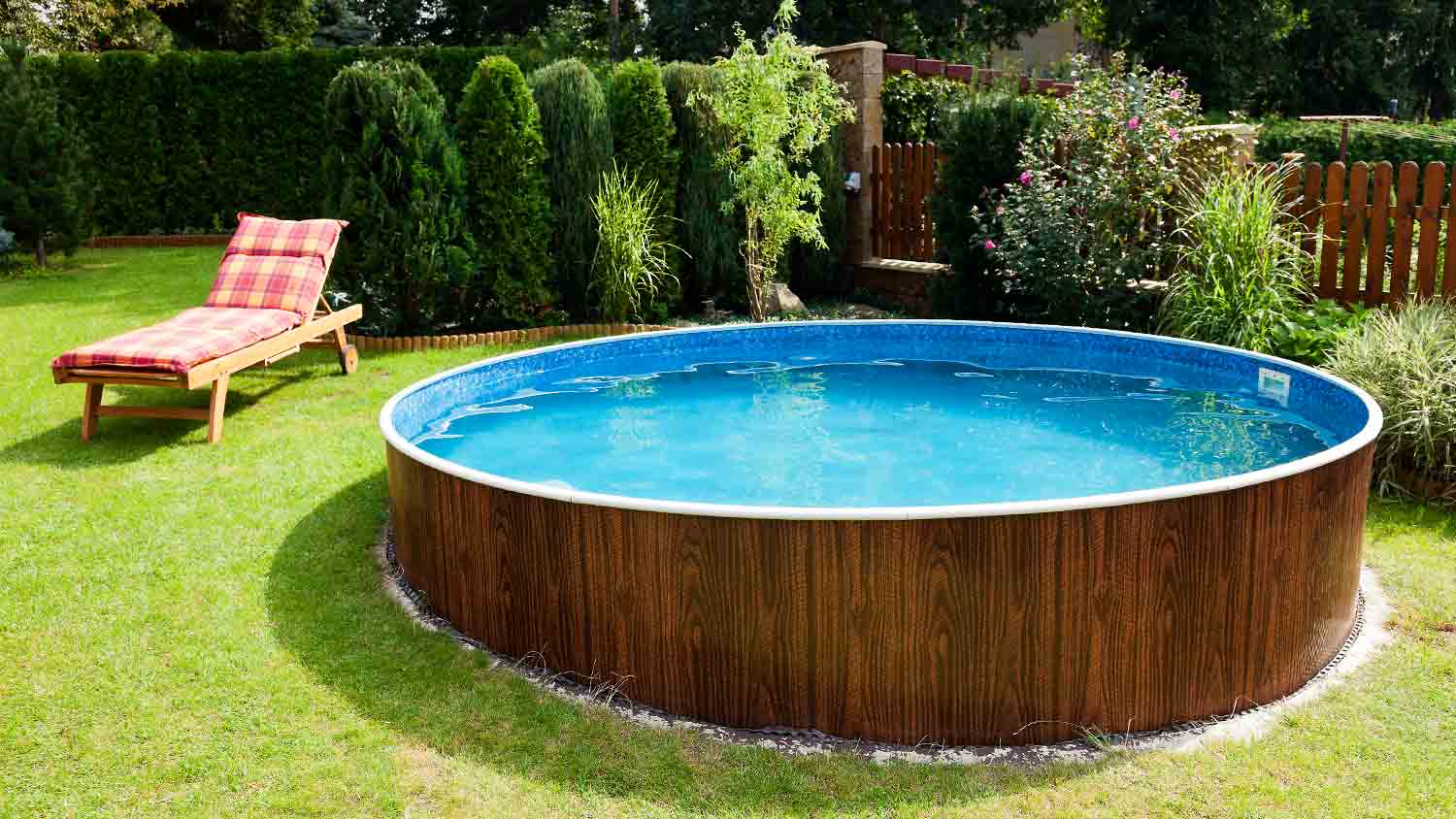
Above ground pools are more affordable than inground pools, so can you put an above ground pool in the ground to save money? Learn when it’s safe to do so.