






Top-rated septic tank pros.

Get matched with top septic tank pros in Pearson, GA

Enter your zip and get matched with up to 5 pros

Need a pro for your septic tank service project in Pearson, GA?

Select your specific project to find the pro for you.

Find Septic tank pros in Pearson

Avatar for Wilcox Septic Solutions
Wilcox Septic Solutions
2.5(
21
)
Septic System - Install or Replace

Serving Pearson, GA and surrounding areas

In business since 2022

Free estimates

Emergency services offered

We take great pride in our experience, expertise, quality, and customer service that we provide to meet the consumers' needs. It is our mission to provide excellent workmanship, and complete customer satisfaction from start to completion of a project. In order to understand the needs, and expectations of our customers, we take great care to work, and communicate with every customer in a professional manner. Our reputation is based on service, safety, and quality, regardless of how large or small the job.\n

Response time5 hrs
Response rate99%
Recommended by52%of homeowners
Satilla Septic - Septic Tank Service - Waycross, Georgia - 66 photos Facebook
New to Angi
Septic Tank - Clean or Pump Out

Serving Pearson, GA and surrounding areas

In business since 2018

Free estimates

Credit card accepted

With over 6 years experience in the septic industry, Satilla Septic, LLC is your industry expert in Ware County and the surrounding areas. We pride ourselves on our extreme professionalism and attention to detail. Our customer satisfaction guarantee will assure you that we will not leave your property until you are completely satisfied with our work. As a family owned and operated business you can trust we will treat your home as we would treat our own. Give us a call today! We look forward to working with you!

Response time40 mins
Response rate100%
Septic Tanks questions, answered by experts

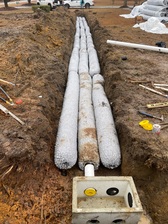
Drain fields often include three to five trenches that are 18 to 24 inches deep. The pipes connecting the drain field to the septic tank will be placed between 12 and 18 inches deep, and the field as a whole will be about 100 feet long.

Deciding between an engineered septic system and a conventional one depends on property size, soil quality, local regulations, and environmental factors. If your property has limited space, poor soil, or is close to sensitive environmental features, an engineered system may be required. Professional site evaluations, considering water usage, long-term plans, and budget constraints, can help determine the appropriate choice. Consulting with a septic system professional is crucial for ensuring compliance with regulations and selecting the best system for your property's unique needs.

There are a variety of different types of septic systems that can work in your home—such as conventional anaerobic systems, chamber systems, drip distribution systems and mound septic systems. All of them work using natural processes to break down solid waste and effectively treat wastewater without needing to be connected to a city sewer system. Which type of septic system you need will depend on characteristics of your property like how high the bedrock is or groundwater table is. Different types of systems come at different costs to install.

To prevent septic tank problems, save on repair costs, and keep your home running smoothly, it's essential to perform regular maintenance. Have your septic system inspected by a professional every one to three years, or annually if possible, to spot potential issues before they develop. You should also have your tank pumped every three to five years, or more frequently if recommended by a professional based on your household's usage. Additionally, be mindful of what goes into your system. Avoid flushing items like paper towels, wet wipes, and feminine hygiene products. Do not dispose of other inappropriate substances, and try to avoid excessive water usage at a single time.

A household of four can easily fill a 1,000-gallon septic tank within a week. It may be 10 to 14 days for smaller households. But the reason why you don't need weekly pumping is because the tank's contents eventually reach the overflow pipe. They flow down this pipe to the absorption area whenever water is used in your home. The tank keeps working at this full level until it's pumped again.

The Pearson, GA homeowners’ guide to septic tank services

From average costs to expert advice, get all the answers you need to get your job done.