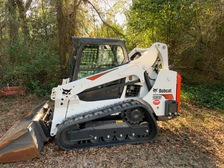
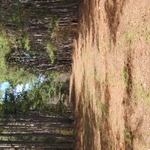
We pride our company on reliability, great communication, integrity, and quality work. We are experts in our trade and will do our best to keep you as educated as we can on your particular task or project. \n\n$25 estimates!
We are committed to excellence in every aspect of our business. \nWe uphold a standard of integrity bound by fairness, honesty, and personal \nresponsibility. Our distinction is the quality of service we bring to our customers. \nAccurate knowledge of our trade combined with ability is what makes us true \nprofessionals. Above all, we are watchful of our customers' interests and make \ntheir concerns the basis of our business.
I am a small business owner, wanting to grow with my customers to fulfill their needs. I am willing to do anything to make them happy and also to make sure the job is done right.
Here at Kat Construction and Excavation, we pride our company on reliability, great communication, integrity, and quality work. We strongly believe in giving our absolute best in all of our projects no matter how big or small. We are experts in our trade and will always keep you educated on your particular task or project. We look forward to earning your business!\n
We are dedicated to providing our clients with the very best in excavation and building site services. We specialize in residential and commercial services, and take pride in the attention to detail put into each of the projects we are involved with. We are known for our quality work and the integrity of our business. We understand that without our wonderful customers we would not be able to continue growing. This is why we have set such a high priority on our customer service. Your satisfaction is paramount to our business.
Sapp's Construction, is committed to excellence in every aspect of our business. We uphold a standard of integrity bound by fairness, honesty and responsibility in all of our jobs. We are a locally owned and operated business with more than 16 years of experience serving Hephzibah, GA and surrounding areas. There is no job too big, or too small for our team. Call today and let us put our experience to work for you!\n\n
South Georgia Land Development and More is a leading construction company in Adrian, GA focuses on providing optimum quality in various construction services. We take great pride in our work as we have over 20 years experience in the industry. Thus, rest assured, no matter what construction project we handle, we will be providing nothing but highly professional and expert works.
Southern & Son Land Management aims to provide quality work at a low price. As a new business, our main goal is to gain satisfied customers that will help our business grow! We can handle jobs, big or small, ranging from your clearing and grading projects to that aggravating drainage issue in the back yard. Need that dead tree removed or an old building in the back torn down and hauled off? Give us a call. Or a new rock driveway to lead up to the new building pad we just built you? We’re here. Give us a call for a free estimate! We can’t wait to help you get your land fixed right up. Ask about our military and senior citizen discounts.
Prior to excavation, you should prepare the dig site and call 311 before you sign anything.
To get your site ready for excavation, you should move anything in the area that isn’t affixed to the land. You can save money on the excavation by removing hardscaping, including walkways, decks, concrete patios, and paver patios.
Before you carry out any digging, you should call 311 to confirm that there are no utility lines running through your excavation site. Skipping this step could lead to severe injury and property damage if your excavator hits a water, sewage, or gas line.
Preparation involves site assessment, clearing debris, grading surfaces, and compacting soil to support stable construction.
To determine whether your homeowners' insurance will cover crawl space repair, consider the cause of the issue. Repair may be covered if the problems were caused by an event that the insurance covers, such as vandalism or a windstorm. However, companies won't cover the repair if the issues are caused by neglect or wear and tear.
Landscape edging is more DIYable than trenching. You can DIY your own digging projects, but proceed carefully and only with proper knowledge of the equipment and appropriate safety measures in place. Keep in mind the project's scope and estimate how long it will take you to do it on your own. While you can certainly save money by DIYing home improvement projects, you can’t exactly hide an unfinished—or worse, ruined— landscaping job from the neighbors. It’s always safer to call an excavation pro near you to get an estimate.
There is no standard depth for burying a septic tank; they are typically buried anywhere from 4 inches to 4 feet underground. The final depth depends on several factors, including the depth of your main sewer line, the height of the bedrock, soil type, local regulations, and the property's landscape. If you plan to grow grass or plants over the tank, a depth of at least 4 to 6 inches is recommended. Deeper tanks can be more difficult to locate, but a septic professional can help find it for you.
The Gibson, GA homeowners’ guide to excavation services
From average costs to expert advice, get all the answers you need to get your job done.
Excavation costs $1,500 to $6,300 for most residential projects—but it depends on factors like the size of the area. This guide will help you plan a budget.
You can't have an in-ground pool without digging into the ground. How much does pool excavation cost, and can you take it on yourself? Our guide explains.
Picking the right pro can make or break your project. Learn how to hire an excavation pro with the qualifications and skillset to do the job efficiently.