"Tim was very helpful, working me into the schedule and doing a great job of troubleshooting an electrical problem and quickly fixing the issue. I would hire him again in a minute!"
"On Demand Electrical Service installed all of my home audio system throughout the house indoor and outdoor. Service was highly professional with quality performance. On Demand Electric come highly recommended."
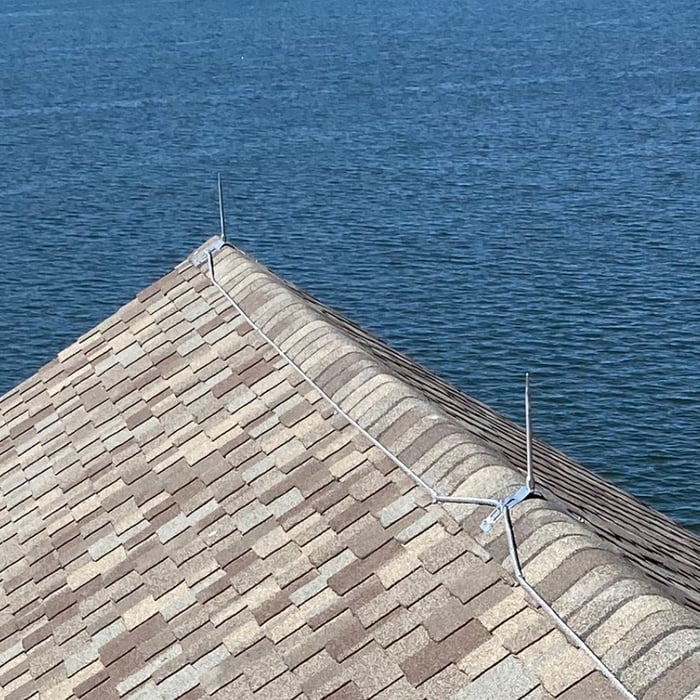
"Ed Riley is extremely knowledgeable about what causes lighting and how to protect from it. He explained to me which and how structures develop static electricity that lead to lighting discharges in a way that the physics made sense to me. They were also reasonably priced and kept their word. Definitely recommend them."
"Mr Townsley knows his trade Iâ m a retired electrical engineer and Iâ m very satisfied with the installation of the lightning rods Jim never cut any corners and did a excellent job"
"WB Lightning is focused on customer service. The company provided good communication and responded very quickly to my inquiry for a quote. WB Lightning is a respected company, I had another electrical service provider tell me I made a good choice when I hired WB Lightning Rods."
With over 4 generations of experience in lightning protection, StrikeForce is who you need to protect your home from lightning damage. We handle everything from the initial consultation to completion of service with customer satisfaction as a priority. Give us a call today. We're looking forward to working with you!
Soldering is a reliable and durable way to connect wires, but it isn't the only method. Nowadays, professionals often crimp the connection instead—although this requires a higher degree of skill than soldering.
Most standard residential water heaters, which are typically around 40 gallons and use 240 volts and between 3,500 and 5,500 watts, require a 30-amp, two-pole circuit breaker. For smaller, point-of-use water heaters using 120 volts and between 1,500 and 3,000 watts, a 30-amp breaker is also often adequate. However, some models may have different needs; units that use more watts than average may require a 40-amp breaker, while smaller units might only need a 20-amp breaker. Newer, tankless, or more energy-efficient models can also require a higher amperage. Having the correct breaker size is crucial for safe and efficient operation, so it's best to consult a licensed electrician to determine the specific needs of your water heater.
Aluminum wiring can pose a fire risk as it can overheat, expand, and contract, leading to failing splices and loose connections. If your home has aluminum wiring, it requires careful maintenance and potential safety upgrades. The first step is to hire a licensed electrician to conduct a thorough inspection.
A complete replacement with copper wire is the safest option but can be very expensive and is not always necessary. Other safety measures and upgrades include:
Copper Pigtailing: A more budget-friendly option where a short section of copper wire is added to each end of the aluminum wire. This is only appropriate for certain homes.
Aluminum-Compatible Outlets: Installing outlets specifically designed for use with aluminum wiring.
Anti-Oxidant Paste: Applying this paste to connections to prevent oxidation.
Consulting with a qualified electrician is essential to assess the condition of your wiring and determine the most appropriate updates to meet current safety standards.
You can run a small or basic standard-size refrigerator on a 15-amp circuit. But you should plug a modern, standard-size refrigerator into a 20-amp dedicated circuit. The refrigerator needs to be on a dedicated circuit, meaning it is the only appliance and outlet on that circuit breaker. This method prevents tripping the breaker and reduces the chance of an electrical fire.
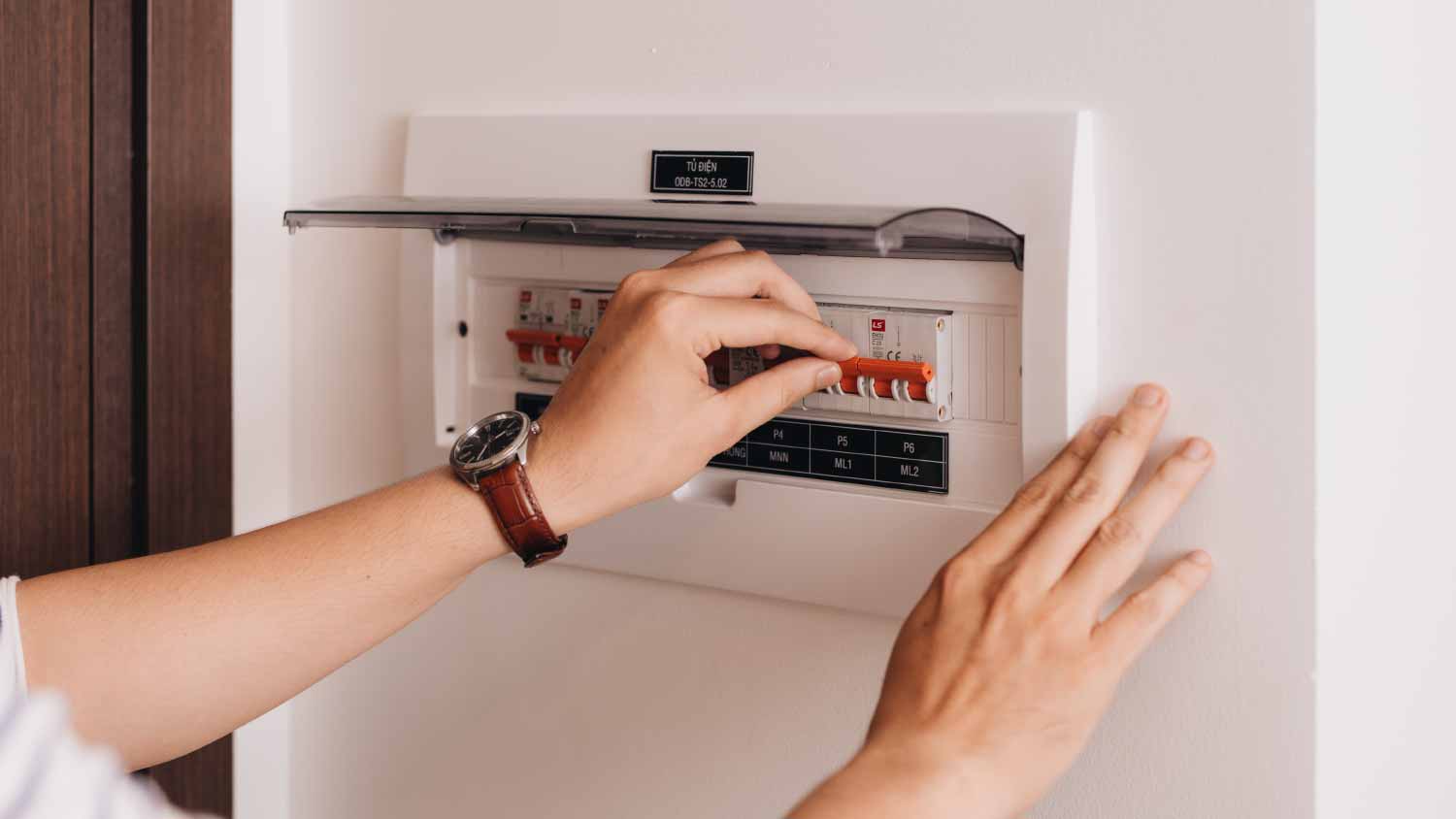
While not always necessary, wiring your circuit breaker in a certain way can ease both the installation process and use afterward. For starters, you’ll need to install the electrical panel so that the main service knockout aligns with the cable conduit. If they aren’t aligned, you may not have sufficient working space to finish running the wires. Using cable trays, on the other hand, gives you a bit more freedom to and flexibility in where and which direction you install the wires. At the end of the day, the power flow will be the same whether the cords run up or down.
The South Bay, FL homeowners’ guide to electrical services
From average costs to expert advice, get all the answers you need to get your job done.
Is it time to upgrade your electrical panel? For the sake of safety, find out sooner than later by exploring our top signs that it’s time for an upgrade.