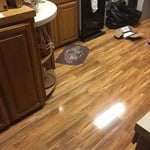
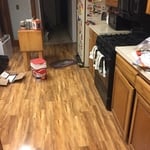
"Remodeled kitchen. The work he did was OK. I wanted a contract. Kept asking for one. He showed up with the contract the day I paid him. Kept having to call to see when he would show up to work again. He would tell me and sometimes he would not show up or call. Took them 2 1/2 months to finish. The appliances were on backorder. They were not in by the time he finished, except for a few things like cleaning paint splatter, and caulking. He said he would come back and install appliances and finish up. Appliances were delivered and two weeks later I was still calling to see when he would come back. He would not say. I was telling him on the phone that I would hire someone else and he hung up on me. I called and left a message telling him that this is business and if he has the courage to call back in the next two or so days, it is fine. Otherwise, I am hiring someone else. He never called me."
Welcome to D & D Contracting! We take pride in the quality of work and customer satisfaction that we give each and every customer. We are known to pay exquisite attention to detail while making customer satisfaction our top priority. Call us today to learn more about how we can help you!
"The company was able to start right away. They were flexible with working with my plumber to get sump pump drains in the concrete. The floor looks great. I almost hate cover it with carpet. I ended up hiring the company to do my sidewalk as well. Sidewalk was pricier than I expected but looks great!"
We're a locally owned and operated company that values honesty, integrity and treats your home as if it were our own. We offer a variety of general contractor home improvement services that are customizable to each individual project. We specialize in additions and kitchen remodels but also offer a wide range of expertise for a variety of other projects. We pride ourselves on the quality of our work as well as our commitment to outstanding results. We look forward to building lasting relationships and guarantee your satisfaction!
Fire Pit Installation questions, answered by experts
While adding fire sprinklers to your home, you may want to consider other fire prevention and protective measures. Get your smoke alarms and CO alarms inspected and replaced, if needed. Add fire doors to vulnerable areas of your home. Inspect or purchase fire extinguishers. For exterior protection, consider fire-smart landscaping practices .
Start by checking the top or side edge of the door. Look for a certification label or metal tag stamped with details like the fire rating and information on the manufacturer. Even if it’s painted over, the tag should still be visible. Next, look along the edges for slim intumescent strips. They’re designed to swell up and seal gaps when exposed to heat. Finally, check if the door closes itself. Most fire doors have a self-closing mechanism, like an overhead closer or spring hinges. If none of these are obvious, contact a fire safety professional to help verify your door.
In general, it will take about 90 minutes to burn the creosote sweeping log by itself, allowing it to work its magic. This may be longer or shorter depending on the conditions of your chimney.
When a carbon monoxide alarm goes off, you should always take it seriously. Infrequent and occasional chirps often point to a low battery, a faulty device, or dust buildup (this usually affects smoke detectors and not standalone CO detectors). A continuous alarm signals an emergency, and you should immediately evacuate and call 911. When it comes to carbon monoxide in your home, it’s better safe than sorry.
No, but they both serve distinct life-saving purposes. Smoke detectors primarily sense the presence of smoke, typically caused by a fire, and emit loud alarms to alert occupants to evacuate. In contrast, carbon monoxide detectors monitor the levels of carbon monoxide gas, an odorless and colorless but deadly substance produced by incomplete combustion of fuels. When CO levels become dangerous, CO detectors sound alarms to warn inhabitants of potential poisoning risks.
The Springfield, CO homeowners’ guide to fire pit installation services
From average costs to expert advice, get all the answers you need to get your job done.
A fire pit installation costs $850 on average but can vary by size, fuel type, materials, and more. See how much you need to budget for a new fire pit.
Discover fire door cost data, including installation, materials, and tips to save. Learn what impacts fire door pricing and how to budget for your project.
Discover home fire sprinkler system costs, including installation, maintenance, and key cost factors. Learn how to budget and save on your home fire protection.
A fire pit adds attractive entertainment space to your backyard. Learn about standard fire pit dimensions and what factors contribute to fire pit size.