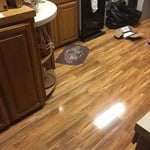
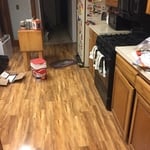
We are dedicated to being number one in all areas from customer service to overall job satisfaction. Our contractors are the best of the best, fully trained and safety oriented. \nWe have been serving the Junction City area since 2007.
"The company was able to start right away. They were flexible with working with my plumber to get sump pump drains in the concrete. The floor looks great. I almost hate cover it with carpet. I ended up hiring the company to do my sidewalk as well. Sidewalk was pricier than I expected but looks great!"
H&A Dumping Services LLC is committed to excellence in every aspect of our business. We uphold a standard of integrity bound by fairness, honesty and personal responsibility. Our distinction is the quality of service we bring to our customers. Accurate knowledge of our trade combined with ability is what makes us true professionals. Above all, we are watchful of our customer's interests and make their concerns the basis of our business. Please give us a call today!
We pride our company on reliability, great communication,\nintegrity, and quality work. We are experts in our trade and will do our best\nto keep you as educated as we can on your particular task or project. We look\nforward to earning your business!\n
We take great pride in our experience, expertise, quality, and customer service that we provide to meet the consumer's needs. It is our mission to provide excellent workmanship and complete customer satisfaction, from the start to the completion of a project. In order to understand the needs and expectations of our customers, we take great care to work and communicate with every customer in a professional manner. Our reputation is based on service, safety, and quality, regardless of how large or small the job.
FHR is committed to excellence in every aspect of our business. We uphold a standard of integrity bound by fairness, honesty, and personal responsibility. Our distinction is the quality of service we bring to our customers. Accurate knowledge of our trade combined with ability is what makes us true professionals. Above all, we are watchful of our customers' interests, and make their concerns the basis of our business.\n
Fire Pit Installation questions, answered by experts
Installing a spark arrestor on your home’s chimney is an essential task. It reduces fire risk and ensures your chimney is compliant for insurance and building code purposes. Not having a spark arrestor could invalidate your home insurance or cause snags when it comes to a house sale.
The NFPA model codes and International Residential Code (IRC) mandate that all new one- and two-family homes have fire sprinkler systems. However, all municipalities are different. The best way to determine if your municipality requires fire sprinklers is to contact your state fire marshal’s office. One reason to install a fire sprinkler system is that it’s the first line of defense in putting out a fire and alerting your family of emergencies.
Generally, an oil furnace is considered safer than a gas furnace for several reasons. While both types of furnaces can produce carbon monoxide, a leak in an oil furnace is easier to detect due to the smell. Oil furnaces also don't connect to a gas pipeline, which reduces the chance of a fuel leak. Most importantly, heating oil is not combustible, whereas natural gas is highly flammable. This means there is a much lower risk of combustion or explosion with an oil furnace. However, an oil furnace can still pose a fire hazard if it tips over.
Fire sprinkler systems give your home’s value a boost. Potential home buyers are looking for a safe place to settle, and a well-maintained sprinkler system can provide peace of mind. Plus, some homeowners insurance policies offer discounted rates for homes with this type of built-in system, thanks to the decreased risk of fire.
You can let a fire burn out in a fireplace as long as you or someone else will stick around to monitor it until it goes completely out. This may take several hours. To prepare, stop adding fuel to the fire well before you’re ready to call it a night. If you’re using the fireplace for warmth, you’ll want to cover up in some blankets as the flame dies down.
The Tribune, KS homeowners’ guide to fire pit installation services
From average costs to expert advice, get all the answers you need to get your job done.
A fire pit installation costs $850 on average but can vary by size, fuel type, materials, and more. See how much you need to budget for a new fire pit.
Discover fire door cost data, including installation, materials, and tips to save. Learn what impacts fire door pricing and how to budget for your project.
Discover home fire sprinkler system costs, including installation, maintenance, and key cost factors. Learn how to budget and save on your home fire protection.
A fire pit adds attractive entertainment space to your backyard. Learn about standard fire pit dimensions and what factors contribute to fire pit size.