

Top-rated drywall insulation pros.

Best drywall insulation pros near Drake, CO

Enter your zip and get matched with up to 5 pros

Need a pro for your drywall insulation project in Drake, CO?

Select your specific project to find the pro for you.

TRUSTED BY DRAKE, CO HOMEOWNERS

  • Average homeowner rating star icon4.6
    Average homeowner rating
  • Verified reviews icon335
    Verified drywall insulation services reviews

Top-Rated Drywall insulation pros in Drake - Updated Nov 2026

Avatar for RL Insulation
RL Insulation
5.0(
11
)
Blown-In Insulation - Install or UpgradeInjection Insulation - Install

Serving Drake, CO and surrounding areas

Approved

Super Service Award Winner

In business since 2021

Free estimates

Offers commercial services

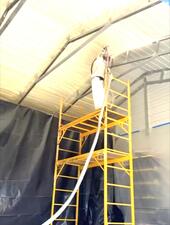
"RL Insulation LLC has been an incredible partner on several commercial projects for my company. Their team is reliable, efficient, and consistently delivers high-quality work. They complete projects quickly without sacrificing attention to detail, and their professionalism makes them a pleasure to work with. If you're looking for an insulation company that gets the job done right the first time, I highly recommend RL Insulation LLC!"
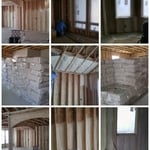
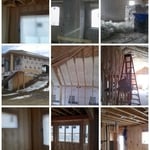
Recent Projects
Recent Projects
Recent Projects
Recent Projects
Recent Projects

+2

Response time1 day
32 neighbors recently requested a quote
Recommended by72%of homeowners

Avatar for J H Insulation
J H Insulation
5.0(
2
)
Blown-In Insulation - Install or Upgrade

Serving Drake, CO and surrounding areas

Approved

In business since 2010

Free estimates

Emergency services offered

We pride our company on reliability, great communication, integrity, and quality work. We are experts in our trade and will do our best to keep you as educated as we can on your particular task or project. We look forward to earning your business!

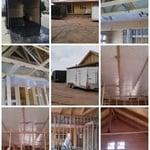
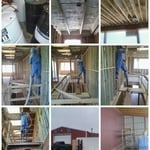
Artisia  NM  project
Fort Lupton  project
RV

+2

10 neighbors recently requested a quote
Showing 1-10 of 48
Drywall Insulation FAQs, answered by experts

While every home has its own unique needs, ceiling drywall installation typically follows a staggered or stepped pattern to enhance structural integrity and reduce the visibility of seams. Starting from one corner, sheets are placed perpendicular to the ceiling joists, with the ends of adjacent sheets meeting along the center of the joist. The next row begins with a half sheet, ensuring joints don't align vertically. This alternating pattern, combined with proper taping and mudding, creates a seamless appearance and strengthens the ceiling structure, minimizing the risk of cracks over time.

Although they have similar applications, spackle and joint compound are not the same. Their primary differences lie in their composition, consistency, and ideal use cases.

Spackle is composed of gypsum and binding agents, making it thicker than joint compound. It dries quickly and is easy to sand, which makes it ideal for small wall repair projects like filling nail holes or patching minor damage.

Joint compound, also known as drywall mud, consists of limestone and gypsum. It is primarily used for large-scale projects, such as taping and finishing the seams on newly installed drywall. It tends to shrink more than spackle and can be more difficult to spread.

While both products can be used to fill small depressions and cracks, spackle cannot replace joint compound for taping and mudding new drywall. Conversely, you can often use joint compound for small patching jobs typically done with spackle.

Knowing what causes drywall damage can help stop it before it starts. Here are some of the most common causes of drywall damage: 

  • Water damage from roof leaks or leaky pipes. 

  • Small holes caused by doorknobs, minor accidents, and rodent infestations. 

  • Wall dents stemming from moving furniture and minor accidents. 

  • Wall cracks that form from a settling foundation or seismic activity. 

  • Nail pops from nails and screws in the walls. 

  • Large holes that are caused by accidents with heavy objects, children and pets, or sporting equipment.

If you don’t have studs in the area where you want to install your TV mount, you may still be able to install a TV mount on drywall. The easiest way to install a mount on drywall is by using drywall anchors—but not just any plastic anchors. Choose molly bolts or toggle anchors, which have a weight capacity of around 50 pounds. For added support, consider pairing drywall anchors with a wall mounting plate. Extra heavy TVs may need to be mounted via the ceiling joists or beams.

To hide drywall edges, you need to properly apply drywall tape and multiple layers of joint compound. These materials hide the seams between drywall sheets and fill the holes from drywall screws, leaving behind a smooth, flat finish to paint over. Apply joint compound smoothly, and finish the job by sanding the walls to make sure you fully hide drywall edges and other imperfections.
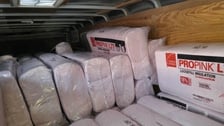
The Drake, CO homeowners’ guide to drywall insulation services

From average costs to expert advice, get all the answers you need to get your job done.