


Top-rated basement waterproofing pros.

Get matched with top basement waterproofing pros in Heber, AZ

Enter your zip and get matched with up to 5 pros

Need a pro for your basement waterproofing project in Heber, AZ?

Select your specific project to find the pro for you.

Find Basement waterproofing pros in Heber

Avatar for Groundworks
Groundworks
5.0(
7
)
Foundation, Basement or Crawlspace - Waterproofing / EncapsulationBasement Drainage Channels - InstallBasement Drainage Channels - Repair

Serving Heber, AZ and surrounding areas

Approved (Corporate)

In business since 2000

Free estimates

Warranties offered

"Alex and Donavan were very thorough. Discovered more than what we called them for. We originally wanted information on sealing cracks to eliminate cricket infestation coming through cracks in stem wall. We were not interested in repairing foundation rebar which is typical in slab homes in AZ. They were knowledgeable and honest in their evaluation of our home."
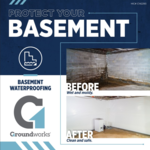
Basement Waterproofing
Crawl Space

+22

170 neighbors recently requested a quote

Basement Waterproofing questions, answered by experts

The best type of basement ventilation system depends on your budget, the moisture in your basement’s air, and the types of windows you have down there. You should consider all of these factors when choosing a ventilation system. However, the most effective method for basement ventilation is an energy recovery ventilator (ERV) or a whole-house ventilation system, which preheats or precools incoming air from the outside while also managing water vapor.

A plastic vapor barrier should completely cover your basement to prevent water from penetrating through the walls. This typically goes before installing insulation to prevent moisture from building up and becoming trapped on the inside of your insulation, where it can collect and lead to mold damage. Installing insulation after the vapor barrier allows for any moisture to exit the walls for better ventilation.

While "dry" mode on your AC can help reduce humidity levels to some extent, it may not be as effective as a dedicated dehumidifier, especially in areas with extremely high humidity or larger spaces. Dehumidifiers are specifically designed to remove moisture from the air more efficiently, making them a better choice for tackling persistent humidity issues.

While a standard gutter system is widely considered the most effective way to prevent water damage to your home's foundation, several alternatives are available. These options can be used on their own in certain climates or as supplementary protection.

Common alternatives include:

  • Rain Chains: These are decorative chains that hang from the roof's edge, guiding rainwater to the ground.

  • Drip Edges: These metal strips are installed at the edge of the roof to direct water away from the fascia. While often used with gutters, they can be paired with a ground-level solution but are typically not sufficient on their own.

  • Rain Dispersal Systems: These systems work by breaking up the heavy sheet of water flowing off the roof, dispersing it over a wider area.

  • French Drains: This ground-level system uses a perforated pipe in a gravel-filled trench to collect and redirect water runoff away from the house.

  • Drip Paths: Placed directly below the roofline, these paths made of concrete, stone, or other materials prevent soil erosion and guide water away.

It's important to note that some alternatives like rain chains and dispersal systems may not be adequate in regions with heavy rainfall because they don't divert water away from the foundation as effectively as a full gutter system. Ground-based solutions like French drains can be very effective but are often more expensive and can affect your landscaping and curb appeal. Many experts recommend installing a full gutter system for maximum protection and using alternatives as supplementary measures.

While water in your basement is unlikely to make you sick unless it’s coming from a sewage backup, mold is likely to start to grow in wet areas within 24 hours, and mold can make you sick. According to the Centers for Disease Control and Prevention (CDC), inhaling mold spores can cause allergy symptoms, including runny nose, itchy eyes, difficulty breathing, wheezing, and itchy skin. Individuals with pre-existing respiratory issues like asthma and immunocompromised individuals are at an elevated risk of symptoms when inhaling mold spores.

The Heber, AZ homeowners’ guide to basement waterproofing services

From average costs to expert advice, get all the answers you need to get your job done.