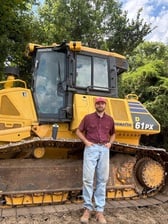
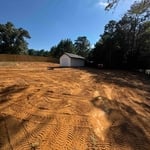
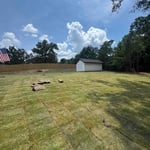
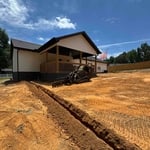
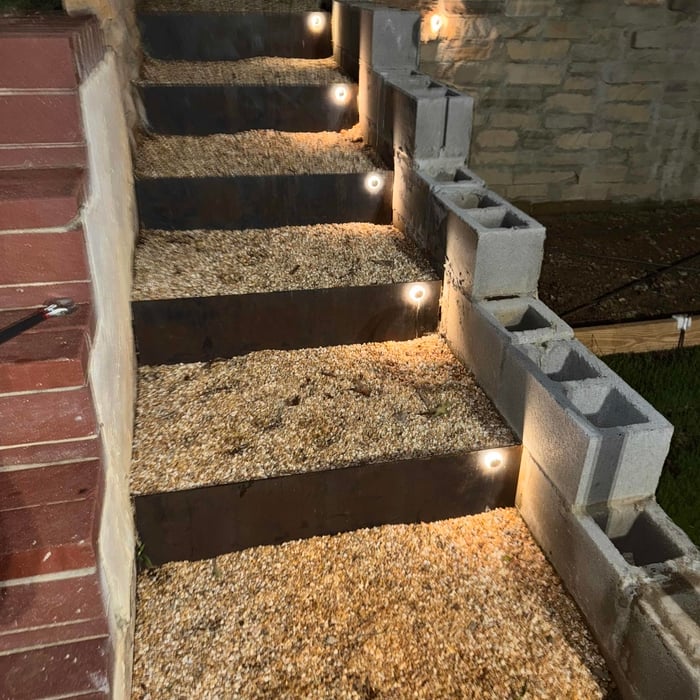
"Cameron did a fabulous job clearing our heavily overgrown pastures. He was polite, professional and very respectful of our property. I highly recommend him."
"Outlaw Lawn Care did a great job refreshing my pine straw. It was a big job on a very steep hill. He kept appointments and delivered what was promised. I’d whole heartedly recommend Outlaw Lawn Care!"
"Brandon responded quickly and arrived within a hour. He explained what needed to be done, and then got right to work. He did an excellent job and I am very pleased with his work. I highly recommend him."
Hello, My name is Jacob Stevens I run a few businesses and the best way to describe my main job is inventor/scientist as my main job. I got into this because I kept helping people with handy man like tasks and decided I might as well do it as a side thing. Handyman tasks are something I generally enjoy doing and seems to be needed in our area. I am very detailed oriented and can solve any problems given enough time and budget. When given a task I prefer to do It fast and efficient before moving on to another task but I am able to multitask very well. Thank you for reading this and I hope you have a great day.
East Atlanta Junk Removal provides fast, reliable, and professional junk removal services throughout Atlanta and surrounding areas. We handle everything from single-item pickups to complete property cleanouts, including furniture, appliances, household junk, garage and basement cleanouts, yard debris, construction debris, move-out cleanouts, and commercial jobs.\n\nOur goal is simple: show up on time, work efficiently, respect your property, and leave your space clean and clutter-free. No job is too big or too small. Whether you’re a homeowner, renter, landlord, realtor, contractor, or business owner, we’re ready to help.\n\nContact East Atlanta Junk Removal for dependable service, fair pricing, and FREE estimates. Same-day and next-day service may be available.
I’ve been working in landscaping for 5-6 years with my father and he has more than 20 years of experience in landscaping. We are a family owned business and my father has worked for two landscaping companies and those companies are Montgomery landscaping and Golden Landscapes. We've done irrigation and drainage work in multiple locations in alabama, we also do trimming, mulch, and straw. We do work in Montgomery, Wetumpka, Prattville, Millbrook, Alabaster, and any other city in the state of Alabama. We are very well versed in trimming ,irrigation and drainage systems, and laying sod and installing shrubs, trees and flowers. We take pride in our work and we cater to every aspect of what the client asks of us and we always ask for the clients opinion of the project before we finish. I believe we should be hired because of are amazing work ethic and experience we have in doing landscaping and our top priority will be to satisfy all clients with any project they have for us to complete.
Parham Solutions LLC is a small, dedicated landscaping team focused on creating and maintaining beautiful outdoor spaces. As professional landscapers, we take pride in quality workmanship, attention to detail, and dependable service on every visit. \n\nFrom routine maintenance to overall yard care, we treat every property with the same care and respect we would our own. You’ll always know what to expect: clear communication, reliable scheduling, and results that make your outdoor space look its best. \n\nIf you’re looking for a trustworthy team to keep your yard clean, attractive, and well-maintained, we’re here to help.
Completion time ranges from days to weeks, contingent on project size, environmental conditions, and regulatory approvals.
No, you typically cannot use metal detectors to find your sewer line. Most sewer lines are made of non-metallic materials such as PVC, clay, or cast iron, which are not detectable by standard metal detectors. Metal detectors are designed to locate metallic objects, so they won't be effective for identifying the path of a non-metallic sewer line. To locate your sewer line accurately, it's best to use other methods.
You can bury underground electrical wire six inches deep—but only if you use a rigid metal electrical conduit. For rigid, non-metallic conduits, bury the wire at least 12 inches deep. If using an underground feeder cable rated for direct burial, you'll need to place it at least 18 inches deep, as it has no conduit for extra protection.
Errors in site preparation can lead to structural failures or appear costly midway. Professionals ensure detailed, reliable home base development layouts.
Tree experts don’t advise against digging through tree roots, but instead encourage caution and consultation with a local arborist to make sure you don’t damage the tree’s structure or interrupt its water or nutrient intake. An arborist can recommend specific practices when digging and help prune the roots or dig a trench for utilities with a tool that can remove soil without touching the tree’s roots.
The Roanoke, AL homeowners’ guide to excavation services
From average costs to expert advice, get all the answers you need to get your job done.
Excavation costs $1,500 to $6,300 for most residential projects—but it depends on factors like the size of the area. This guide will help you plan a budget.
You can't have an in-ground pool without digging into the ground. How much does pool excavation cost, and can you take it on yourself? Our guide explains.