

•
Discover the cost to install hardwood stairs. Learn about material, labor, and additional factors to budget for your stair installation project.
Don’t let bad wiring short your circuit

Making a stair stringer for steps involves cutting precise notches into an angled structural board to support your treads and risers safely.
Your stringer choice affects both function and style, from closed stringers that hide hardware to open stringers that showcase your staircase construction.
Wood remains the most popular stringer material for residential projects, offering versatility and warmth that suits nearly any home design you prefer.
Hiring a local stair company removes the guesswork from measurements and code compliance, ensuring your staircase stays safe and structurally sound.
A great staircase doesn’t just get you from point A to point B—it sets the tone for your entire house. Think open risers that let light pour through or a clean, tucked-in look that blends into the walls. Behind every one of these designs is something doing the heavy lifting: the stringer. It’s the piece that handles most of the behind-the-scenes work. Whether you’re building new or upgrading what you have, understanding stair stringers is the first step to getting it right.
A stair stringer is the angled structural board that runs along the side—or sometimes right down the middle—of a staircase, supporting each step from below. You’ll recognize it by its distinctive notched profile, carefully cut to hold the treads (the parts you walk on) and risers (the vertical boards between steps). Stair stringers aren’t just pieces of wood or metal thrown in for good measure. They’re the part of your staircase that actually carries the load.
The stringer bears all the weight: your steps, the weight of the materials, and whatever you’re lugging up and down the stairs. It transfers that load safely to the surrounding structure, namely the floors above and below. Think of it as the structure doing the heavy lifting. Without it, your staircase wouldn’t be a staircase at all—more like a precarious pile of boards.
Most staircases rely on at least two stringers, one on each side of the staircase. Wider stairs often call for a third stringer in the center for added support. When properly designed and installed, a stringer ensures your stairs are safe and stable. Without it, things can go from slightly wobbly to downright dangerous. Whether it’s for a deck, basement, or interior staircase, the stringer is the literal backbone that makes your entire staircase secure, reliable, and built to last.
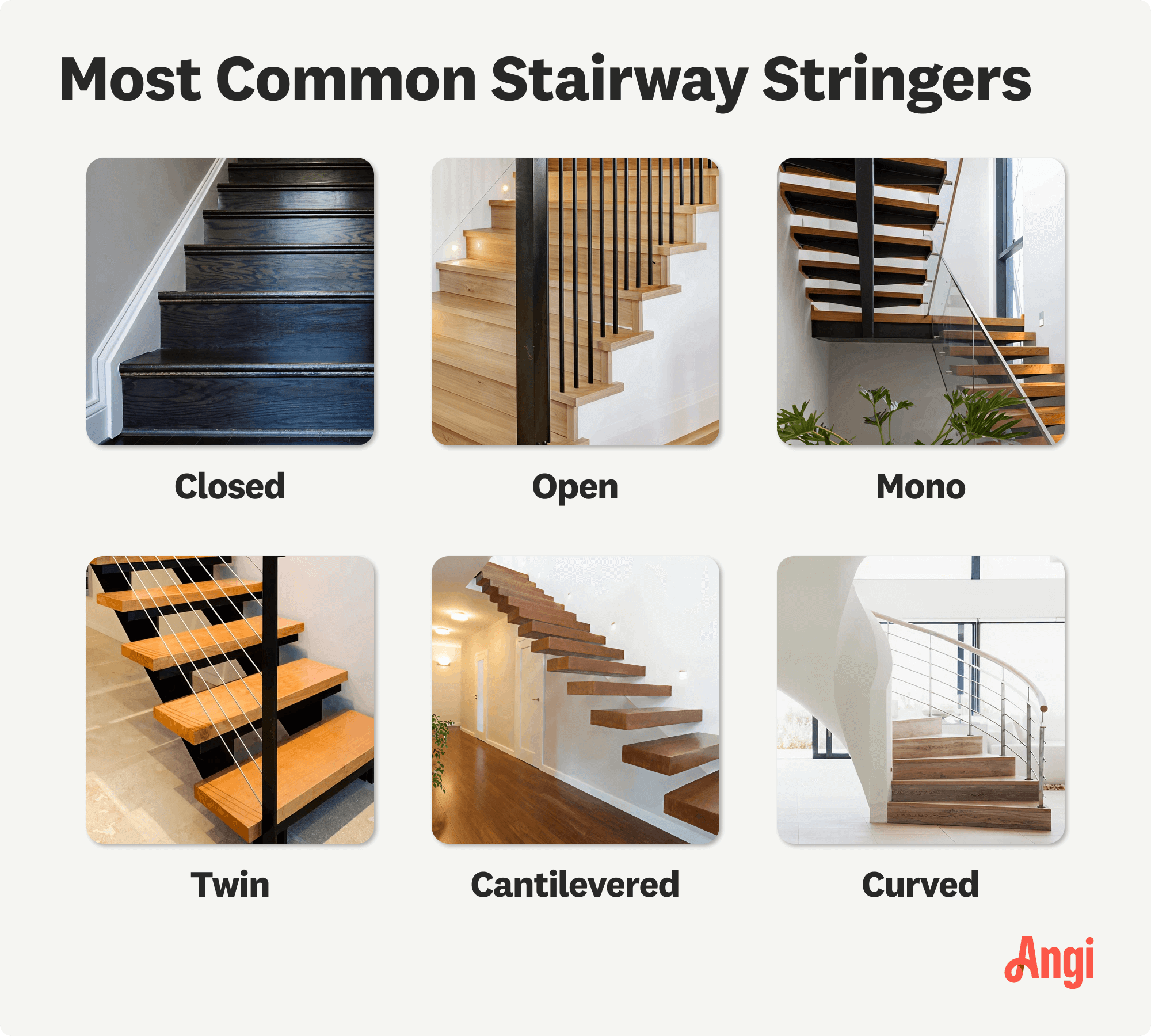
Some staircases blend into the background, while others make a statement once someone enters your home. Either way, the type of stringer used sets the tone—both structurally and visually. Whether you’re planning for subtle and seamless or designing a bold architectural feature, the type of stringer you choose has a major impact on the finished look and feel. Here’s a breakdown of the most common styles.
Also known as housed or boxed stringers, these run along the sides of the staircase with the treads and risers tucked neatly into grooves inside the board. That means no exposed ends, just a clean, continuous line on each side. Closed stringers offer a polished, traditional look—perfect for homes, offices, and schools where both structure and aesthetics matter. They also do a great job hiding hardware, giving the staircase a crisp, finished look.
Open stringers, sometimes called cut or sawtooth stringers, have their top edge cut into a repeating pattern that matches the shape of the steps. This allows the edges of the treads and risers to show, which gives the staircase a more open and architectural look. You’ll often see these in contemporary homes or loft-style interiors where the construction details are meant to be seen, not hidden.
Mono stringers use a single, sturdy beam that runs underneath the center of the staircase. With no side supports in view, the steps seem to float in midair—especially if you skip the risers. This type of stringer is popular in high-end, modern homes that favor minimalism and open space. While it looks light, the center beam does all the heavy lifting, and it needs to be engineered to handle serious weight.
Featuring two beams—one on each side of the steps—twin stringers can support either open or closed tread designs. They’re a solid, balanced setup that’s found in just about every type of building, from residential builds to commercial spaces.
Cantilevered stairs rely on hidden supports, usually inside a wall or concealed beam, so that each tread appears to float by itself. The result is a staircase where each step juts out unsupported. No visible framework means you’re leaning on careful planning and engineering to ensure the stairs aren’t just pretty but safe, too. For this kind of complex build, it’s crucial to work with a local stair installation professional who understands the nuances and demands of this intricate design.
Curved stringers are for staircases that don’t follow a straight path. Whether forming a tight spiral or a sweeping arc, these stringers are shaped to guide the curve of the stairs. They’re found in dramatic entrances and sleek modern builds, and just like cantilevered stringers, they require serious planning and craftsmanship to get the flow (and the math) just right.
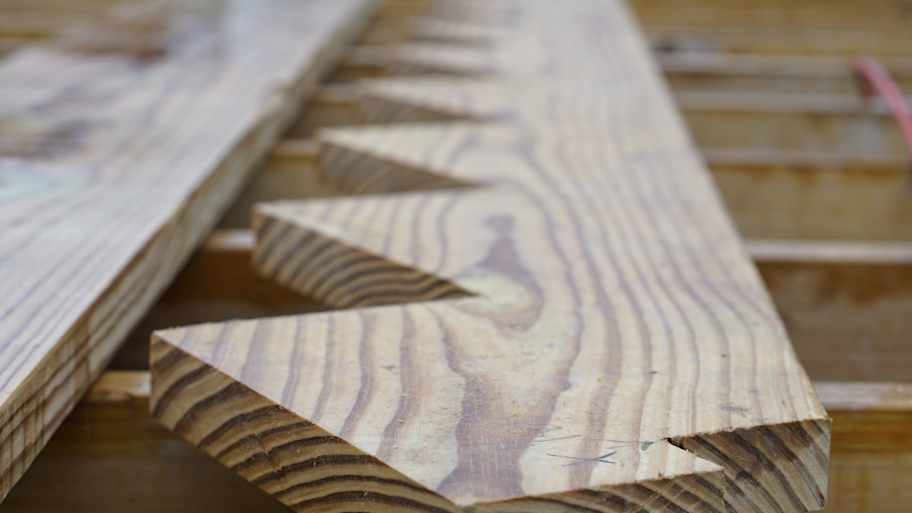
The look, feel, and function of your stairs depend heavily on the material of the stringers. Whether your home is rustic and classic or sleek and architectural, the material you choose for your stair stringers will shape the entire project.
Wood remains the go-to material for residential stairs. It’s versatile, relatively inexpensive, and brings a natural warmth that suits nearly any home style. From pressure-treated pine for outdoor decks to high-end (and expensive) hardwoods featured in interior spaces, wood offers a range of options that few materials can match. That said, it does come with its challenges, particularly with moisture, wood rot, and other defects. Whether you’re cutting them on-site or using a pre-fab version, wood stringers can be DIY-friendly for homeowners with carpentry skills.
Pros:
Easy to cut and customize with standard tools
More budget-friendly than metal options
Classic, versatile look
Absorbs sound better than metal
Cons:
Prone to rotting and warping over time
Susceptible to defects like knots
Limited span capacity compared to steel
Needs periodic sealing or refinishing if exposed
Steel brings strength and a clean, modern look that’s right at home in both commercial and high-end residential projects. It's ideal for floating or open designs where structural support is the priority. They can span longer distances and support heavier loads than wood, but they’re not a grab-and-go type of install. Steel stringers may look effortless, but most are custom-fabricated and require a lot of knowledge and experience in planning, precision, and fabrication.
Pros:
High load capacity and long span capability
Durable and rot-resistant
Can be customized into complex shapes
Requires little maintenance once finished Cons:
More expensive than wood
Tends to be louder under foot traffic
Requires welding and professional fabrication
Heavy and harder to install without equipment
Aluminum stringers offer a lighter alternative to steel, making them a favorite for outdoor structures or pre-fab modular homes. While they don’t pack quite the same punch, they hold their own in light to medium-duty builds. Their natural resistance to rust makes them a smart choice in areas with moisture exposure.
Pros:
Lightweight for easier transport and installation
Naturally resists rust and corrosion
Holds up well in outdoor conditions
Minimal maintenance needed
Cons:
May require thicker sections to meet load needs
More expensive than wood
Requires specialized fabrication for custom designs
Default finish (dull gray) isn’t always visually appealing
Cutting your stair stringers and installing them might sound like a satisfying weekend project, until you’re knee-deep in math, building permits, and uneven steps. Getting the rise and run just right, notching accurately, and ensuring structural integrity isn’t as simple as tracing a pattern. Even with wood, small miscalculations can throw everything off, making for an awkward (or unsafe) climb.
Building codes are strict for good reason, and meeting them takes more than a measuring tape and a circular saw. Unless you have solid carpentry skills, the right tools, and a strong understanding of local building codes, this is one job where hiring your local staircase installer isn’t overkill—it’s smart and safe.
Flawless finish and exceptional service. Custom Paint Jobs LLC is the only choice for me.
 Custom Paint Jobs, LLC
Visited my home for estimate same day that I called. Painted on Saturday. Great job. Good price!
Window Depot did an amazing job on my deck. I wasnt sure what I wanted to do, but their composite decking was affordable and will last a long time. I am excited to have family over, and I am no longer embarrassed by my backyard. Jeff and the ground crew were polite, respectful, and caring for...
 Window Depot USA of Central Ohio
The guys did an outstanding job and we had a great experience with CarifaTile. I appreciated that Joe reviewed the quotes with me and set expectations prior to the install. The crews showed up as scheduled and always left the areas clean upon leaving the house. We will definitely use...
 CarifaTile
Beginning with the estimate, Larry and Peyton were super helpful in getting my new condo's interior re-painted. Not only was the job well done, but also done in a super timely manner as promised.
 Five Star Painting of Plain City and Powell
BJ Trim Carpentry rescued me in the middle of a do-it-yourself project. I found I needed more expertise than I had...and more TOOLS! BJ Trim Carpentry responded quickly and completed what I needed expertly, politely and with a little humor!
This brownstone is historical and the carpentry work is very detailed. I was very happy to secure a company in NY and living in OH to complete the request. Wood work on this brownstone has been existing since approximately 1888 and West side did a GREAT JOB. I will not be able to...
 Westside Home Improvement
We had a great experience with Mark Rodgers Construction. We were in the process of seeking out estimates for possible foundation work for our front porch. Mark came out himself to provide the estimate. Turned out that the company deals mainly with concrete, so we wouldn't be getting an...
 Mark Rodgers Construction
Overall this experience was incredible! I looked on Angies List for a cleaning service because I was planning a holiday party and wanted to make sure we found a reliable, thorough and efficient cleaning service to make sure everything was perfect for the party since we had co-workers and...
From beginning to end our experience with Joe was very good. He was professional and prompt in his estimate for the job and worked hard to meet our schedule so that he could remove our old backsplash the day before our new countertops were removed and return shortly after they were removed to...
From average costs to expert advice, get all the answers you need to get your job done.
Discover the cost to install hardwood stairs. Learn about material, labor, and additional factors to budget for your stair installation project.
Discover stair repair cost estimates, including average prices, key cost factors, and tips to help you budget for your stair repair project.
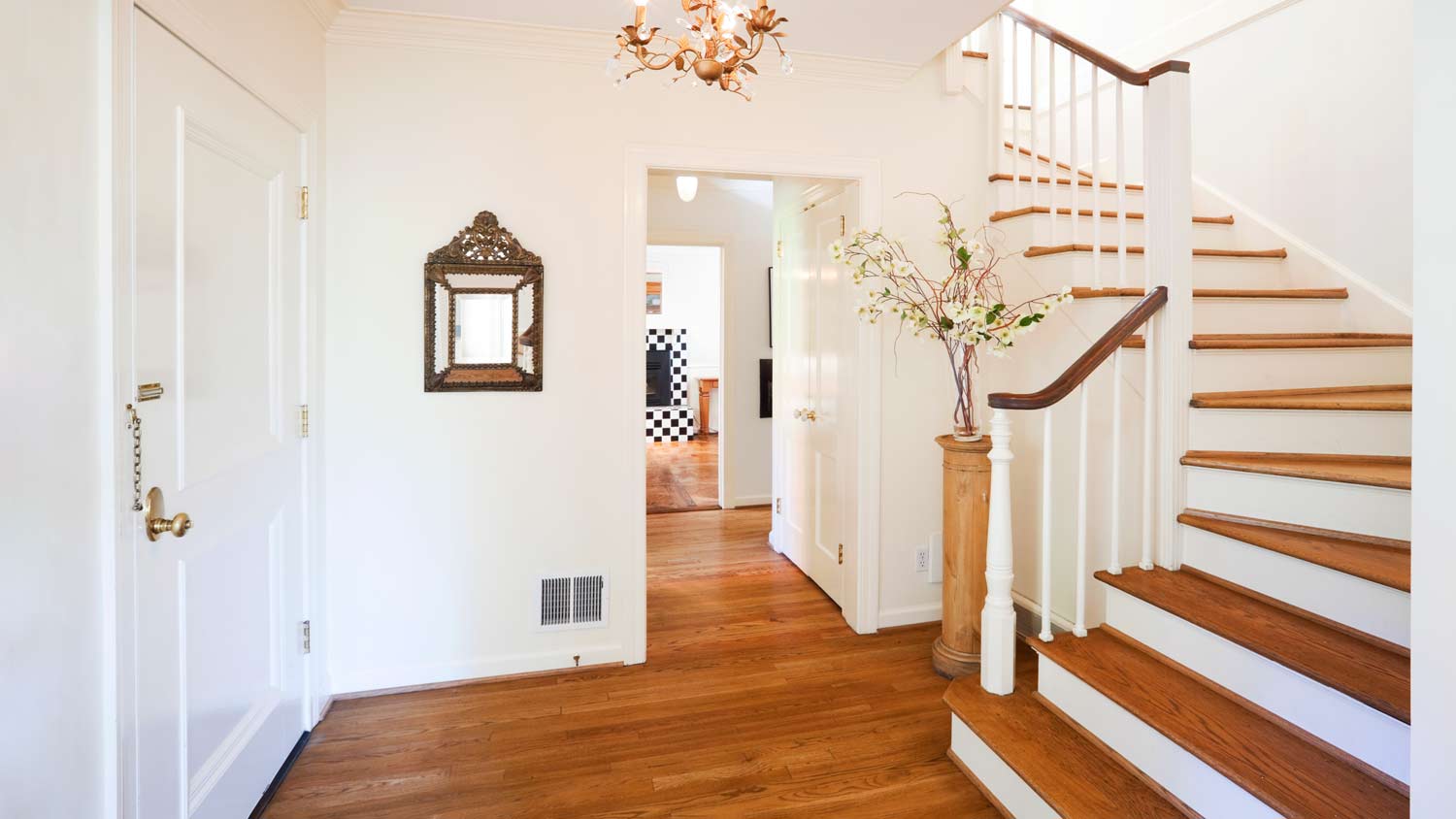
Refinishing stairs is a great way to spruce up one of a home's most dominant focal points. High-quality wood should be allowed to shine. Learn the cost to refinish stairs in this guide.
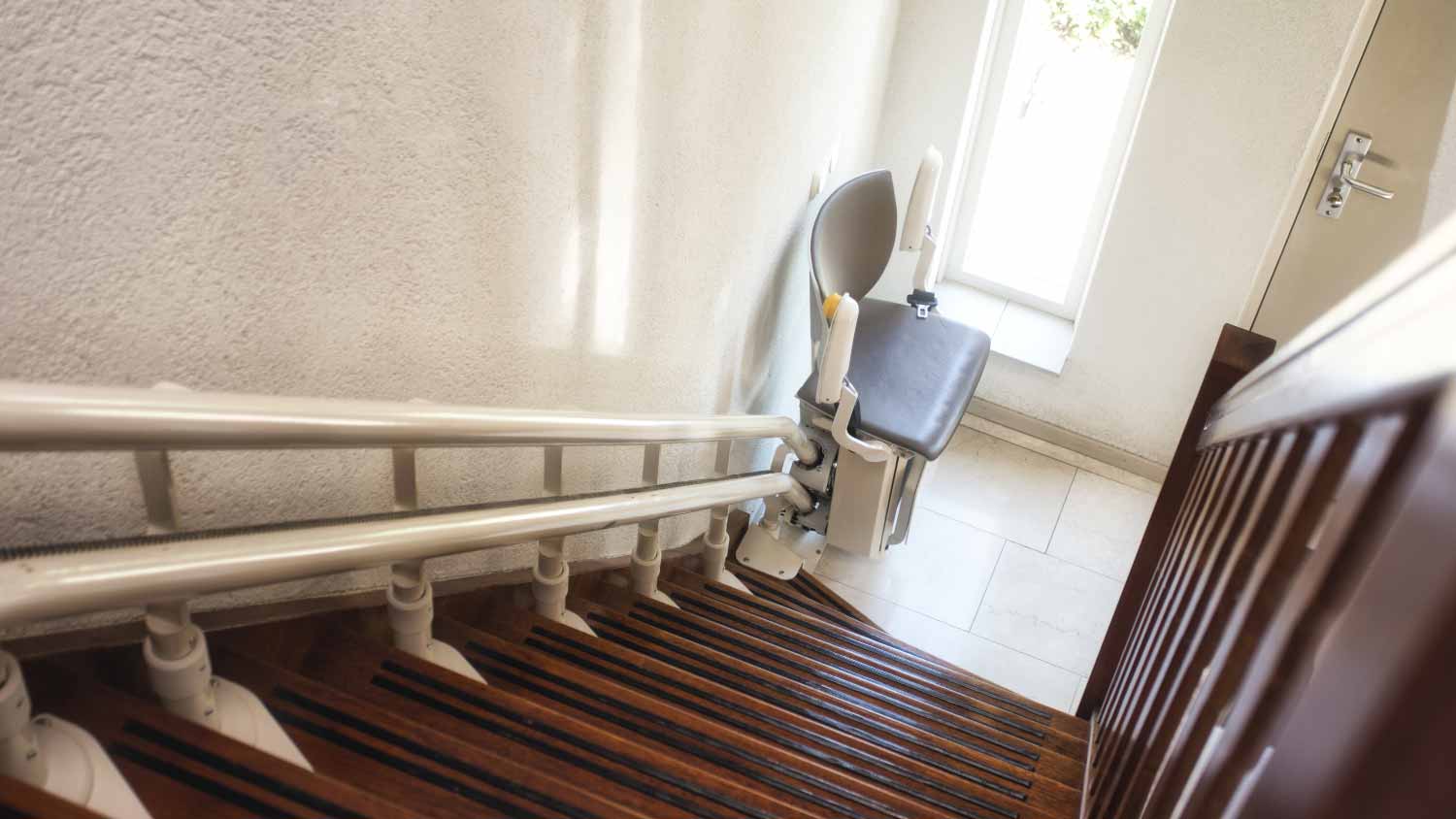
Learn how to hire a stair lift installation professional. Find qualified installers, get the right questions to ask, and ensure safe installation.
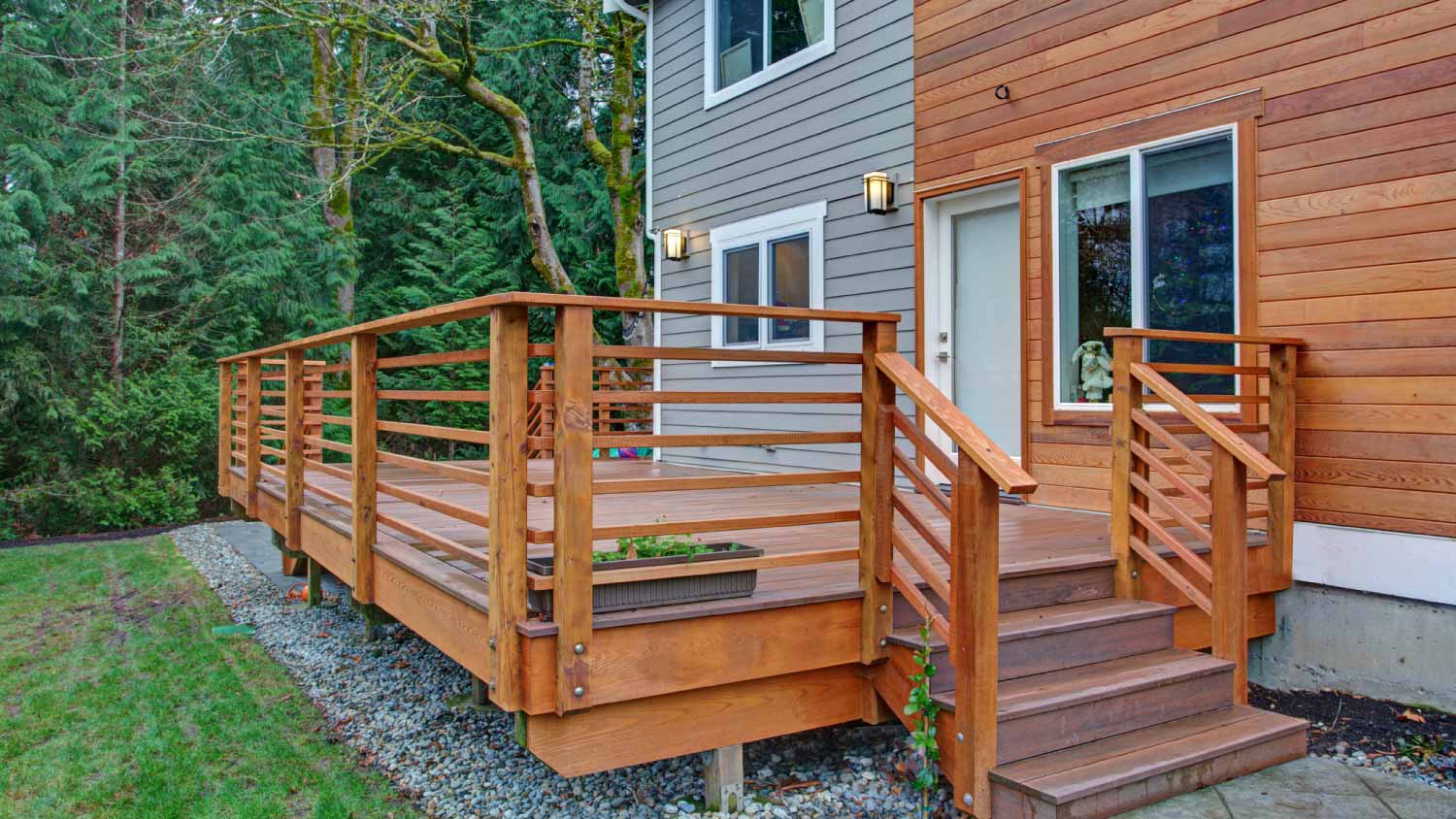
Unstable deck stairs can lead to serious injury. Learn how to attach stairs to a deck to keep your outdoor living space safe, cozy, and secure.
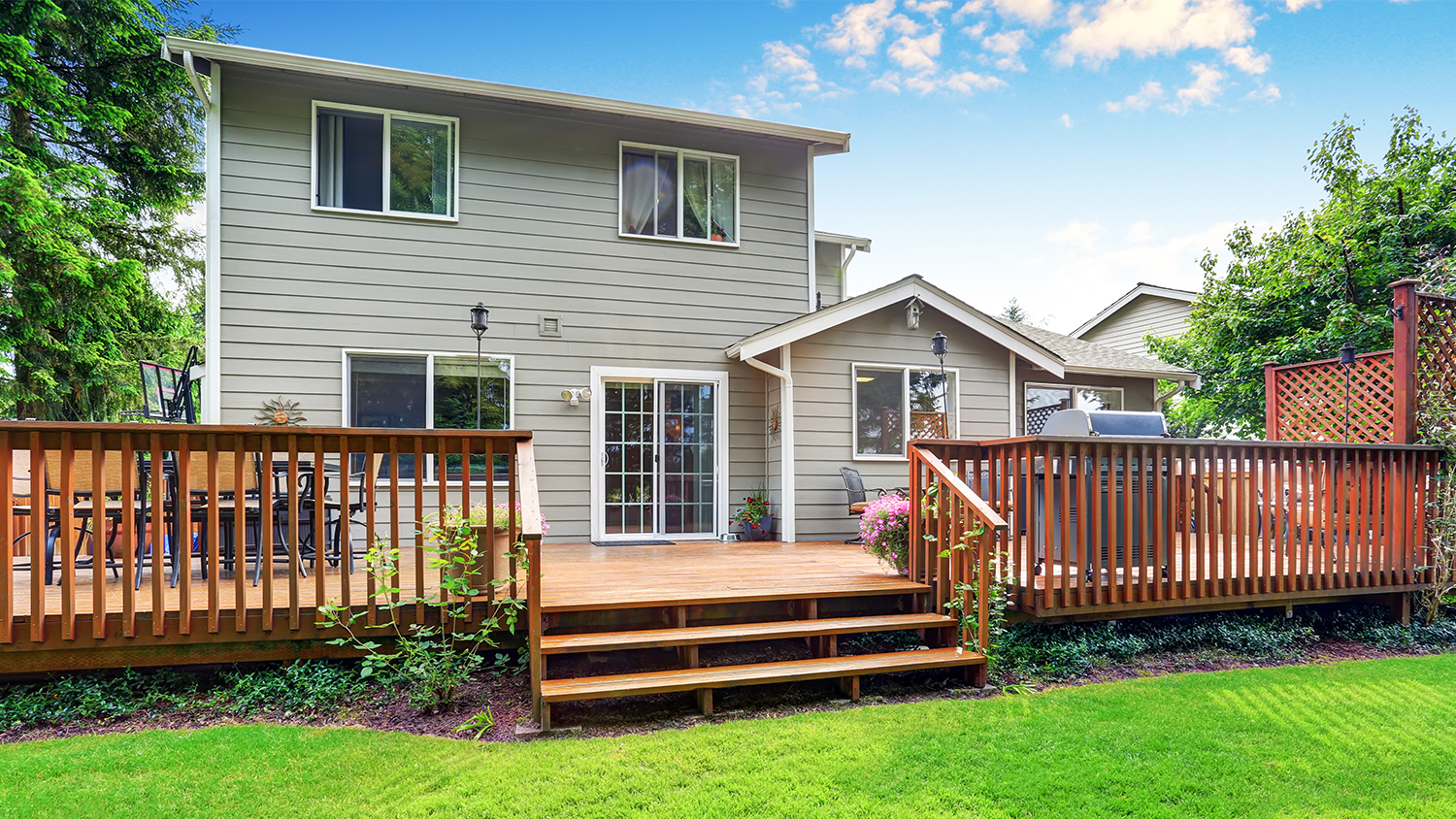
Wondering how to build deck stairs? Follow our helpful guide to learn how to complete the final step of your outdoor decking project.