
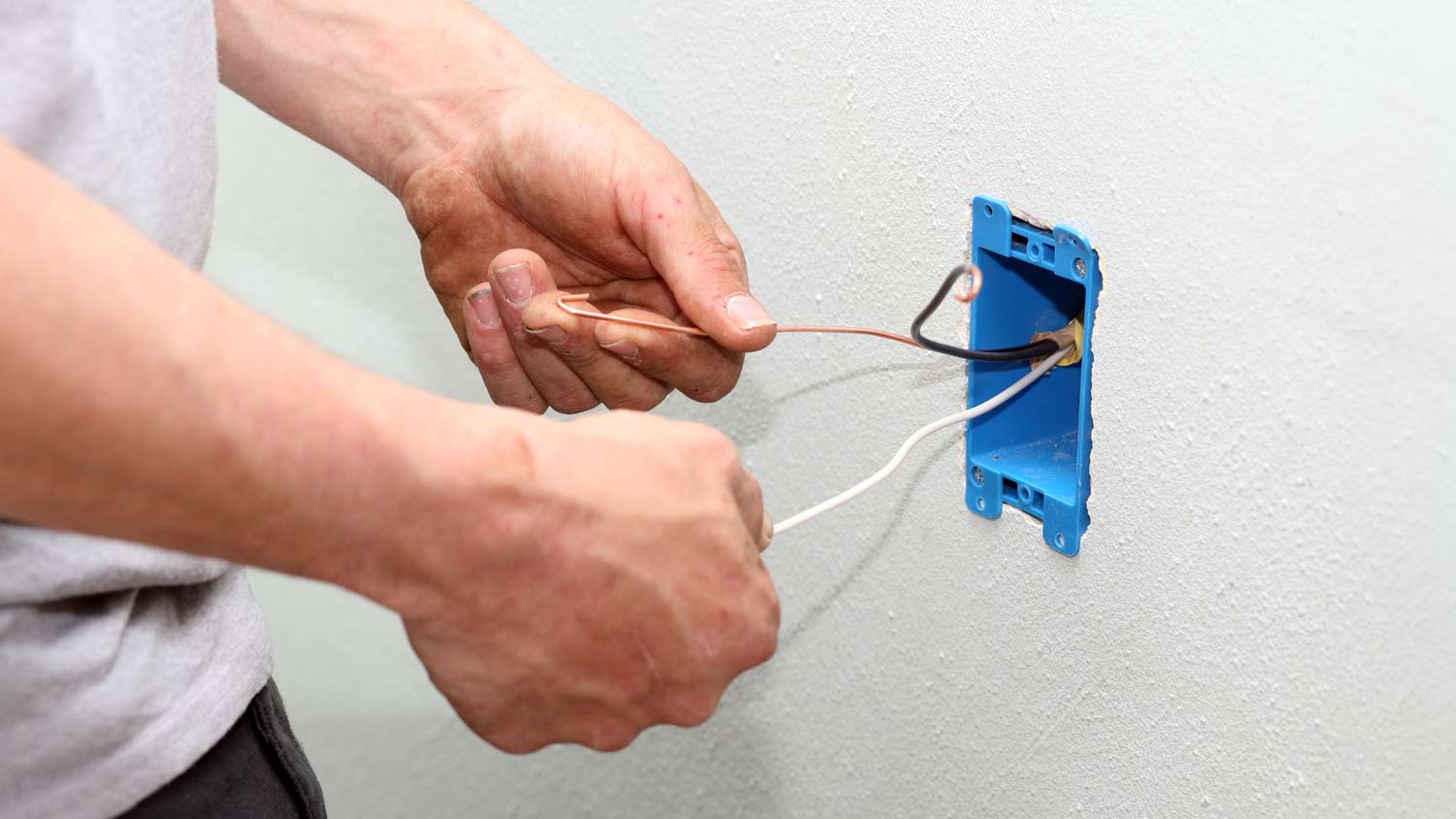
The white wire in an outlet is known as the neutral, but what does the neutral wire do? Here’s the important role it plays in your home’s electrical system.
Uncovering the direct-burial wire mystery

Direct-burial wire and cable are designed for underground use, protected by a thick thermoplastic sheath that withstands moisture, soil pressure, and temperature changes affecting your yard.
While above-ground outdoor electrical wiring can technically survive exposure, the National Electrical Code requires burial except under buildings, keeping your property safer and more reliable.
You should call 811 before digging any trenches for outdoor electrical wire to mark utility lines, preventing accidental damage and ensuring your project stays safe.
Hiring a local electrical professional keeps installation safe and code-compliant, handling everything from trench depth to voltage calculations for long-distance runs.
A direct-burial wire or cable is a specific type of electrical wiring made to run underground in a trench. But can you use direct-burial wire above ground if you want to? Direct-burial wire is sturdier than the average outdoor offerings, as it must withstand moisture, insects, rodents, soil pressure, and temperature changes. However, though it would likely fare well in the elements, it’s safer to use it in its intended location: below the soil.

In home-related projects, underground service entrance (Type USE) and underground feeder (Type UF) cables are the two most commonly used types of wiring. Utility professionals with your local municipality handle Type USE cable, which electricians mostly use to connect power from a transformer to individual homes.
Protected by a hard plastic casing, Type UF is water- and sunlight-resistant and is used both indoors and outdoors. This type of cable can connect power to a detached garage or backyard shed from your home.
Direct-burial cable is protected by a sturdy, thick thermoplastic sheath and typically has a specific UL (Underwriter Laboratories) rating signaling that it has passed certain tests that evaluate and confirm its durability. Additionally, though neither Type UF nor Type USE cables require the use of conduit (a protective tube), conduit can provide wires with a bit of extra safety on top of their sheathing and other durable properties.
Pro tip: Be careful not to mistake just any thick wire for a direct-burial wire. Look for brightly-colored labeling that confirms the wire is for direct-burial use. (This labeling is necessary to be compliant with the National Electrical Code®.) If you’re unsure what a direct-burial wire looks like, you shouldn’t be the one digging around your yard to find it. Leave any complex electrical work to the pros.
The direct-burial wire or cable’s trench should be deep enough that the cable doesn’t shift or move upward toward the surface over time. Additionally, it shouldn’t be buried shallow enough to be accidentally discovered in a yard. Burial depth can depend on different factors, including the wire or cable type and application. Here’s how deep a cable or conduit should be buried based on type and location:
UF cable: 18 inches for residential uses; 24 inches for most other uses
PVC conduit: 18 inches for most uses
Metal conduits: 18 inches for residential uses; 6 inches for most other uses
According to National Electrical Code® article 300.5(A), the only time a direct-burial wire does not have to be underground is if it's under a building, in which case the minimum cover requirement is 0 inches.
Even though they’re typically not above ground, UF wire and cable are durable and engineered to withstand everything from adverse weather to aggressive rodents. While it can survive above ground, it’s best to bury direct-burial wire underground as directed (and implied by the name).
UF wire and cable may not pose the same threat as a downed power line, but there are still potential hazards to leaving them exposed above ground. By securing and running power lines underground, you’re increasing their reliability and longevity as well as your safety, as they’re away from potential threats such as storms and foot traffic.
Thanks to their sturdy nature, direct-burial wire and cable are used in several different instances for varying projects. Some of the more common uses for direct-burial wire and cable include:
Underground power lines
Fiber optics
Post lights
Running electricity to and from your home
Pet fencing
Golf courses
Phone and other telecommunication cables
Before you start digging, there are a few things you’ll want to do to prepare for the installation of a direct-burial wire or cable. If you’re a new pro looking for a few tips on installation, we’ve got them. If you’re anyone else, stop right now, and don’t attempt to mess with your home’s intricate electrical systems.
Call 811, the national Call Before You Dig hotline, before starting the project. Doing so lets local utility companies know to come out and mark any utility lines so you can avoid hitting them accidentally.
Check for permit requirements (and, equally as important, the cost of building permits). Depending on your area, you may need to get a permit before starting an electrical project.
Calculate the voltage drop if you’re running a long-distance direct-burial wire. This helps determine whether you need a larger cable to minimize voltage loss over long distances.
Map out your property, noting where underground wiring was buried. This is an excellent reference point should you need to make repairs or want to start another project in the future.
Electrical projects can be overwhelming and incredibly dangerous if you’re unsure of what you’re doing. One incorrect step can lead to anything from an electrical malfunction to a fatal shock. This isn’t a project where you can “just wing it.” Instead, call a pro if you’ve got questions about your direct-burial cables or think you need to replace them. A local electrician can install direct-burial wire or cable on your property and answer any questions you have about them.
I recently had Mosby Electric perform an electrical installation on 8-14-2026, and I couldn’t be more satisfied with the service. From the moment I called, their team demonstrated fast arrival and professionalism. The electricians were highly knowledgeable, completing the installation...
 Mosby Electric
Great company! Price was competitive, technician showed up on time and completed the job (exterior electric Radon fan replacement) quickly. Would hire them again.
 MaGen Property Inspections and Radon Mitigation
I conferred with 2 other contractors before Armstrong Electric. Nick and his crew showed me that the project was not as convoluted as the other contractors made it appear to be. They completed the entire project on time. They were professional, friendly and cleaned up after at completion. I...
 ARMSTRONG ELECTRIC, LLC
The techs on my project, Shawn and Cliff, were great. They were prompt, courteous, and efficient. I am very happy with the results and would definitely contact Mr. Electric for any future electrical projects.
 Mr. Electric of Columbus
Victor was wonderful. He was on time, professional, and explained everything he was doing. He was thorough and figured out that the problem was electrical instead of with my HVAC system. Very knowledgeable. I will be using this company in the future for any HVAC needs. Thanks!
 Hubbs Heating & Air LLC
They were excellent. They did a great job. I was totally satisfied. They put tremendous effort in making sure the work was completed. They were great. They provided immediate response to any inquires I made. I would hire them again. I would recommend them to anyone who needs electrical work....
 JCB & Associates, LLC DBA Property-Tech Industries
Initially, the repairman could not find the problem. Apparently, there was some electrical shortage, but he could not find the definite problem. He left, but called back later to say he had a new idea. He returned and replaced the light switches on the doors. The refrigerator seemed to return...
 Appliance Pro LLC
The initial quoted price from a walk-through seemed high, but we discussed that the quote represented worst case scenario (re-wiring to two floors) and we were excited about the opportunity to have the work done in a timely manner with closing for fire safety reasons, etc. When the job was...
I have to tell you I am all about customer service - I will go out of my way and even pay more for it if you give me great customer service. <br> <br>In a world where this is hard to find, these guys were awesome! I can not sing their praises enough. They were prompt, personable, funny, got...
 Waibel Electric
When I challenged the markup on the generator, Bruder Electric withdrew its bid. They only want naïve customers.
From average costs to expert advice, get all the answers you need to get your job done.
The white wire in an outlet is known as the neutral, but what does the neutral wire do? Here’s the important role it plays in your home’s electrical system.

All home electrical wires follow standard color codes that identify how each one functions in a circuit. Learn about the colorful world of electrical wiring.

You can find several types of electrical wires in your home, but do you know which one is which? This chart of electrical wire types will help you identify the wires you’re working with.

Nearly every electrical wire in your home has a different purpose. This article will cover the types of electrical wires, what they’re for, and how you can tell them apart.

Selecting the right wire size helps your electrical system run safely and efficiently. Find out the correct wire size for 100-amp service panels.

Higher amp ratings require certain wire gauges to match the circuit. This can be confusing, so here’s what to know about wire gauges and your home’s outlets.