

What should you do when a contractor does poor work? Your best defense is documentation. Here's how to fight back and hopefully turn your project around.
Confidently handle unfinished contract work even when it’s unexpected

A contractor who did not finish the job creates frustration, especially when you face delays with no explanation or disagreements about project completion.
Document every detail from the start, including photos of unfinished work, printed email and text exchanges, call logs, and your original contract agreement.
Send a written termination letter with dated photos explaining why you ended the work relationship, then store it with your other documentation for future reference.
Hiring a local contractor helps you avoid these problems by setting clear expectations upfront and maintaining open communication throughout your project from start to finish.
Dealing with unfinished contract work can be extremely frustrating, especially if you’re waking up each morning to a half-built wall in your kitchen or sawdust footprints in the hallway.
In some cases, extended delays to a project may be warranted (i.e. sickness, injury, or factors out of the contractor’s control, such as a lumber shortage). But if you’ve been ghosted for no good reason after paying a reasonable down payment or if you and a general contractor have different ideas about what “finished” means, it could be time to take action.
This step-by-step guide will help you responsibly handle unfinished contract work.
While it may seem like a stretch, the first thing you should do when a contractor doesn’t finish a job is to try to work it out and come to a resolution. Because the truth is, every step on this list gets progressively more serious. Ultimately, you could be looking at arbitration, mediation, or even filing a full-fledged lawsuit.
It’s worth doing everything you can to settle the matter proactively—even if that means agreeing to mutually part ways and receiving a partial refund.
Also, it can’t hurt to take a step back and assess your frustration. Is it truly the lack of quality or failure to meet deadlines that’s upsetting you? Is what you consider to be “unfinished” subjective in any way? The answers to these questions could become relevant quickly.
Try to contact the contractor, especially if you’re being ignored. Make sure you’re using all forms of communication; even if all your previous exchanges have been on the phone, try texting or emailing.
Document everything during this process:
Take pictures of the unfinished or unsatisfactory work
Print out email or text message communications
Screenshot and print call logs
Find and carefully read the initial contract agreement
Email is an effective method here, as you can print and use them to make a case later if it comes to that. You can even craft and send an accompanying email to outline the voicemails you’ve left.
If you can’t get a hold of your contractor or it’s clear that your situation is untenable, you’ll need to make a choice. Follow-up actions could include:
Terminating the contract work
Mutually agreeing to part ways and settle
Allowing them to keep working on revised terms (after you’ve asked your contractor the right questions you maybe didn’t ask the first time)
If you decide to end the work relationship, send a written letter explaining in detail why it’s being terminated (with pictures). Make sure it’s dated, then store this letter with your other documents.
At this point, while it might be tempting to leave a one-star review or deliver a nasty gram to their email, it’s a good idea to take another deep breath and consider if any additional follow-up action is needed.

Hopefully, you hired a licensed and bonded contractor. If so, you can file a complaint with the licensing board against their bond, which could help you get your money back.
A contractor licensing bond is a way of financially protecting consumers when a situation like this arises. Licensed contractors have already paid a surety company that can reimburse you for the damages or costs incurred so long as you can provide proof. If they did negligent work, their insurance might cover what the bond does not.
This is just one example of how hiring an unlicensed contractor can cost you.
Filing a complaint with the Better Business Bureau could be enough to persuade the contractor to finish the job or pay you back what you’re owed. The BBB also offers mediation and arbitration services. These come in various forms, ranging from informal to conditionally binding, but they might be a good way to settle the issue with your contractor out of court.
If arbitration or mediation doesn’t work, it may be time to take legal action.
Your first step, unless your project is very large and expensive, is to file in small claims court. You’ll save substantial amounts on legal fees by going this route, and will also receive a verdict much quicker.
Each state has a maximum for small claims court settlements. For example, Delaware’s limit is $25,000, while Connecticut is just $5,000. Research yours to make sure your unfinished contract work falls within the limit.
If all else fails, and you’re facing losses that exceed your state’s small claims court limits, it may be time to hire legal help. A contract attorney can give you insights into whether your case is worth taking to court.
Keep in mind, contract attorneys can charge up to $120 per hour. That might be fine if you hope to recoup five or six figures from the contractor in your lawsuit, but you should always weigh the potential downsides—and financial ramifications—of hiring a lawyer and not winning your case.
You can, but only if you have proof the person or company you’re suing did not fulfill the duties of the agreed contract.
Typically, this means the contractor:
Didn’t complete the work as per agreed upon
Did a subpar job that doesn’t meet reasonable standards
Did a subpar job that may also be considered negligent (i.e., posing safety hazards to your family)
A legal case will be built around the specifics of the job outline in your contract, which should be included in the paperwork your contractor provided. Carefully reading the description could help you decide whether going to court is worth it or not.
After the legal process plays out and a verdict has been reached—whether you won, lost, or reached a settlement—you may consider leaving a review (or reviews) online. Waiting until the case is settled (in or out of court) and gives you time to gather the facts.
Just remember, the point of leaving a review isn’t just to slander a business. In lieu of contractor references, online reviews are one way people get answers to questions before they hire a contractor. Be thorough but honest. You can make your point—and probably detract others from having the same negative outcomes as you—without using foul language or taking cheap shots.
Exquisite workmanship from Custom Paint Jobs LLC. My home has never looked better.
 Custom Paint Jobs, LLC
Visited my home for estimate same day that I called. Painted on Saturday. Great job. Good price!
Window Depot did an amazing job on my deck. I wasnt sure what I wanted to do, but their composite decking was affordable and will last a long time. I am excited to have family over, and I am no longer embarrassed by my backyard. Jeff and the ground crew were polite, respectful, and caring for...
 Window Depot USA of Central Ohio
The guys did an outstanding job and we had a great experience with CarifaTile. I appreciated that Joe reviewed the quotes with me and set expectations prior to the install. The crews showed up as scheduled and always left the areas clean upon leaving the house. We will definitely use...
 CarifaTile
Beginning with the estimate, Larry and Peyton were super helpful in getting my new condo's interior re-painted. Not only was the job well done, but also done in a super timely manner as promised.
 Five Star Painting of Plain City and Powell
BJ Trim Carpentry rescued me in the middle of a do-it-yourself project. I found I needed more expertise than I had...and more TOOLS! BJ Trim Carpentry responded quickly and completed what I needed expertly, politely and with a little humor!
This brownstone is historical and the carpentry work is very detailed. I was very happy to secure a company in NY and living in OH to complete the request. Wood work on this brownstone has been existing since approximately 1888 and West side did a GREAT JOB. I will not be able to...
 Westside Home Improvement
We had a great experience with Mark Rodgers Construction. We were in the process of seeking out estimates for possible foundation work for our front porch. Mark came out himself to provide the estimate. Turned out that the company deals mainly with concrete, so we wouldn't be getting an...
 Mark Rodgers Construction
Overall this experience was incredible! I looked on Angies List for a cleaning service because I was planning a holiday party and wanted to make sure we found a reliable, thorough and efficient cleaning service to make sure everything was perfect for the party since we had co-workers and...
From beginning to end our experience with Joe was very good. He was professional and prompt in his estimate for the job and worked hard to meet our schedule so that he could remove our old backsplash the day before our new countertops were removed and return shortly after they were removed to...
From average costs to expert advice, get all the answers you need to get your job done.
What should you do when a contractor does poor work? Your best defense is documentation. Here's how to fight back and hopefully turn your project around.

If a disappearing contractor left you without your deposit and services, here are the actions to take to remediate the project and get your money back.

Some home improvement contractors don't hold up their end of the bargain, but there are ways to make it right. Learn about your options for getting legal help, filing complaints, and more when you believe your contractor shorted you.

Working with a contractor usually results in a beautiful finished product. But if issues arise, it’s important to know the grounds for firing a contractor and how to part ways respectfully.
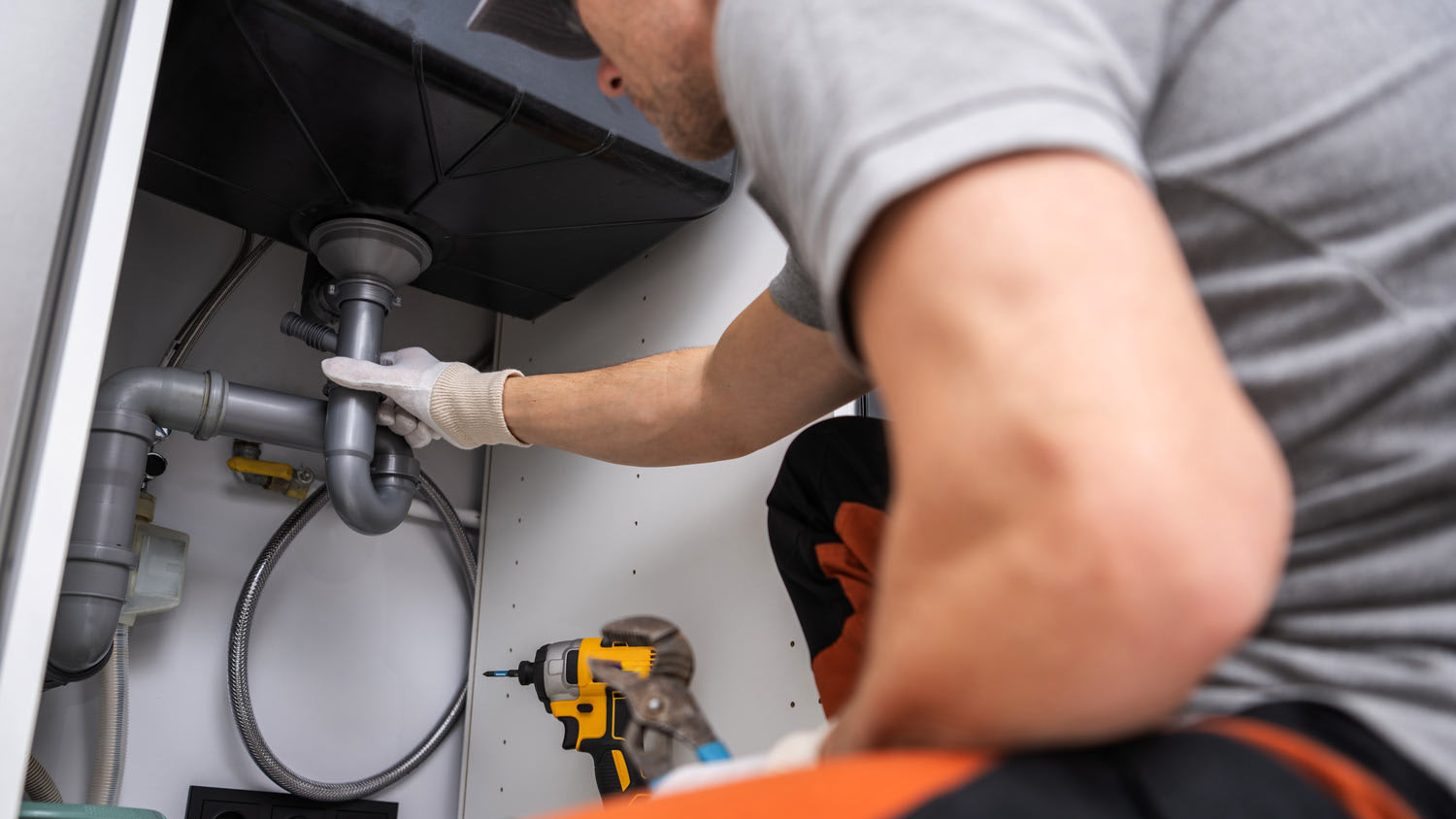
If your contractor causes water damage during a home project, there are several steps to take. Learn how to handle this situation so it can get resolved ASAP.

When it comes to creating a downstairs oasis, knowing who to hire to finish your basement is key. Here's how to find the best professional for the job.