

A damaged main support beam can cause serious structural damage to your house. Learn how much it costs to replace a main house support beam.
Foundation repair costs depend on your project and location. Check with a local pro for your specific job.


Your repair method and damage severity set the price, from $500 to $10,000 for your basement wall project.
Wall length and deflection severity directly impact your repair expenses, with walls over 2 inches of bowing requiring more complex solutions.
You should set aside $250 to $500 for a structural engineer inspection before choosing your repair plan.
Hiring a local structural engineering professional helps you choose safe repairs and keeps your basement foundation work code compliant.
In 2026, the national average cost to repair a bowing basement wall is $4,500, with most homeowners spending between $500 and $10,000, depending on the repair method, damage severity, and how widespread the problem is. You should also budget $250 to $500 for a structural engineer inspection before committing to a repair plan.
Bowing basement wall repair costs are shaped by parts, labor, and any finishing work needed once supports are in place. A report from a local structural engineer is also worth factoring into your budget, since it identifies the root cause of the bowing and guides the right repair approach.
The repair method you choose is the single biggest cost factor, with options ranging from $1,600 to $2,800 for wall anchors up to $6,700 to $11,000 for wall straightening with reinforcement straps on a 20-foot wall. Steel or carbon fiber straps fall in the middle at $1,700 to $5,000, while helical tiebacks run $6,000 to $7,200 for the same wall length. Here’s how the main repair types compare by average cost:
| Type of Repair | Average Cost Range in 2026 |
|---|---|
| Wall Anchors | $1,600–$2,800 |
| Steel or Carbon Fiber Straps | $1,700–$5,000 |
| Helical Tiebacks Wall Straightening | $6,000–$7,200 |
| Wall Straightening | $6,800–$11,000 |
Wall anchors cost between $400 and $700 each and should be placed every 5 feet. This cost means you can expect to pay $80 to $140 per foot for this type of brace.
To install wall anchors, one steel plate is attached to your basement wall, and another is buried in the ground outside your wall. The two plates are connected with a steel shaft that is tightened to hold your wall in place.
Steel or carbon fiber straps go for $350 to $1,000 per strap and should go every 4 feet. With that considered, you can expect to pay between $85 and $250 per foot.
Straps are long strips of metal or carbon fiber installed vertically on your basement wall and anchored on the top and bottom. They are often made from steel or carbon fiber and sealed with epoxy for longevity.
Helical tiebacks are often the most expensive bowed basement wall repair option. Expect to spend from $1,500 to $1,800 per tieback. A tieback should be installed every 5 feet, resulting in a cost of $300 to $360 per foot.
If straps or anchors aren't heavy-duty enough to fix the problem, helical tiebacks might be your best choice. Helical tiebacks are long steel, screw-like shafts drilled at an angle through your foundation wall into the soil outside your home. The shaft is twisted through a plate or channel attached to your interior wall until a specific torque is achieved.
The above options will not make your wall perfectly straight—rather, stop it from bowing any further and maybe remove some of the bow. Consider wall straightening if you want your wall to return to its original, upright state. Basement wall straightening will cost between $250 and $300 per foot, which is in addition to the cost of steel or carbon fiber straps at $85 to $250 per foot. The total cost for wall straightening is $340 to $550 per foot.
A contractor will excavate the soil around the exterior of the bowed wall to relieve pressure, then use hydraulic jacks inside to push the bowed wall back into its original spot. Additionally, reinforcement straps are installed to prevent future bowing.
A structural engineer foundation inspection and written report costs $250 to $500 and gives you an objective, accurate assessment of what repairs your foundation actually needs. That evaluation is a practical reference point when comparing contractor bids and deciding which repair method is appropriate for your situation.
"We've discovered the great value of structural engineers over the past few years," says Robert Tschudi, Expert Review Board member and North Carolina-based homebuilder and remodeler. "Not only do they understand the structural integrity of your house, they know what is needed (support-wise) to do your renovation."
Wall length directly drives repair costs—wall anchor installation on a 15-foot wall runs $1,200 to $2,100, while the same repair on a 30-foot wall rises to $2,400 to $4,200. Wall width adds another variable, since thicker walls require longer anchors or tiebacks to reach stable soil. Here is how wall anchor costs scale with wall length:
| Wall Length (ft.) | Average Cost (Wall Anchors) in 2026 |
|---|---|
| 15 | $1,200–$2,100 |
| 20 | $1,600–$2,800 |
| 25 | $2,000–$3,500 |
| 30 | $2,400–$4,200 |
Wall anchors run $400 to $700 per anchor placed every 5 feet, while steel or carbon fiber straps cost $350 to $1,000 per strap for every 5 feet. The strap material—steel versus carbon fiber—affects where your cost lands within that range.

Generally speaking, the less your wall is bowed, the less it will cost. You can repair just about any bowed basement wall with bracing options if the deflection is less than 2 inches. If the deflection is between 2 and 4 inches, the situation may still be salvageable but more expensive to repair.
Your bracing options depend on the conditions outside of your wall, too. If there is not enough room for an excavator to dig up the soil near your basement wall, you likely cannot use wall anchors or helical tiebacks. Similarly, if the soil around your basement wall is dense and hard to penetrate, your only option may be reinforcement straps, which are more costly than wall anchors.
The labor involved in repairing your wall has a significant effect on the cost. Labor-intensive methods like wall straightening, which requires excavation, can average between $340 and $550 per square foot. Faster repair methods like wall anchors and straps average between $80 and $250 per square foot.
The ease of accessibility of the bowing wall issue will have an impact on the cost. If the contractor can access the issue easily, the costs will be on the lower side. If the contractor has to do any excavating, however, costs can rise quickly. Talk to your contractor about what work they'll need to do to access the issue and what it'll cost you.
Most bowing basement wall repairs require a permit, with permitting costs ranging from $100 to $2,000 depending on your municipality and the scope of work. For significant structural repairs, your local building department may also require a structural engineer's plans and signature, a site plan, or a soil test—all of which add to that cost.
To confirm what's required before work begins, contact your local building department or ask your contractor whether you need a permit for foundation work.
A bowing basement wall repair sometimes uncovers related problems that need to be addressed to prevent the issue from returning. The additional work required depends on what caused the bowing in the first place:
Structural repairs: Bowing foundation walls can signify an underlying structural problem. Repairs like replacing damaged floors and joists can cost around $1,000, but more extensive foundation repairs can cost several thousand dollars or more.
Water intrusion repairs: Bowing is often a sign of water intrusion, so you'll need to fix the water problem to prevent further damage. The cost to waterproof a basement averages around $5,000.
Foundation drainage installation: Improper drainage around the foundation can cause structural issues like bowing. Installing a drainage system can cost between $2,000 and $7,000.
Wall finishing: If you have a finished basement, you'll need to finish the wall once it's been repaired. Installing drywall costs an average of $1.50 to $3 per square foot, and DIYing the paint will run you about $100 to $200 for paint and supplies.
In most cases, you should hire a foundation repair contractor to fix a bowing wall rather than replace it. Replacement requires extensive excavation, placing your house on piers, demolishing the existing wall, and re-pouring a new one—a scope that is rarely necessary.
Foundation repair will take less time, cost less, and cause far less disruption to your home than a full replacement.
Repairing a basement wall costs real money. Unfortunately, there aren't many shortcuts to the solutions that will save money after the damage is present. However, catching the problem early by performing regular DIY inspections on your basement walls is an excellent way to minimize foundation repair costs before they happen.
The next best thing you can do to save big money is to hire a local foundation repair pro at the soonest sign of trouble. Doing so may mean having the ability to do the repair work before more (and more costly) damage occurs.
Safety is key when working around foundations, crawlspaces, and basements. Always wear protective gear like gloves, masks, and goggles, and ensure proper ventilation. Minor tasks like filling small cracks and basic inspections can be DIY projects, but leave structural repairs, extensive waterproofing, and significant drainage work to the pros.
Repairing a bowing basement wall isn't something you should attempt on your own. Getting the job done right requires the specialized knowledge and skill of a local wall repair professional. Improper installation can lead to cracked walls or wasted time and money if the repairs don't work out.
Repairing a bowing basement wall isn’t a simple DIY task. Here’s why you should always hire a pro to handle the job:
Professionals know how to stabilize walls to prevent worsening bowing or collapse.
Experienced pros can accurately assess structural damage to determine the safest repair method.
DIY repairs can worsen bowing and put your home at risk of serious structural and safety concerns.
Experienced contractors carry insurance and warranties for added protection.
Hiring a pro ensures your project complies with local building codes and regulations.
To assist your pro with the repair process, consider helping out with the following tasks:
Remove furniture, storage, and belongings from your basement.
Clear any obstacles or obstructions to provide your pro with easy basement access.
Keep tools and materials nearby and easily accessible.
Lay down protective coverings over valuables and flooring.
Clearly explain the extent of damage and the type of repair you require to your pro.
Talk with your pro to determine which repair method, such as wall anchors, helical tiebacks, or carbon fiber straps, best fits your budget.
Let your pro know of any additional damage or concerns that could affect the repair complexity.
Ask your pro about the timeline and costs associated with your project so you know exactly what to expect.
Home is the most important place on earth, which is why Angi has helped more than 150 million homeowners transform their houses into homes they adore. To help homeowners with their next project, Angi provides readers with the most accurate cost data and upholds strict editorial standards. We extensively research project costs to develop the pricing data you see, so you can make the best decisions for you and your home. We rely on reputable sources, including the U.S. Bureau of Labor Statistics, academic journals, market studies, and interviews with industry experts—all to ensure our prices reflect real-world projects.
Want to help us improve our cost data? Send us a recent project quote to [email protected]. Quotes and personal information will not be shared publicly.
Positive experience. As previously stated, the replacement/repair could not be completed (no fault of the plumbing tech) b/c misinformation was rec?d by property management maintenance. Thanks to the plumbing tech for your efforts. Appreciate you!
 The Waterworks
Carpet repair done well. Scheduling was easy. Showed up on time.
 BR Flooring Installation
I would recommend this company to anyone! He showed up on time, was friendly, completed a very difficult repair on our dryer vent cover, was responsive, and pricing was extremely fair and competitive. I would have him back to do any of our repairs or cleanings without hesitation!
 U.S.A. Dryer Vent, LLC
Everything from initial contact to completion was absolutely top notch. We contacted the business during off hours to leave a message, and the owner still reached out to feel out the issue within minutes. We were scheduled and repaired within 48 hours. I cannot say enough about the...
 Supreme brick & chimney
Ace Fireplace Services came to the rescue for my chimney repair. They were quick to pinpoint the issue and worked their magic to fix it. My chimney is now in excellent shape, and I'm a satisfied customer.
 Ace Fireplace Services
On Sunday 2/26 I requested quotes via Angi from 4 refrigerator repair businesses. Northwest Appliance responded to me Monday morning (2/27) and my refrigerator was repaired by noon the same day. Great communication, they did everything they said they would. The technician had the parts on...
Great experience all together. Dog friendly, courteous, great results and honest with recommendations. Will certainly be using Cardinal in the future for any carpet repairs
 Cardinal Carpet Care & Repair
Description says they handle window repair including rotten hardwood - they called me back right away but didnâ t leave a voicemail. I followed up 3 days later and they said they donâ t do that kind of work.
 Window-Gurus
Chaz, the owner, was very responsive and he communicated with us throughout the entire process. The overall cost was in the middle compared to the three estimates we received. The installation crew was very professional. Chaz was considerate enough to send a crew back to our home to repair...
 Unique Hardwood Floor LLC
Great guys. Spend a lot of time repairing and prepping our walls before doing the new paint. Home looks great now.
From average costs to expert advice, get all the answers you need to get your job done.
A damaged main support beam can cause serious structural damage to your house. Learn how much it costs to replace a main house support beam.

Beam installation costs are an important consideration if you’re building a home or doing renovations. Learn about average costs and factors in this guide.
Considering a bow window for your dream reading nook? Find out everything you need to know about bow window prices, permit and labor costs, and more.

A bowing foundation wall can quickly become a major structural problem for your home. Learn why your wall is bowing and what you can do to fix it.
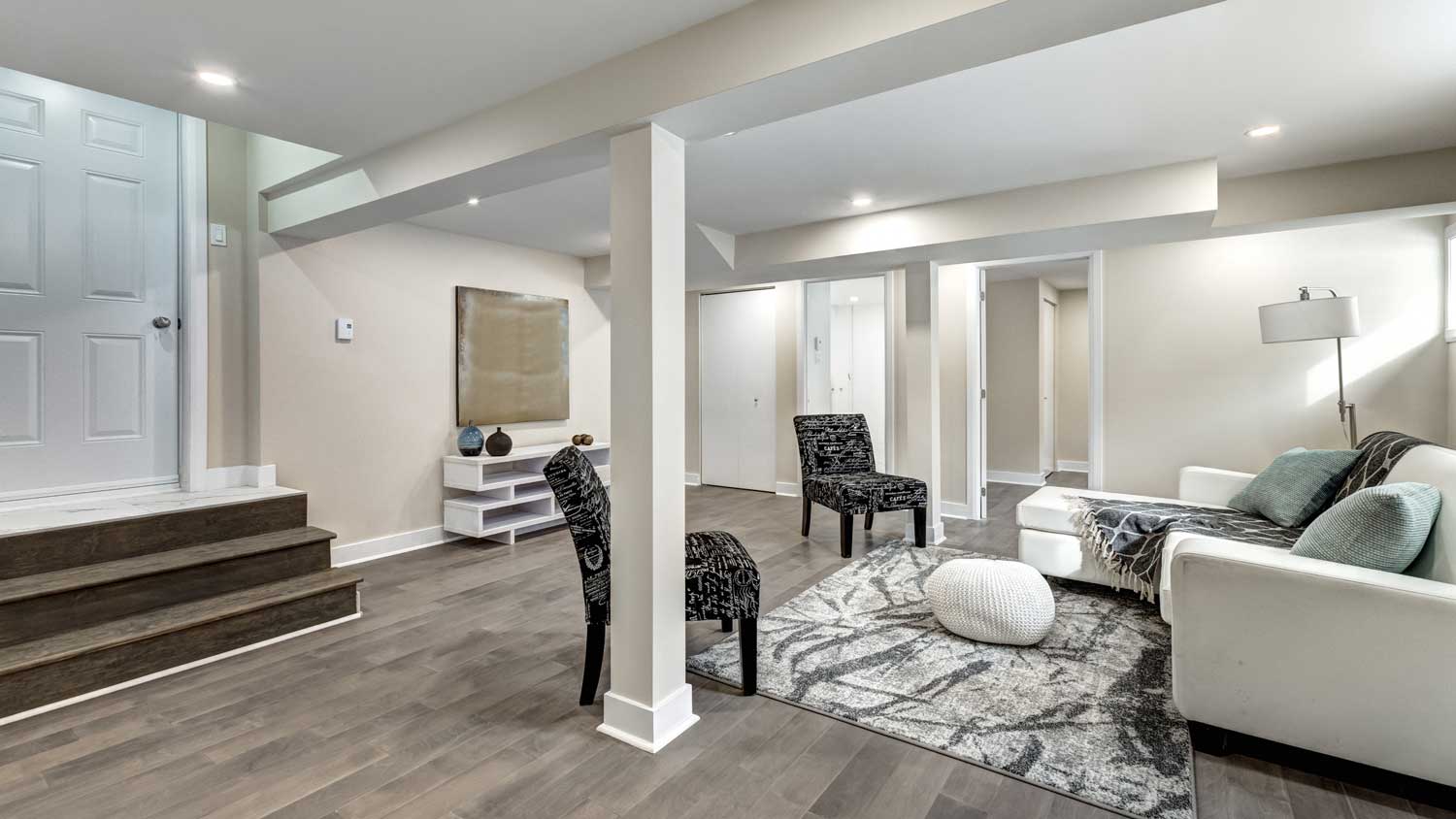
Wondering what supports your home or why your basement needs posts throughout? Use this guide to identify basement support beams and understand their function.
Curious about the difference between joists vs. beams? Learn how to identify these components and how they work together to provide support for your home.